Account






Picnic Food Ideas: What To Pack & What Wine To Bring
Start exploring

A good picnic needs three things: food that travels well, drinks that stay cold, and a comfortable picnic blanket.
The safest picnic food is anything that travels flat, holds together at room temperature and does not need a knife and fork. Think sandwiches, savoury pastries, hard cheese, cold roast chicken, dips with crudites, and fruit you can eat with your hands. For wine, one bottle of dry sparkling and one bottle of dry rosé will cover almost every picnic spread you can build.
This guide covers what to take, how to pair wine with your picnic, how to keep everything cold, and handy tips. There is a packing checklist too, so nothing gets left on the kitchen counter.
Jump to a section
- What food should you take on a picnic?
- The easy picnic packing checklist
- What wine should you pack for a picnic?
- How do you keep wine cold at a picnic?
- What about soft drinks?
- Picnic ideas for couples, families and groups
- Beach picnic ideas: what to pack and how to keep wine cold
- What else is worth knowing before you go?
- Frequently asked questions
- Sources
What Food Should You Take on a Picnic?
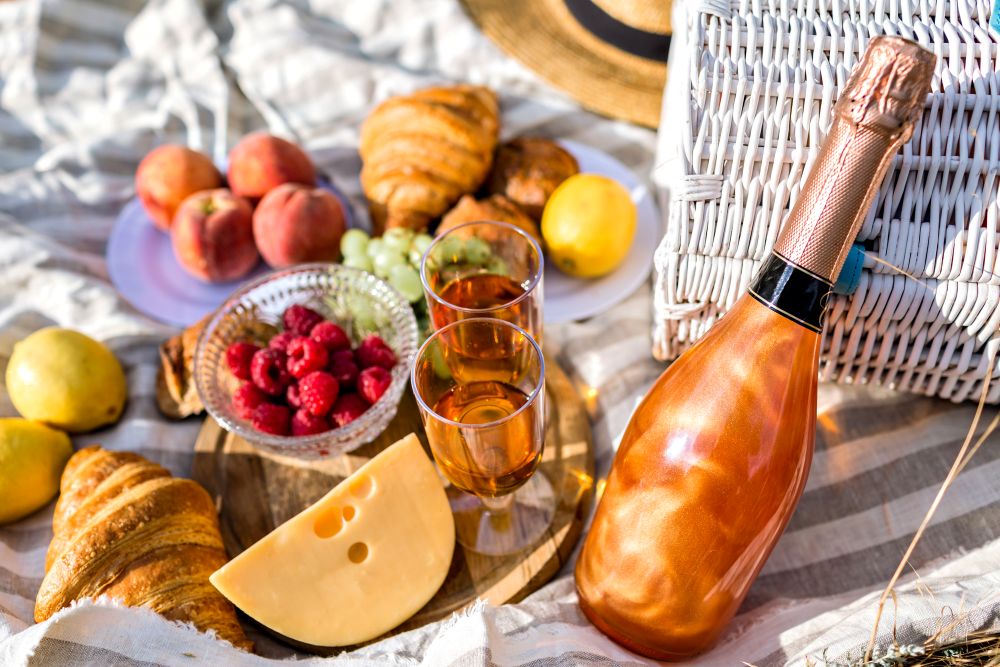
The best picnic food is sturdy, eaten with fingers, and fine at outdoor temperature. Anything that relies on being piping hot or fridge cold will disappoint you by the time you sit down. Food Standards Scotland advises eating ready-to-eat food within four hours of it leaving the fridge, so plan around a window of a few hours rather than a whole afternoon.
Build the perfect picnic spread in four layers:
- Something savoury to snack on: The bits people graze on while everything else comes out.
- Something substantial: The dish that makes it a meal rather than a snack.
- Something fresh: Fruit or salad to stop the spread feeling heavy.
- Something sweet: A small treat to round the picnic off.
Savoury snack food that travels well
Best for: grazing on arrival, and keeping people happy while you unpack
Savoury snack food is the easiest part of any picnic because most of it needs no preparation at all.
- Crisps, salted nuts, olives and cornichons
- Breadsticks, oatcakes and seeded crackers
- Hummus, tzatziki or a soft cheese dip, packed in a screw-top tub
- Carrot, cucumber and pepper batons, cut the night before
- Cured meats such as salami, prosciutto or chorizo
The substantial bit
Best for: making it a meal rather than a snack
Pick one or two of these rather than all of them.
- Sandwiches and wraps: Use a firm bread and go easy on wet fillings, which turn the middle soggy by lunchtime.
- Quiche, frittata or a savoury tart: All three slice cleanly and taste better cool than most cooked food does.
- Sausage rolls, pork pies and empanadas: Pastry is the ideal picnic packaging because it holds its shape.
- Cold roast chicken: Easy to portion, easy to eat, and it pairs with almost any wine you bring.
- A cheese selection: Hard cheeses like cheddar and manchego handle warmth far better than soft or blue cheeses.
Something fresh, and something sweet
Best for: balance, and a reason to stay sitting down a bit longer
Fresh things stop the spread feeling heavy. Sweet things give the picnic an ending.
- Whole fruit like apples, plums, grapes and cherries, which keep far longer than cut fruit
- A grain salad with couscous, orzo or bulgur wheat, dressed in a separate pot and mixed on arrival
- Tomatoes with mozzarella and basil, packed as components rather than assembled
- Brownies, flapjacks, shortbread or a lemon drizzle loaf, all of which travel without collapsing
- Strawberries, which are the one exception worth the effort of keeping cold
Top tip: the four-hour rule
Food Standards Scotland recommends eating ready-to-eat picnic food within four hours of taking it out of the fridge, and keeping it in a cool bag with ice packs until then. Cool bags keep food colder than wicker baskets, if you want your food to stay chilled for longer.
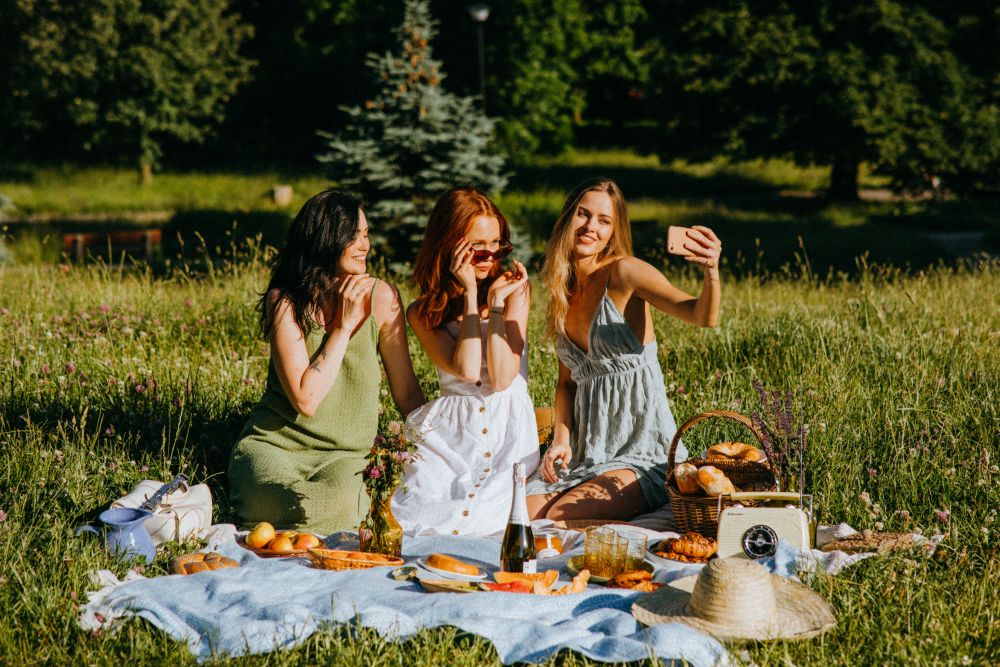
The Easy Picnic Packing Checklist
Everything below fits in one cool bag and one tote. Run through it the night before and the morning of, so you don’t forget any essentials.
The basics
- Picnic blanket, ideally with a waterproof backing
- Cool bag or cool box (allow 6 to 10 litres of capacity per person)
- Ice packs or frozen gel packs, spread through the bag rather than piled at the bottom
- A couple of frozen bottles of water, which chill the bag and become drinking water later
- Plates, cups and cutlery, reusable rather than single-use
- Sharp knife and a small chopping board, wrapped safely
- Napkins or kitchen paper
- A folding camping table (optional, but it gives you a flat, clean surface)
The drinks kit
- Corkscrew
- A bottle stopper, so an unfinished bottle travels home safely
- Unbreakable wine glasses or tumblers
- A cool sleeve or insulated bottle bag for the wine
- Water (more than you think you need)
The things people forget
- Bin bags for rubbish
- Hand sanitiser or wet wipes
- Sun cream and a hat
- Insect repellent
- A cover or clean tea towel to keep insects and birds off the food
- A jumper, because British evenings turn quickly
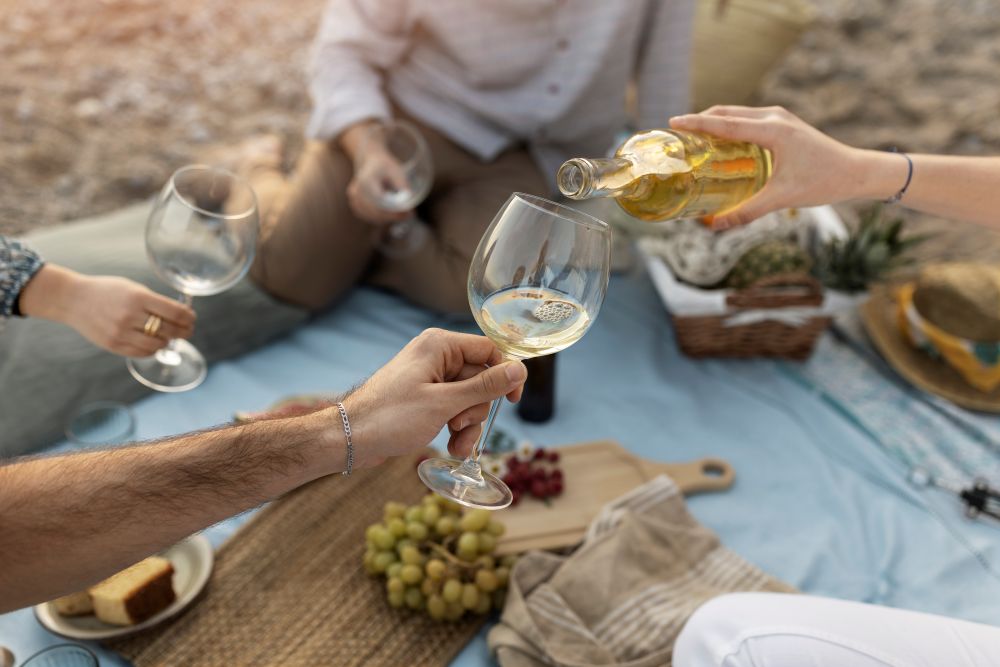
What Wine Should You Pack for a Picnic?
Pack wines that are light, refreshing and taste good cold. Three styles do the job:
All three suit outdoor food, cope well with being served very chilled, and do not need decanting or careful glassware. Heavy, tannic red wine is the one style that struggles at a summery picnic. Warmth makes it taste flat and heavy, so it is best left for dining at home.
Of course, English sparkling wine is a must for an English picnic. It is fresh, made for a sunny afternoon, and if you are picnicking in Sussex, it has often been grown just down the road.
It is also what England does best. Sparkling makes up around 69 per cent of all the wine England and Wales produce, according to WineGB. To get to know the style, our sparkling wine guide and our comparison of English sparkling wine and Prosecco are good places to start.
Jargon explained: dry
A dry wine is one with little or no sugar left in it, so it does not taste sweet. Most picnic-friendly white, rosé and sparkling wines are dry.
Which wine goes with which picnic food
Best for: deciding at the shop in under a minute
| Picnic food | Wine style to pack | Why it works |
|---|---|---|
| Sandwiches, sausage rolls, cold chicken | Dry sparkling wine | The bubbles and acidity cut through pastry, bread and cold meat, and reset the palate between bites. |
| Quiche, hard cheese, savoury tarts | Unoaked dry white, such as Bacchus, Chardonnay or Sauvignon Blanc | Fresh acidity balances the richness of pastry, eggs and cheese without overwhelming them. |
| Charcuterie, olives, tomato salads, hummus | Dry rosé | Rosé sits between white and red, so it handles salt, herbs and tomato better than either. |
| Pork pie, cold beef, smoked meats | Light red served cool, such as Pinot Noir or Gamay | Low tannin and bright red fruit suit cold meat, and a cool serve keeps it refreshing. |
| Spiced food, samosas, jerk chicken | Off-dry white with lower alcohol, such as Riesling | A touch of sweetness softens chilli heat, where high alcohol makes it burn more. |
| Cake, fruit tarts, strawberries | Sparkling rosé, or a sweeter sparkling wine | A dessert needs a wine at least as sweet as it is, or the wine tastes sour by comparison. |
Jargon explained: tannin
Tannin is the drying, grippy feeling you get from strong tea or a big red wine. It comes from grape skins, seeds and oak. High-tannin reds feel harsher when warm, which is why they are a poor pick for a hot afternoon.
How much wine to bring
Best for: buying the right number of bottles
A standard 75cl bottle gives roughly six 125ml glasses. For two people over a long afternoon, one bottle plus plenty of water is usually right. For a group of six, plan on two to three bottles alongside soft drinks. Our guide to how many glasses of wine are in a bottle breaks the maths down properly if you are catering for a bigger gathering.
If you are choosing at the shop and not sure what you are looking at, our guides to what to look for when buying wine and how to read a wine label will help you decode the bottle in front of you. For style-by-style detail, there is also a white wine guide, a red wine guide, and a beginner-friendly look at English rosé compared with Provence rosé.
How Do You Keep Wine Cold at a Picnic?
Chill the bottle in the fridge overnight, move it straight into a cool bag with ice packs, and keep it out of direct sunlight once you arrive. A cold bottle in an insulated sleeve will hold a decent temperature for a couple of hours. A bottle left on the grass in the sun will be warm in twenty minutes.
Temperature matters more than most people expect. The Wine & Spirit Education Trust notes that chilling white, rosé and sparkling wine below 6°C starts to mask its flavours, while fuller whites are better around 10 to 13°C. Reds served above 18°C lose their freshness and taste muddled. In other words, cold is good, but freezing is not the goal.
The ice bucket trick
If you are taking a bucket or a deep container, the WSET advises filling it about three-quarters full with equal parts ice and water. Air is an insulator, so a bottle sitting in dry ice cubes chills far more slowly than one surrounded by iced water.
Keep the bottle out of the sun
Sunlight does more than warm wine up. It can spoil the flavour too, and the wines most at risk are the ones you are most likely to pack.
Research published through IVES on rosé wine found that heat combined with clear glass under light was the most damaging condition of all those tested, affecting colour, aroma and chemical make-up. Separate research reported by Discover found that wine in clear flint glass lost between 10 and 30 per cent of its terpenes, the compounds behind floral aromas, after just seven days of light exposure.
Pale rosé and sparkling wine are often bottled in clear glass, which makes them the most vulnerable. Keep the bottle in the bag, in the shade, until you are ready to serve.
Jargon explained: light strike
Light strike is a wine fault caused by sunlight or strong artificial light reacting with compounds in the wine. It dulls the fruit and can produce unpleasant cooked or cabbage-like smells. Clear bottles offer the least protection.
A cool serve also helps light reds. Twenty minutes in a cool bag before pouring makes a Pinot Noir far more refreshing on a hot day, which is a useful trick covered in our guide to red wines for beginners. And if someone at the picnic swears by putting a teaspoon in the bottle to keep the fizz, we have tested whether a spoon in sparkling wine works.
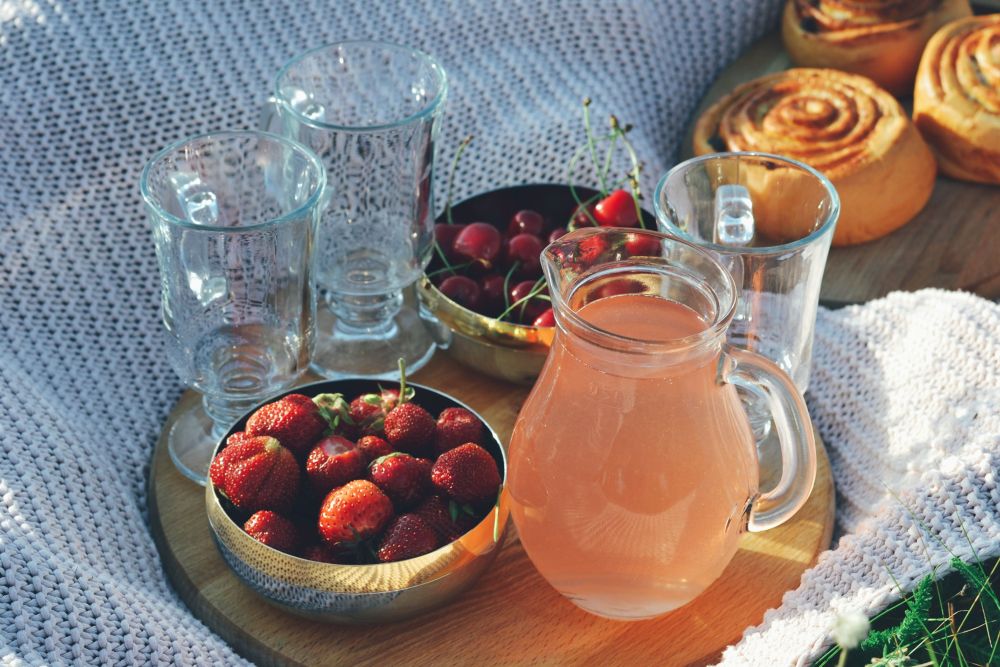
What About Soft Drinks?
Non-alcoholic drinks deserve the same thought as the wine. The principle is the same: fresh and slightly tart beats heavy and sugary.
- Elderflower cordial or presse: Works with almost everything, especially quiche, cheese, and salads.
- Cloudy apple juice: A good match for pork pie, sausage rolls and anything smoked.
- Sparkling water with lemon and mint: The best partner for rich, salty snacks, because the bubbles do the same job as sparkling wine.
- Iced tea, unsweetened: Its gentle tannin suits cold chicken and spiced food.
- Ginger beer: Stands up to strong flavours like jerk chicken and blue cheese.
- Alcohol-free sparkling wine: Lets everyone have the same drink, which matters more at a celebration than the label does.
Picnic Ideas For Couples, Families And Groups
Different occasions ask for slightly different planning. A picnic for two, a family day out, and a big group gathering each have their own quantities and a few items worth adding.
Picnic ideas for couples
Best for: a slow afternoon, minimal carrying, one very good bottle of wine
A picnic for two is the one time it is worth spending on quality rather than quantity. Keep it to a handful of food items, one very good bottle of wine, and something soft to keep you both hydrated.
- A single good cheese, a baguette and a jar of chutney
- Cured meat, olives, and a punnet of strawberries
- One bottle of English sparkling wine or dry rosé, well chilled
- A bottle of elderflower presse or sparkling water, to share alongside
- Two unbreakable glasses and a small blanket you can carry in one hand
Picnics for families
Best for: keeping everyone fed with the least possible fuss
- Pack individual portions rather than sharing platters, which cuts down on mess and arguments
- Choose food that does not need cutting up on the spot
- Bring one large jug of squash or cordial rather than lots of small bottles
- Freeze a few drinks overnight so they double as ice packs and thaw into something cold to drink
Picnics for adult gatherings and celebrations
Best for: birthdays, reunions, and any group of six or more
- You might like to ask everyone to bring one dish to share
- Bring two wine styles rather than six bottles of one, so people can choose
- Nominate one cool bag for drinks and one for food, so the food bag is not opened constantly
- Set the food out in two waves, keeping half in the cool bag until people are ready for more
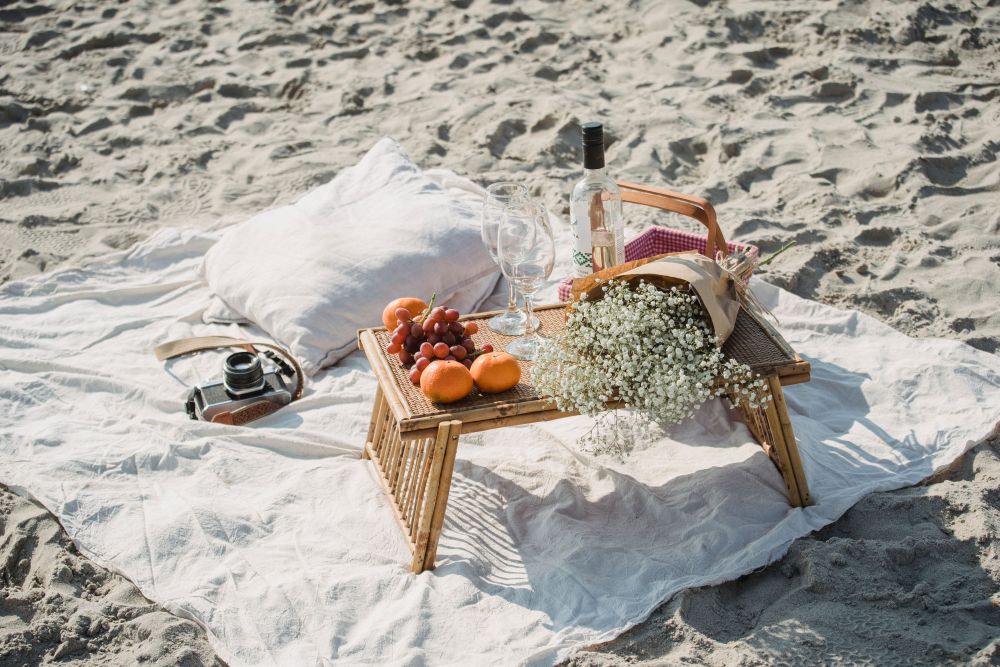
Planning a Picnic on an English Beach
A beach picnic follows all the advice above, with a few coastal extras. Sand, sun, wind and tides each ask for a little more thought than a park does, so here are some handy bits of advice.
What to pack for the beach specifically
Alongside your usual kit, a few beach additions earn their place.
- Windbreak or beach shelter: The single most useful thing at the coast, keeping sand out of the food and the wind off your drinks.
- A weighted or heavy blanket: Corners lift in sea breeze, so weigh them down with bags, shoes or a few smooth stones.
- Sealed tubs and clips: Sand gets into everything, so keep food in closed containers until the moment you eat.
- Extra water: For drinking and for rinsing sandy hands before food.
- Plenty of shade and sun protection: There is often no natural shade on a beach, so bring your own.
Keeping wine cold on the sand
Sand and sun make the beach the hardest place to keep wine cold, and the brightest place for light to spoil it. Dig a shallow hollow in damp sand, sit the cool bag in it, and drape a light towel over the top. Damp sand stays cooler than the surface, and the towel keeps direct sun off the bottle. This matters more at the beach than anywhere else, since pale rosé and sparkling wine in clear glass are the styles most affected by strong light.
Check the tide, and the barbecue rules
Before you settle in, check the tide. The RNLI advises checking tide times before heading to the coast and reading the local safety signs, so you choose a spot that will not be underwater in a couple of hours. It is easy to lose track of time over a long lunch as the sea creeps in behind you.
Barbecue rules vary a lot by beach. Many English beaches allow them, but plenty of councils ban them or limit them to certain hours, and some ban glass and alcohol outright, so it is worth a quick check with the local council first. If barbecues are allowed, common sense applies: keep it off the bare sand, which gets very hot, and douse it with seawater until cold before you leave.
What Else Is Worth Knowing Before You Go?
A few practical rules save trouble. Check the rules of the place you are going, plan for the weather, and leave the site exactly as you found it.
Check the local rules on alcohol
Drinking in a public place is not automatically illegal in the UK. The House of Commons Library explains that councils can use Public Spaces Protection Orders to restrict alcohol in a defined area, and in those areas the offence is failing to comply with a request to stop drinking or to hand over alcohol, rather than the drinking itself. Rules vary from one council to the next, so it is worth a quick check before a park picnic.
Barbecues are usually banned, and glass is discouraged
Most public green spaces welcome picnics but not barbecues. The Royal Parks in London do not permit barbecues or any fire lighting, because falling embers can spread quickly across dry grass, and they ask visitors to take litter home since glass bottles increase fire risk.
The National Trust, which cares for sites across England, Wales and Northern Ireland, takes the same line: picnics are welcome, fires and barbecues generally are not, and it is worth calling ahead to check a specific place first. Many local councils apply similar rules.
Pack for the weather you will get, not the weather you hoped for
Bring more water than seems necessary, especially if you are drinking alcohol in the sun. Take a jumper for the evening and something waterproof for the ground, since grass stays damp long after the last rain. A tarpaulin or picnic blanket with a backed underside makes a big difference.
Take everything home
Bring at least one plastic bag to collect your rubbish. Corks, bottle caps, and cling film are easy to lose in long grass, so gather them before you pack up.
Make a day of it in West Sussex
Bolney Wine Estate has been growing grapes in West Sussex since 1972, and a vineyard visit pairs rather well with a picnic on the same day. We occasionally host summer picnics on the estate, and there is always a tour and tasting if you would rather learn where the wine in your basket comes from.
Frequently Asked Questions
What is the best wine to take on a picnic?
Dry sparkling wine and dry rosé are the two most reliable picnic wines. Both are served cold, both suit a wide range of picnic food from sandwiches to charcuterie, and neither needs special glassware. An unoaked dry white such as Bacchus or Sauvignon Blanc is a good third option.
How long can picnic food safely stay out of the fridge?
Food Standards Scotland advises eating ready-to-eat food within four hours of it leaving the fridge. Keep it in a closed cool bag with ice packs until you are ready to eat, and cover it once it is out.
How do you keep a bottle of wine cold without a cool box?
Chill the bottle thoroughly overnight, then wrap it in a damp tea towel inside a bag. Evaporation keeps it cool for a surprisingly long time. Freezing two bottles of water and packing them either side of the wine works even better.
Can you take red wine on a picnic?
Yes, as long as you choose a light red with low tannin, such as Pinot Noir or Gamay, and give it twenty minutes in the cool bag before pouring. Heavy, tannic reds taste harsh and flat when they warm up in the sun.
Is it legal to drink wine in a UK park?
In most cases, yes, but it depends on the location. Councils can use Public Spaces Protection Orders to control alcohol in specific areas, and refusing a request to stop drinking or hand over alcohol in one of those areas is an offence. Check the council or park website before you go.
Sources
- Food Standards Scotland, Handling picnic food safely: the four-hour rule, cool bags versus wicker baskets, and covering food.
- Wine & Spirit Education Trust, Ideal serving temperatures and top tips for wine storage: serving temperature ranges, over-chilling below 6°C, and the ice and water bucket method.
- Wine & Spirit Education Trust, Four rules to masterful food and wine pairing: the pairing principles behind the food and wine table.
- WineGB, Industry Report 2025: 2024 production figures and the 69 per cent sparkling to 31 per cent still split.
- IVES Open Science, Investigating the impact of bottle colour, temperature and light exposure on rosé wine characteristics: clear glass combined with higher temperature as the most damaging storage condition.
- Discover, Here’s How Light Is Ruining Your Wine: aroma compound losses in flint glass bottles after light exposure.
- House of Commons Library, Alcohol: public places: how Public Spaces Protection Orders apply to drinking in public.
- The Royal Parks, Protect the parks by not using BBQs: the barbecue ban, litter guidance and glass as a fire risk.
- National Trust, Visiting and booking FAQs: picnics welcome, barbecues and fires generally not permitted, and free drinking water at its places.
- The Royal Parks, Holding picnics and gatherings policy: picnic guidance for visitors.