Account






Summer Wine Pairings: What To Drink With BBQs, Salads & Sweets
Start exploring

The best summer wine pairings match the wine to the weight and the acidity of the food, rather than to its colour. You might be familiar with the advice that white wine goes with fish and red with meat. It is a reasonable starting point, though summer food needs a little more thought, especially when cooking on a BBQ.
- Light, fresh dishes suit light, fresh wines.
- Rich, smoky, charred dishes want a little more body or more fruit.
- Sweet food wants sweeter wine.
Keep those three points in mind, and most summer meals become much easier to match with wine.
This guide covers British summer food favourites served between June and September. Barbecue plates and salads eaten in the garden, fish and chips by the sea, mezze and grilled vegetables, and a bowl of strawberries at the end. Plus, some English wine suggestions, since its high natural acidity makes it a wonderful match with dishes during the sunny season.
Jump to a section
- What Are The Basic Rules Of Summer Wine Pairing?
- What Wine Goes With Summer Starters And Nibbles?
- What Wine Goes With A British Barbecue?
- What Wine Goes With Classic British Summer Meals?
- What Wine Goes With Mediterranean And Spiced Summer Dishes?
- What Wine Goes With Summer Desserts?
- Why Does English Wine Work So Well With Summer Food?
- How Cold Should Summer Wine Be Served?
- Frequently Asked Questions
- Sources
What Are The Basic Rules Of Summer Wine Pairing?
Summer wine pairing comes down to three questions. How heavy does the wine feel next to the food? How refreshing is it? And how sweet is it? Get those three right, and you have a match.
Match the weight of the wine to the weight of the dish
Best for: deciding quickly, with no wine knowledge at all
A delicate crab salad will be flattened by a big, oaky red. A slow-cooked lamb shoulder will make a light white taste like water. To get the wine pairing just right, try to imagine the dish on a scale from light to rich, then pick a wine sitting at roughly the same point. This trick is a good rule of thumb.
Jargon explained: body
Body is how heavy a wine feels in the mouth. Skimmed milk is light bodied, double cream is full bodied. Alcohol, sugar and oak ageing all add to it.
Use acidity against fat, salt and char
Best for: barbecue, fried food, anything creamy
Think about why we squeeze lemon over fish, or splash vinegar on chips. Rich, oily, salty food starts to feel heavy after a few mouthfuls, and something sharp cuts through it and makes the next bite taste fresh again. A wine with high acidity does the same thing.
This is why sparkling wine is so good with fish and chips, and why a sharp white feels right beside grilled sardines. Summer food tends to be salty, oily or cooked over flames, so acidity earns its keep in July far more than it does in January.
Jargon explained: acidity
Acidity is the tartness that makes your mouth water, the same sensation you get from a squeeze of lemon. Wines from cooler places, including England, tend to have more of it.
Fat softens tannin, and sugar hardens it
Best for: steak, burgers, sticky glazes and sweet sauces
There is real science behind fat, sugar, and tannins.
Tannins bind to the proteins in your saliva, and when those proteins are pulled away, you feel the dry, gripping sensation known as astringency, as set out in a review of tannin research published in the journal Molecules.
Fat gets in the way of that process. In a study presented to the American Chemical Society, tasters who swallowed a spoonful of oil before tasting a tannin solution found it less astringent, with olive oil having the strongest effect and making the tannins read as fruity instead.
How does this apply to wine pairing? Fatty food makes a tannic red taste smoother and rounder. Sweet food does the opposite and makes that same red taste harder and more bitter. For example:
- Rich, fatty food: A ribeye steak, lamb chops or a mature Cheddar can all take a properly tannic red such as Cabernet Sauvignon, Malbec or a Bordeaux blend. The fat softens the grip as you eat, and the wine tastes rounder than it does on its own.
- Sweet, sticky food: Barbecue ribs, honey-glazed chicken or anything brushed with a sweet marinade will make those same wines taste hard and bitter. Choose a low-tannin, fruity red such as Gamay from Beaujolais, or an off-dry rosé.
- Lean food: Grilled white fish, prawns and leafy salads have little fat for the tannin to work on, so leave the red alone here and pour a dry white.
This is worth keeping in mind at a barbecue, where delicious sticky glazes turn up on almost everything.
Jargon explained: tannin
Tannin comes from grape skins, seeds and oak barrels. It is the drying, mouth-puckering feel you also get from strong stewed tea. Red wines have it, white wines have very little.
Worth knowing: reading a wine label
European labels usually name the place, so a bottle says Chablis or Rioja and expects you to know the grape. Labels from England, Australia, New Zealand and the Americas usually name the grape instead.
New to all of this? Our beginner’s guide to food and wine pairing works through the principles slowly, and the spring wine pairing guide covers the earlier end of the year.
What Wine Goes With Summer Starters And Nibbles?
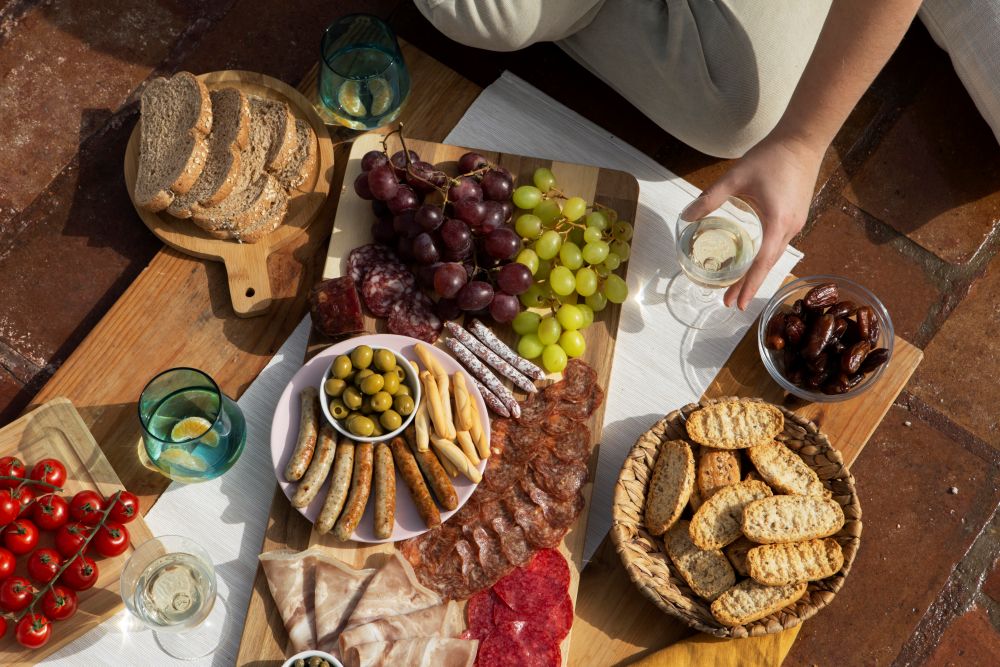
Summer starters want high acidity and low alcohol. Most of them are salty, sharp, herby, or creamy, and all four respond well to a dry white with high acidity, a dry rosé, or a glass of sparkling wine.
Here is a quick reference for the starters that turn up most often:
| Pair with | Why it works | |
|---|---|---|
| Smoked salmon blinis | English sparkling wine | Bubbles and acidity cut the oil and the crème fraîche |
| Goat’s cheese and beetroot salad | Bacchus or Sauvignon Blanc | Herbaceous, citrusy whites echo the tang of fresh goat’s cheese |
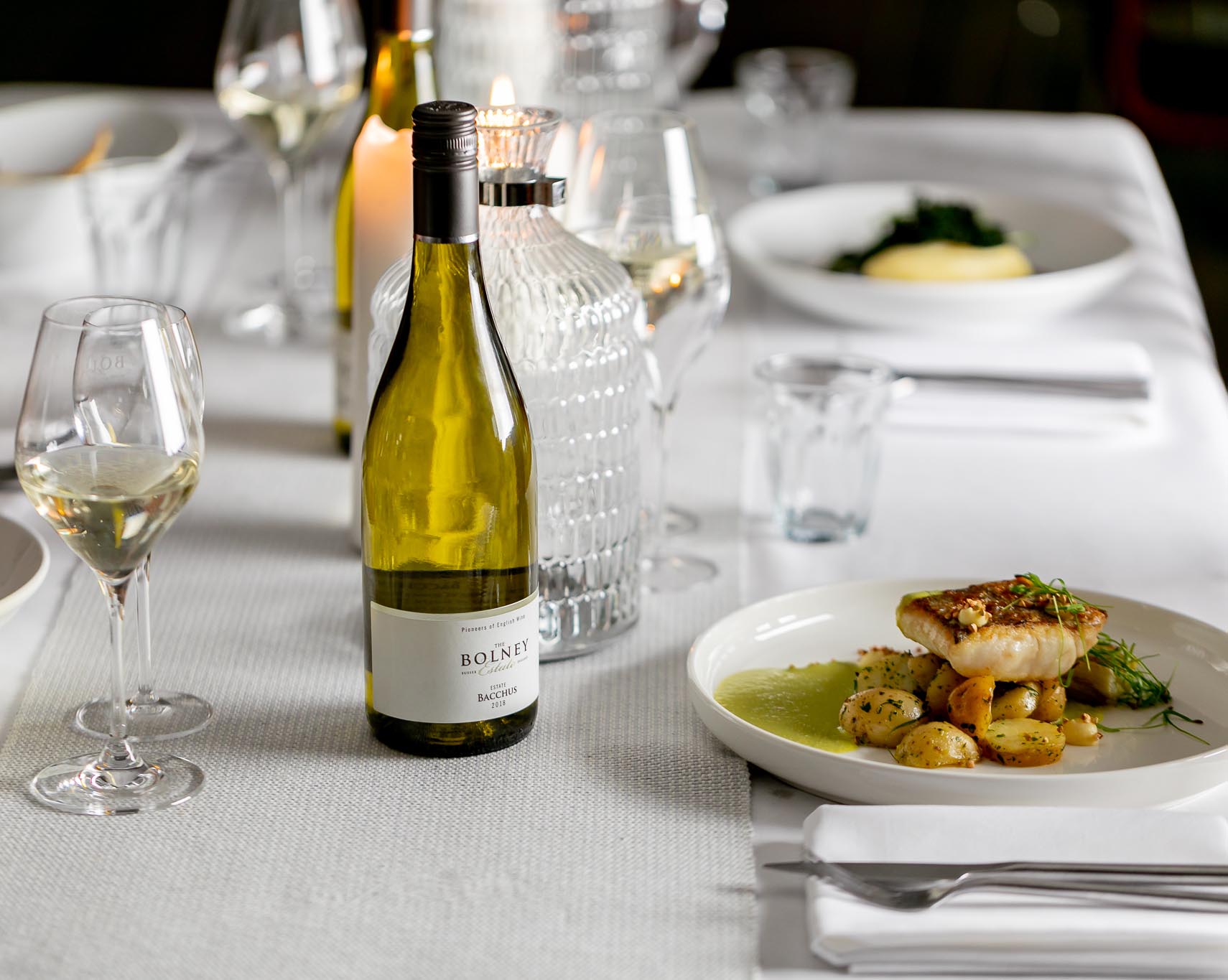
| Asparagus with hollandaise | Dry English white | Asparagus is famously awkward, and a grassy, high-acid white meets it halfway |
| Prawn cocktail | Dry rosé | The light red-fruit character handles the tomato in the sauce |
| Melon and prosciutto | Off-dry white or sparkling rosé | A touch of sweetness in the wine keeps pace with the melon |
| Gazpacho | Pale, dry rosé | Raw tomato is very acidic, so the wine needs matching acidity |
Jargon explained: off-dry
Off-dry means a wine with a small amount of sweetness left in it. Not a pudding wine, just enough sugar to round off the edges.
Putting out a cheese board instead? Cheese has its own logic, and our wine and cheese pairing guide goes through it style by style.
Something to sip before the food arrives
Best for: the hour before you eat, while the barbecue heats up
If you would like something a little different to start the evening, vermouth is a top choice. It is a wine base flavoured with botanicals, lower in alcohol than a spirit, and its bittersweet, herbal edge wakes up the appetite. A rosso vermouth over plenty of ice with soda and a slice of orange is one of the easiest summer drinks to put together, and it sits happily beside olives, salted almonds and charcuterie.
If the category is new to you, our guides to what vermouth is and how to enjoy vermouth are a friendly introduction.

What Wine Goes With A British Barbecue?
For a British barbecue, a chilled dry rosé and a light, fruity red will cover almost the whole table. Barbecue food is smoky, salty and often sticky, and those three qualities matter more than what type of meat is on the grill.
Burgers, steak and lamb
Best for: a red wine drinker’s barbecue
Fatty red meat is the one place where a heavily tannic red earns its keep, because the fat softens the tannin as you eat.
- Beef burgers: A medium-bodied red such as Merlot, Rioja or an English Pinot Noir served lightly chilled.
- Steak: Cabernet Sauvignon or Malbec, the classic answer, and one worth the extra glass on a warm evening.
- Lamb kebabs and koftas: Syrah from the Northern Rhône, where the peppery character meets the spice rub.
- Sausages: Lighter, juicier reds like Gamay, or a dry rosé if the sun is out.
Sticky glazes, marinades and barbecue sauce
Best for: sticky ribs, barbecue chicken thighs, honey-glazed anything
This is the one that catches most people out, and it is an easy fix. Sweet sauce makes a dry, tannic red taste harsh, so a big Cabernet has a hard time next to a rack of sticky ribs. Reach instead for a fruit-forward red with soft tannin, or an off-dry rosé with a little sweetness of its own to keep pace.
If you make your own marinade, wine is a useful ingredient in it as well as alongside it. Our guide to cooking with wine covers what to use and what to keep for the glass.
Fish, halloumi and vegetable skewers
Best for: the half of the grill that is not meat
- Grilled mackerel or sardines: A high-acidity English white, where the acidity handles the oiliness of the fish.
- King prawns with garlic and chilli: English sparkling wine, or a dry rosé.
- Halloumi skewers: Bacchus or another aromatic white, because halloumi is salty and squeaky and wants something sharp.
- Charred peppers, courgette and aubergine: Dry rosé, which sits neatly between the smoke and the sweetness of the vegetables.
Worth knowing: chilling red wine
Light and medium reds are far happier with barbecue food after twenty minutes in the fridge. A British summer garden is usually warmer than any cellar, and a little chill keeps the wine fresh rather than heavy.
What Wine Goes With Classic British Summer Meals?
Traditional British summer food is lighter and less spiced than most people assume, so it pairs best with sparkling wine, light-bodied dry whites and dry rosé. Cream, pastry and vinegar are the recurring characters, and all three want acidity.
Fish and chips
Best for: the seaside, and anyone who doubts this combination works
Sparkling wine with fish and chips sounds unlikely, and it is one of the great summer pairings. Batter is fat and salt, and sparkling wine brings acidity plus carbonation, which together cleanse the palate between mouthfuls. English sparkling wine has the acidity for it in abundance. Our sparkling wine guide explains the different styles in more detail.
Poached salmon, new potatoes and dill
Best for: a summer lunch that needs no thought
Salmon sits neatly in the middle of the weight scale, which makes it one of the friendliest things to pair. An unoaked Chardonnay such as Chablis, a dry English rosé, or a chilled Pinot Noir from England or Burgundy all work. Salmon with a creamy sauce leans towards the Chardonnay, and salmon straight off the grill leans towards the Pinot Noir.
Ploughman’s, pork pie and pickle
Best for: pub gardens and picnic blankets
Pickle and chutney are sharp and sweet at the same time, which asks a lot of a wine. Sparkling wine copes beautifully, and so does an off-dry white. Mature Cheddar is happy with a fuller red, though pickle alongside it will struggle with heavy tannin, so keep it soft.
Coronation chicken and picnic salads
Best for: buffets, christenings and long garden lunches
Coronation chicken is creamy, mildly spiced and slightly sweet from the mango chutney. An off-dry German Riesling handles all three at once, since the small amount of sugar meets the chutney and the acidity cuts the mayonnaise. A fruity dry rosé is a lovely choice too, and tends to please a whole table.
Pro tip for hosts
Catering for a mixed table is easier with one sparkling, one white, one rosé and one light red on hand. A mixed wine case is a tidy way to cover a dinner party or a garden gathering without over-buying a single style.
For a bigger group, a magnum is worth considering. One large bottle serves twelve glasses, it stays cold longer than two standard bottles, and it makes a lovely centrepiece on a long table.
What Wine Goes With Mediterranean And Spiced Summer Dishes?
Mediterranean summer food generally wants dry rosé or a crisp, unoaked white, while spiced dishes want a low-alcohol wine with a touch of sweetness. Tomato, olive oil, lemon and herbs run through most of these dishes, and chilli changes the rules completely.
Greek, Spanish and Italian plates
Best for: long, slow, sharing-plate dinners
- Greek salad and grilled octopus: Dry rosé or Assyrtiko, both of which have the acidity for raw tomato and feta.
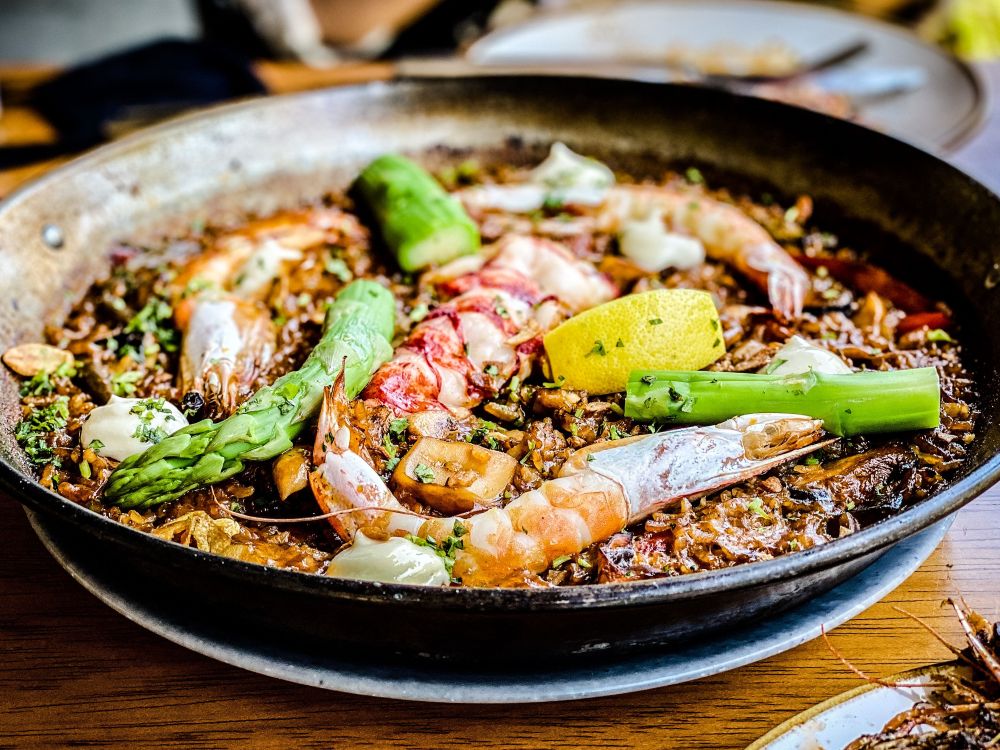
- Seafood paella: Albariño or an unoaked English white, with saline, citrus character to match the shellfish.
- Tapas and charcuterie: Chilled dry rosé, or a light Spanish red served cool.
- Moussaka or aubergine parmigiana: A medium red with soft tannin, since these are rich but not heavy.
- Mezze, hummus and flatbreads: An aromatic white, which copes with lemon, tahini and herbs together.
Why is rosé the wine of the Mediterranean summer?
Almost all of the pale, dry rosé on shop shelves today is modelled on the style made in Provence, in the south of France. It is light in colour, dry rather than sweet, and tastes of fresh red fruit and herbs. That combination is why rosé handles tomatoes, olive oil and grilled vegetables so well, and why it turns up on every table across the Mediterranean in summer.
Provence has built its whole identity around it. The region gives over 91% of its vineyards to rosé and made 134 million bottles of it in 2024 under its official appellation rules, according to the Provence wine council. Rosé as a whole now makes up roughly 9% of all the wine produced in the world, or about 2.3 billion litres a year, based on figures from the International Organisation of Vine and Wine.
English rosé tends to be a little brighter and more red-fruited than the Provence style, which is worth knowing when you are choosing between them. We compare the two in English rosé versus Provence rosé, and if you have ever been told that pink wine is sweet or not serious, our piece on five rosé myths will help you out.
Chilli, curry and anything with real heat
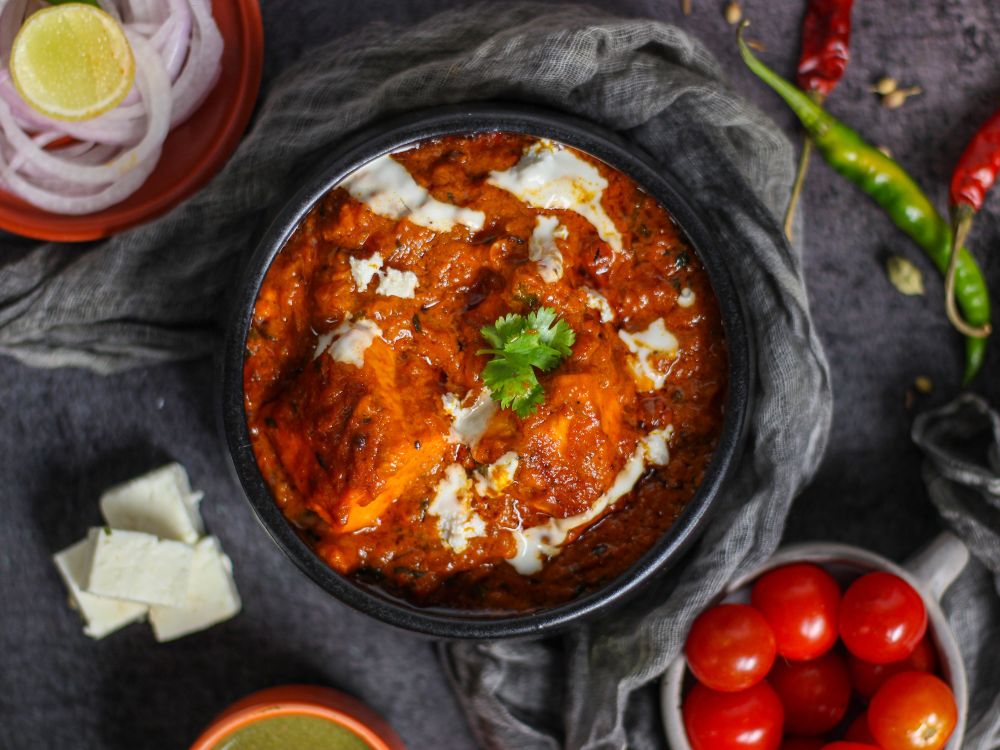
Best for: Thai salads, harissa lamb, jerk chicken, hot sauce
Alcohol makes chilli heat feel hotter, and that is measurable rather than folklore. Capsaicin, the compound behind chilli burn, acts on a receptor called TRPV1, and research published in The Journal of Physiology found that ethanol lowered that receptor’s heat activation threshold from 42°C to around 34°C, close to the temperature of the tongue itself. So, a high-alcohol red with a hot curry is working against you.
With spicy food, look for:
- Lower alcohol: Around 11% to 12.5% rather than 14.5%.
- A little sweetness: Off-dry German Riesling and demi-sec sparkling both soothe rather than sharpen.
- Low tannin: Tannin plus chilli heat is an unpleasant combination for most palates.
- Serve it cold: A colder wine dulls the burn.
Jargon explained: ABV
ABV stands for alcohol by volume, the percentage printed on every label. Most English still wines sit around 11% to 12.5%, which is lower than many warm-climate wines.
What Wine Goes With Summer Desserts?
There is really only one thing to remember with pudding: the wine should be at least as sweet as the dessert. Sugar in food makes wine taste drier, thinner and more acidic, so a dry wine beside a sweet dessert can come across as sour and hollow.
Summer puddings and the wines that suit them:
| Pair with | Why it works | |
|---|---|---|
| Strawberries and cream | Demi-sec sparkling or sparkling rosé | Red-fruit character mirrors the strawberries, and the sweetness matches the cream |
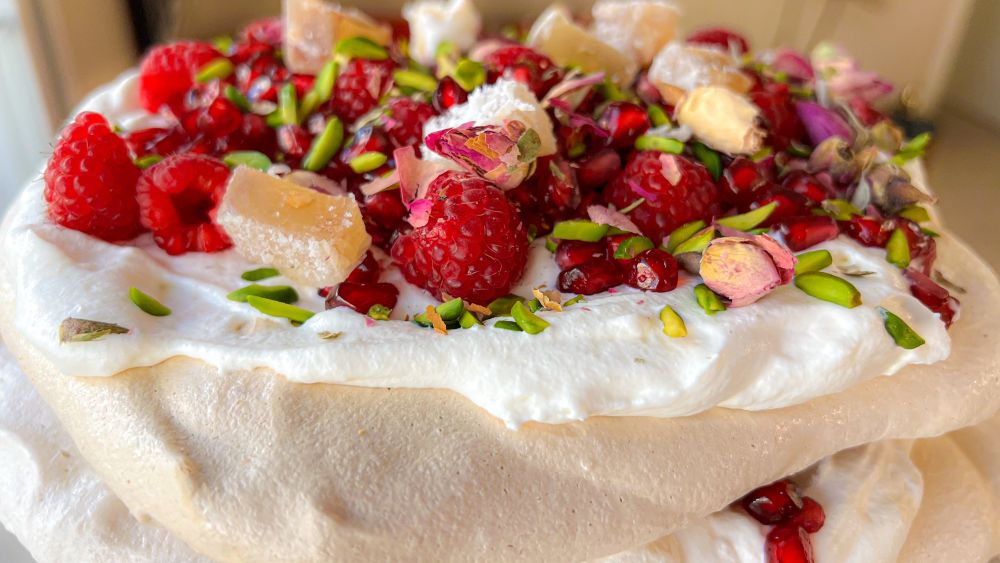
| Eton mess or pavlova | Moscato or late-harvest white | Meringue is very sweet, so the wine needs plenty of sugar of its own |
| Lemon tart | Sweet German Riesling or Sauternes | High acidity in the wine keeps up with the citrus rather than being flattened by it |
| Peach or apricot tart | Late-harvest white | Stone-fruit flavours in the wine echo the fruit in the tart |
| Banoffee pie | Tawny Port or Pedro Ximénez sherry | Nutty caramel flavours in the wine mirror the toffee, and both are sweet enough to cope with condensed milk |
| Dark chocolate torte | Fortified red such as Port | Only a sweet, weighty wine survives next to bitter chocolate |
| Fresh fruit salad | Off-dry sparkling | Light enough not to bury the fruit, sweet enough not to taste sour |
Jargon explained: demi-sec
Demi-sec is a sweetness level used for sparkling wine. Confusingly, the driest style is called brut and demi-sec is noticeably sweeter, which is what makes it a pudding wine.
Why Does English Wine Work So Well With Summer Food?
English wine suits summer food because a cool climate produces grapes with high natural acidity, and acidity is the single most useful quality in a food wine. It cuts fat, lifts salt and refreshes the palate, which is exactly what barbecue, fried fish and creamy salads need.
England sits close to the northern limit of where grapes will ripen at all. For food pairing, that turns out to be a real advantage. Grapes grown in cooler conditions ripen slowly, so they hold on to more of their natural acidity and build up less sugar, and the finished wines come out fresher and lighter in alcohol.
The figures help to show how this works. The WineGB harvest report measured tartaric acid, the main natural acid in grapes, at 10.22 grams per litre across the 2025 British harvest, close to the ten-year average of 10.47. It also put average potential alcohol, meaning the strength the sugar in those grapes would produce, at 10.48%.
That means English wine tends to be bright and mouth-watering at a gentler strength than most warm-climate bottles, which is just what you want across a long summer lunch.
How English wines taste:
- Whites: Citrus, green apple, elderflower and a grassy, hedgerow note, dry and sharply refreshing.
- Sparkling: Green apple and lemon when young, moving towards bread and pastry flavours with age on the lees.
- Rosé: Pale and dry with high acidity, showing redcurrant and strawberry rather than jammy fruit.
- Reds: Lighter-bodied with soft tannin and red-berry fruit, closer to a cool-climate Pinot Noir than a big Cabernet.
How English sparkling wine is made
Best for: understanding why the bubbles feel finer
Most quality English sparkling wine is made by the traditional method, the same process used in Champagne. The base wine goes into the bottle with a little yeast and sugar, ferments a second time inside that sealed bottle, then rests on the spent yeast cells for months or years. That second stage is what produces fine, persistent bubbles and the savoury, bready character that sets it apart from tank-made fizz.
Jargon explained: lees
Lees are the spent yeast cells left behind after fermentation. Leaving a wine to rest on them adds texture and flavours of bread, brioche and toasted nuts.
Jargon explained: traditional method
The traditional method means the second fermentation, the one that creates the bubbles, happens inside the individual bottle rather than in a large tank. It takes longer and costs more, and it is the reason the bubbles feel finer.
Bacchus, the English grape to know
Best for: salads, goat’s cheese, seafood, halloumi
Bacchus is a white grape created in Germany in the 1930s from a crossing of Silvaner, Riesling and Müller-Thurgau, and it is now one of the most widely planted varieties in the UK.
The IWSC notes that England’s cooler climate and shorter growing season give Bacchus lower yields, fresher aromatics and higher acidity than it achieves in Germany, often putting people in mind of Sauvignon Blanc. Expect elderflower, citrus, green orchard fruit and a herbaceous edge, per Vineyard Magazine.
Suggestions for which wine to pair with your English summer dishes:
- English sparkling wine: Starters, fried food, salty nibbles, and welcoming people as they arrive.
- English white wine: Salads, seafood, grilled vegetables and soft cheese.
- English rosé wine: The barbecue all-rounder, from prawns to sausages.
- English red wine: Lighter in style, so serve it cool with burgers, salmon or charcuterie.
How Cold Should Summer Wine Be Served?
Sparkling wine is best served well chilled at 6°C to 10°C, and light whites a little above that. Temperature is the easiest thing to overlook in summer, and it shapes how a wine tastes more than most of us realise. Too warm and a wine turns dull and alcoholic. Too cold and its aromas go into hiding.
| Type of wine | Serving temperature | Rough guide |
|---|---|---|
| Sparkling wine | 6°C to 10°C | Three hours in the fridge, or 25 minutes in ice and water |
| Light whites and rosé | 7°C to 10°C | Straight from the fridge |
| Fuller whites | 10°C to 13°C | Out of the fridge 15 minutes before pouring |
| Light reds | 12°C to 14°C | 20 to 30 minutes in the fridge first |
| Fuller reds | 15°C to 18°C | Cooler than most British homes on a warm August evening |
Decanter’s advice on white wine notes that youthful, aromatic wines with high acidity show best at the cooler end of the range, because low temperatures emphasise their freshness. Outdoors, an ice bucket half filled with ice and half with water is far more effective than ice alone, and it keeps the bottle steady through a long lunch.
Taste English wine where it grows
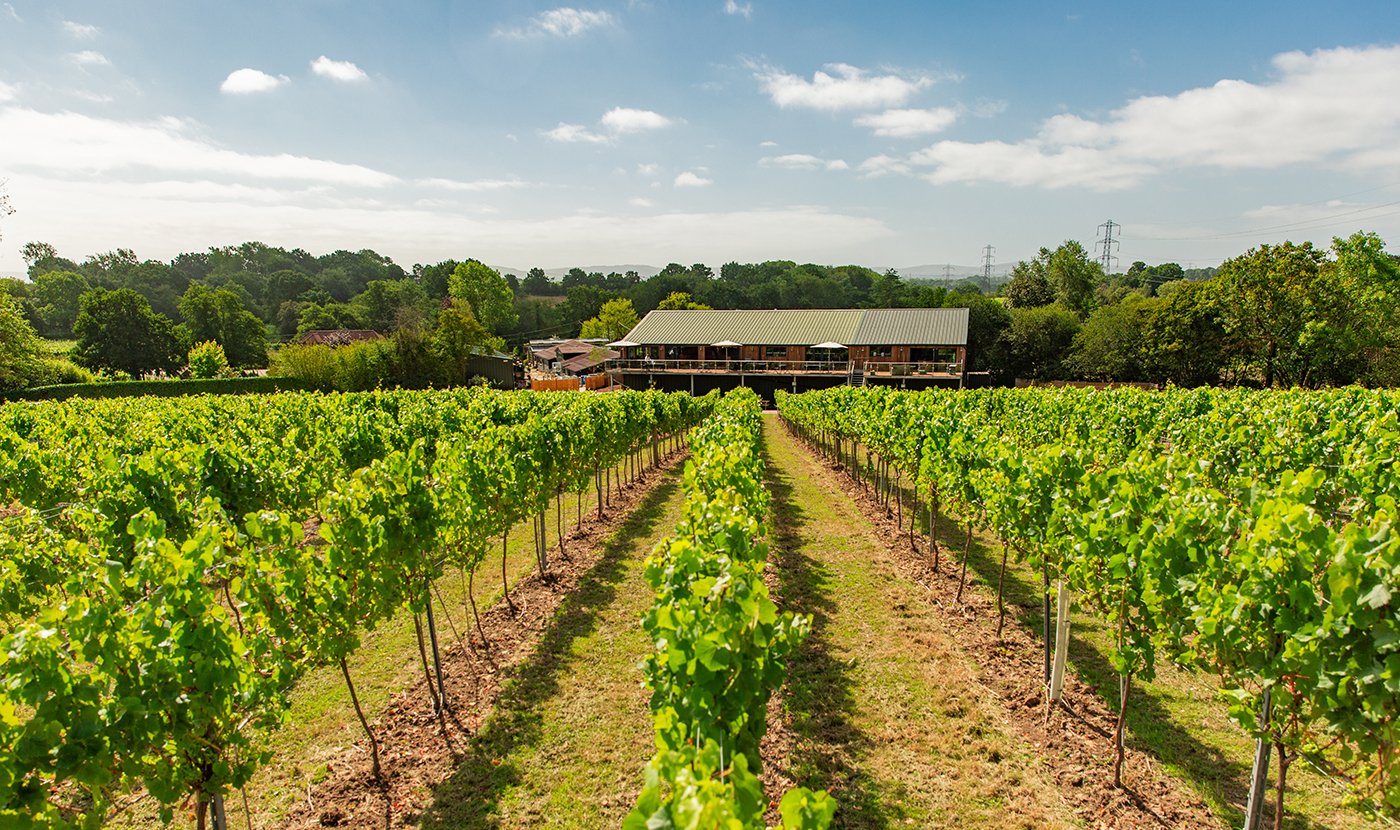
Walk through a lush vineyard, see how the wine is made, and enjoy a tasting. Bolney Wine Estate has been growing grapes in West Sussex since 1972, and tours and tastings run all summer.
Frequently Asked Questions
What is the best all-round wine for a summer barbecue?
A chilled dry rosé is the best single choice for a summer barbecue. It has enough acidity for grilled fish, halloumi and salads, and enough red-fruit character for sausages, burgers and charred vegetables. If you want two bottles rather than one, add a light, fruity red served lightly chilled.
Can you drink red wine in summer?
Yes, and it is well worth doing. Choose lighter reds with low tannin, such as Pinot Noir or Gamay, and serve them at around 12°C to 14°C rather than at room temperature. Twenty to thirty minutes in the fridge is usually enough. It is warmth rather than the wine itself that makes red feel out of place in summer.
What wine goes with strawberries and cream?
A demi-sec sparkling wine or a sparkling rosé pairs best with strawberries and cream. Both bring red-fruit flavours that echo the strawberries and enough sweetness to sit alongside the cream. A bone-dry sparkling wine will taste sharp and hollow by comparison.
Why does wine make spicy food taste hotter?
Alcohol increases the perception of chilli heat. Capsaicin triggers a heat-sensing receptor called TRPV1, and ethanol lowers the temperature at which that receptor fires, from around 42°C to around 34°C. With spicy food, choose a lower-alcohol wine with a touch of sweetness and little or no tannin.
Which English wine should a beginner try first in summer?
Bacchus is the easiest starting point. It is England’s best-known white grape, dry and aromatic with citrus, elderflower and a grassy edge, and it is often compared to Sauvignon Blanc. It suits salads, seafood, goat’s cheese and grilled vegetables. English sparkling wine is the other obvious first step, particularly with anything salty or fried.
Sources
- WineGB, 2025 Harvest Report announcement: UK harvest conditions and grape variety yields
- IWSC, Bacchus: England’s answer to Sauvignon Blanc: Bacchus origins, planting and cool-climate character
- Vineyard Magazine, Bacchus: typical flavour profile of English Bacchus
- McRae and Kennedy, Molecules (2011): how tannins bind salivary proteins to create astringency
- American Chemical Society research on dietary fats and grape tannins: oil reduces perceived astringency in tasting trials
- The Journal of Physiology, The Salty and Burning Taste of Capsaicin: ethanol lowers the TRPV1 heat activation threshold
- Decanter, white wine serving temperature: sparkling and white wine serving ranges
- Vins de Provence, Intro to Rosé: Provence rosé production volume and vineyard share
- ProWein, rosé wine production and styles: OIV global rosé production figures

What Happens At An English Vineyard In Summer?
As life begins to return to normal and our estate is filled with the sounds of glasses clinking, bottles popping and people enjoying themselves, you may notice that our vineyard is a hive of activity. The team have been busy caring for our vines after a frosty start to the year, ensuring that they are ready for our harvest season.