Account






15 Reasons To Visit An English Vineyard This Summer
Start exploring

Summer is the most impressive time of year to visit an English vineyard. The vines are in full leaf, the grapes are swelling on the bunch, and almost every vineyard open to the public runs its fullest programme of tours and tastings between June and September. Best of all, you do not need to know a single thing about wine to have a wonderful day.
Here is the quick version, if you are deciding what to do this weekend:
- There are far more vineyards than most people think: More than 1,150 were registered in 2025 across the UK, and hundreds welcome visitors (Food Standards Agency).
- Summer is when the vineyard is putting on a show: Flowering, fruit set and the first blush of colour in the grapes all happen between June and August.
- English wine has arrived: The UK produced the equivalent of more than 16.5 million bottles in 2025 and had its strongest ever showing at the world’s biggest wine competition in 2026 (Decanter).
- Beginners are the point, not a problem: Most tours are built for people who are a total wine beginner.
So pull on some comfortable shoes. Here are 15 reasons to spend a summer’s day in an English vineyard.
Jump to a section
- Why Is Summer The Best Time To Visit An English Vineyard?
- What Can You See Happening In The Vines In Summer?
- What Do You Learn On A Vineyard Tour And Tasting?
- Why Is English Wine Worth Tasting Where It Is Made?
- What Else Is There To Do At An English Vineyard?
- How Do You Plan A Vineyard Visit This Summer?
- Frequently Asked Questions
- Sources
Why Is Summer The Best Time To Visit An English Vineyard?
Summer is the best time to visit an English vineyard because the growing season is at its peak, the countryside looks glorious, and opening hours and events are at their most generous. A winter visit has its own quiet charm, but the vines are bare, and many estates run a shorter timetable.
1. The vineyard is at its most alive
Best for: first-time visitors and photographs
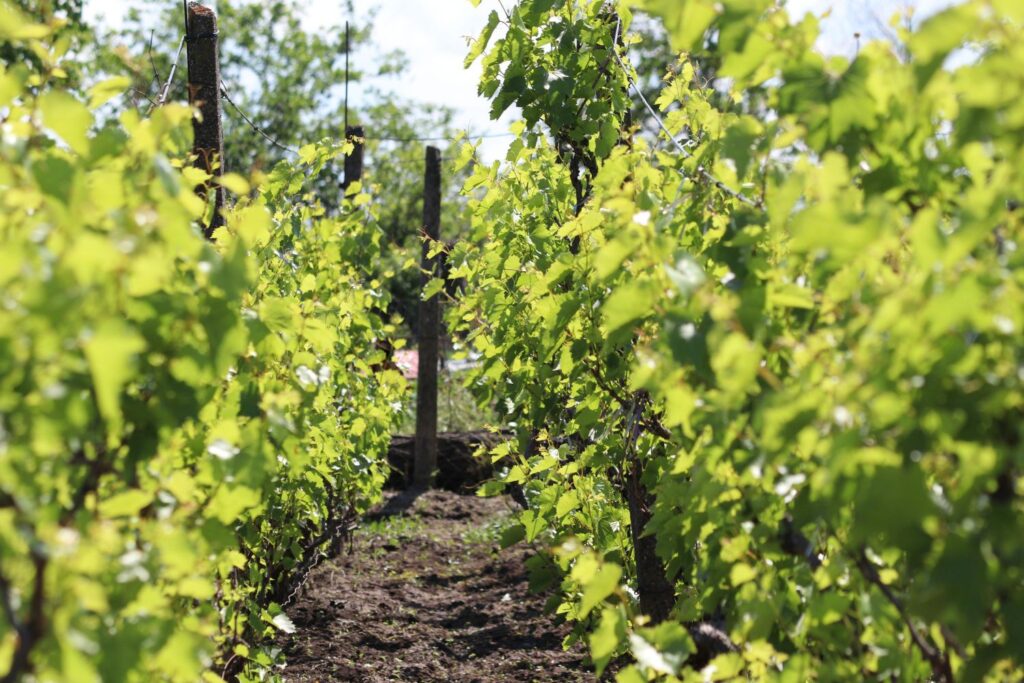
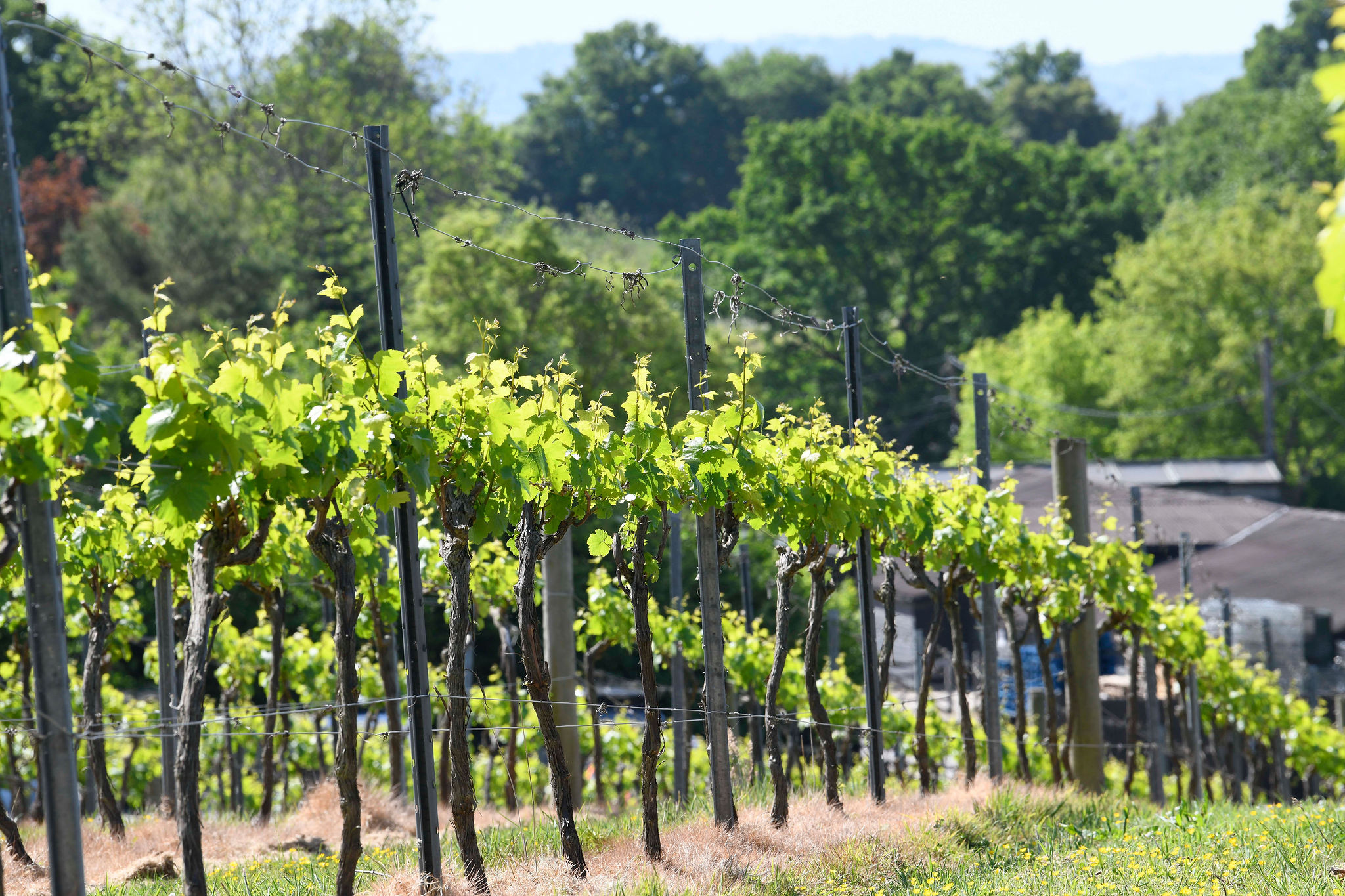
From June to August, the vineyards are lush and green, the leaf canopy is thick, and ripening bunches of grapes are getting ready for harvest. It is the most rewarding time of year to walk through an English vineyard. You get close enough to smell the warm leaves and see how the canopy is trained to shelter the fruit.
Look a little closer, and there are small things to spot that are easy to miss from the edge of the row:
- The bloom on the skins: A fine white coating that forms naturally to protect each grape as it ripens.
- Curling tendrils: The vine grips the wire with these to hold itself up as the fruit gets heavier.
- Uneven ripening: Bunches on the sunnier side of the row run slightly ahead of the rest.
It is also the best time of year for photographs, with the rows at their fullest and the light lasting well into the evening.
2. English vineyards are an exhilarating outdoor day out, and the weather plays along
Best for: groups, families and anyone who fancies a walk
Almost every tour starts outdoors, with a walk through the rows before you taste a drop. Luckily, that works in your favour, because vineyards are planted where the weather is kindest. Kent, Sussex and Essex have the largest wine grape plantings in the country, according to the ICAEW industry profile, since the southeast is the warmest and driest corner of England. Grapes want the same summer you do!
3. Summer is when vineyards pull out all the stops
Best for: people who want more than a standard tour
Those long, light summer evenings unlock things a wintry February afternoon simply cannot. The season fills up quickly from May onwards with exciting events:
- May and June: The vines flower, and Father’s Day brings one of the busiest weekends of the year for tours and long lunches.
- Late June: English Wine Week fills the calendar with one-off tastings, open days and blending sessions.
- July and August: Sunset tastings, picnics on the grass, outdoor dining and live music, with the grapes colouring up in the background.
Jargon explained: cellar door
The cellar door is the shop and tasting room at the vineyard itself, where wine is sold straight to visitors instead of going through a shop or supermarket.
What Can You See Happening In The Vines In Summer?
In summer, you can watch three of the four big moments in a grapevine’s year: flowering, fruit set, and the start of ripening. Only harvest sits outside the summer window in England, usually landing from late September into October.
4. Flowering, the fortnight that decides everything
Best for: visits in June
Grapevine flowers are tiny, pale green and easy to walk straight past. They are also the most important thing in the vineyard for two weeks. Cool, wet weather during flowering thins out the crop, which is a big part of why English vintages swing so much from one year to the next.
Ask your guide how flowering went this year. It only lasts two weeks, but it decides how many grapes they get, so they will have plenty to say about it!
Jargon explained: fruit set
Fruit set is the stage right after flowering, when the pollinated flowers turn into little hard green berries. Those berries grow into the grapes.
5. Veraison, the moment the grapes turn
Best for: visits from mid-July into August
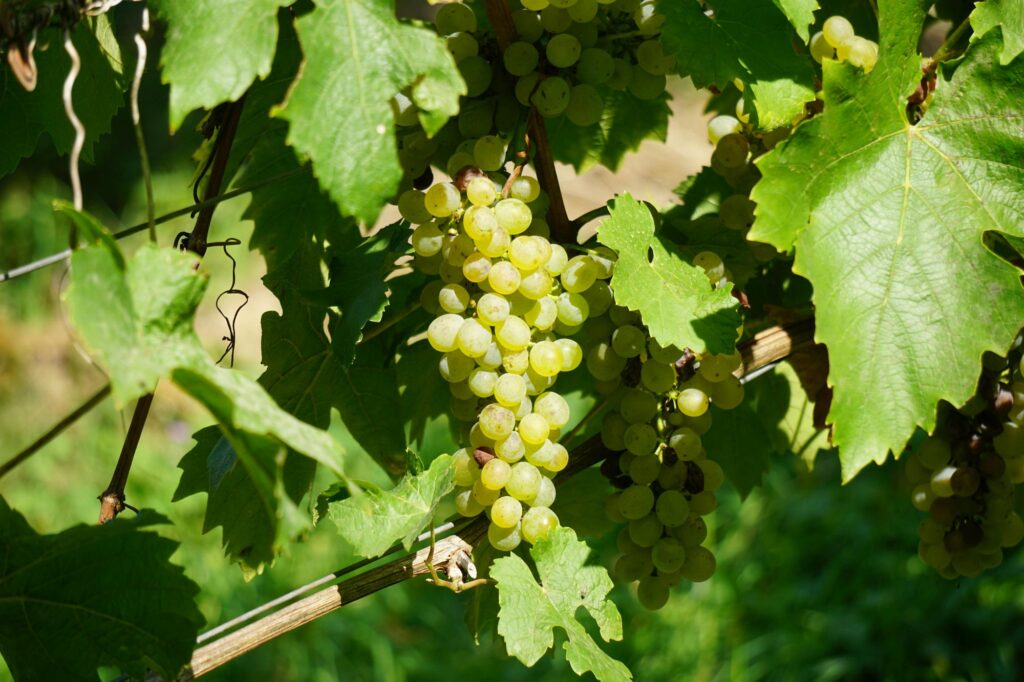
This is the one to catch. From around late July in the northern hemisphere, red varieties shift from green to pink to deep purple and white varieties turn translucent and golden.
Wine Enthusiast describes it as both a physical and chemical transformation, with the berries softening and roughly doubling in size as sugar floods in. It happens unevenly across a bunch, so you get these lovely mottled clusters of green and purple sitting side by side. Wine Folly reckons it takes another 30 to 70 days from there to a finished, ready-to-pick grape.
Jargon explained: veraison
Veraison is the point when grapes soften and change colour, marking the start of ripening. Say it “ver-ay-zon” and nobody will bat an eyelid.
6. You see the work nobody thinks about
Best for: anyone curious about how farming and wine connect
Summer is the busiest stretch of the year for a vineyard team. They are tucking shoots into wires by hand, trimming the canopy, pulling leaves away from the fruit so air can move through, and sometimes dropping perfectly good bunches on the ground so the remaining ones ripen better.
Meanwhile, the winery is quietly bottling, blending, and preparing for harvest. There is a lot going on, and summer in an English vineyard is far busier than it looks from the footpath.
Jargon explained: canopy management
Canopy management means shaping the leaves and shoots of the vine so sunlight and fresh air reach the grapes. It keeps disease down and ripening even.
What Do You Learn On A Vineyard Tour And Tasting?
A tour and tasting show you how grapes become wine, why two bottles from the same field can taste so different, and how to taste properly. None of it requires prior knowledge, and good guides will explain everything clearly for you.
7. You find out how wine becomes fizzy
Best for: anyone who drinks fizz and has never wondered how
Sparkling wine is what England does best, and the top tier is made by the traditional method, in which a second fermentation occurs inside the sealed bottle, and the wine then rests for months on its lees.
The Sussex rules require sparkling wine to rest for a minimum of 15 months in the bottle. Most tours take you into the cellar to see it. Thousands of bottles are stacked to the ceiling, tipped nose-down so the used yeast slides into the neck, ready to be removed before the wine is sold.
The story of who invented sparkling wine has a few surprises, too, and an English chapter of history most people don’t know.
Jargon explained: lees
Lees are the spent yeast cells left over after fermentation. Letting the wine rest on them adds a soft texture and those lovely bready, biscuity notes.
8. You learn to taste
Best for: complete beginners
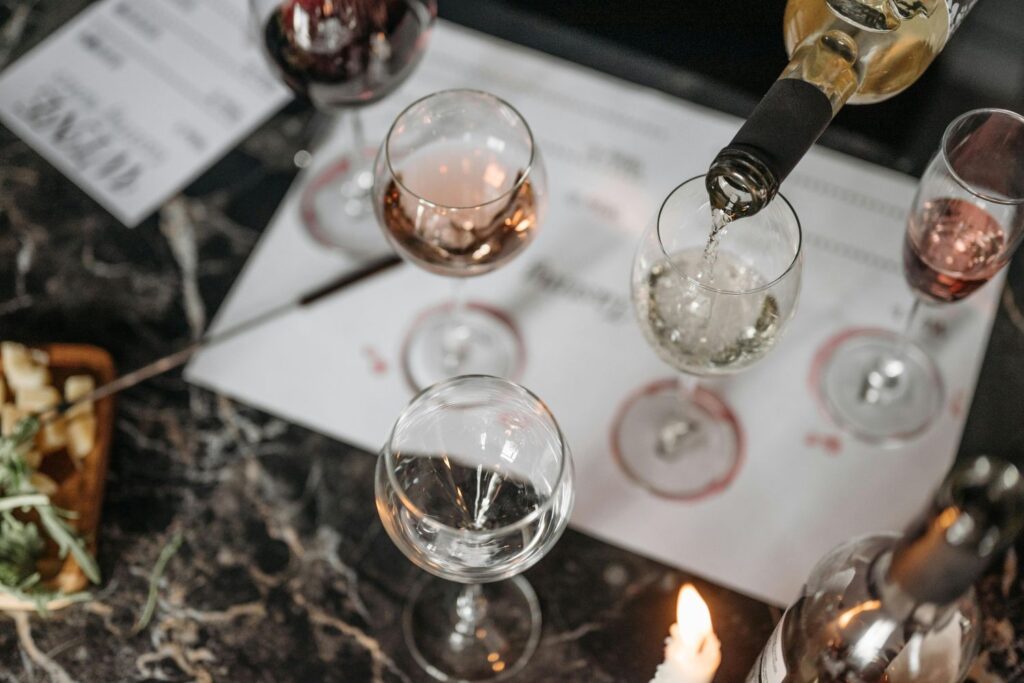
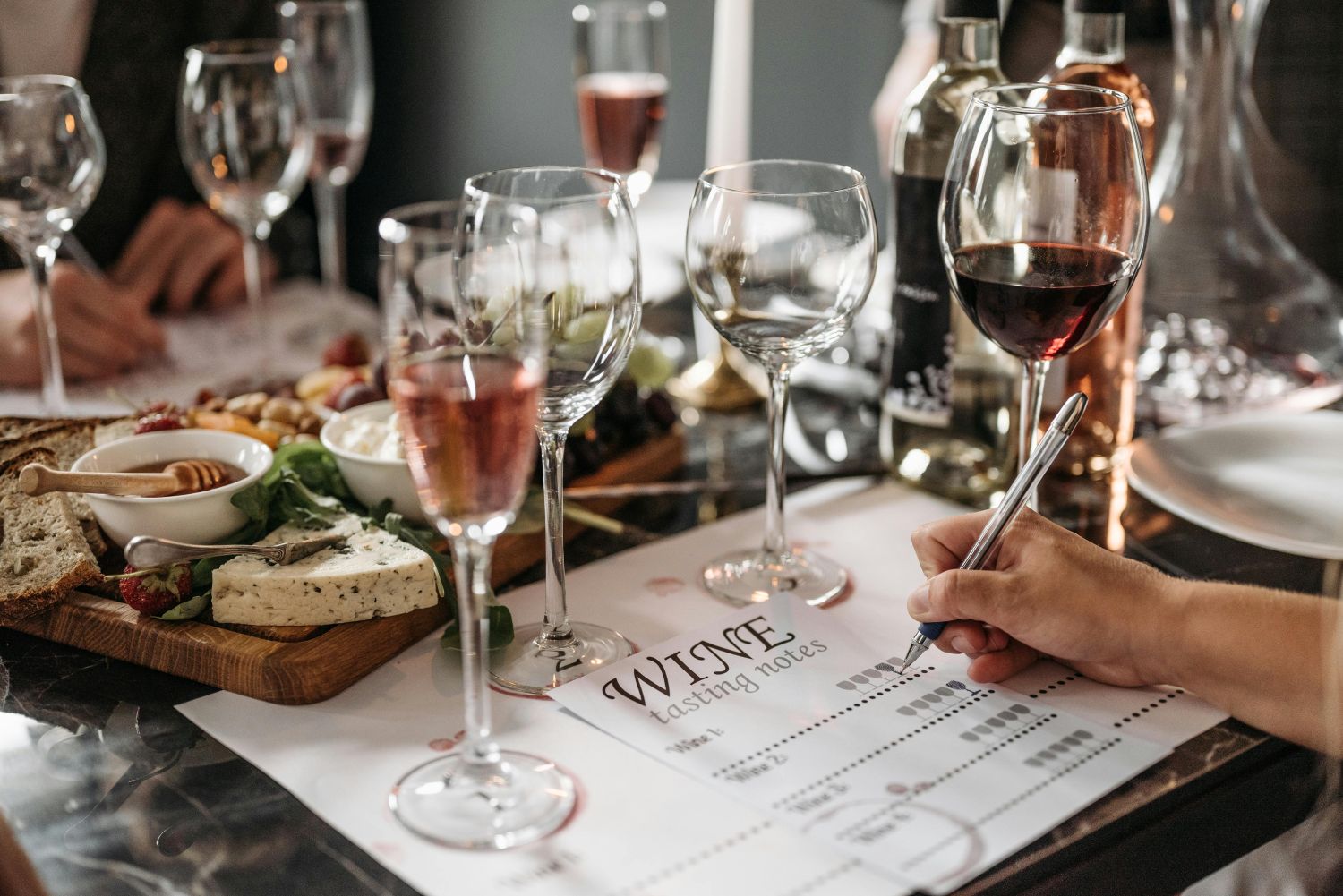
A guided tasting hands you a simple method you can use for the rest of your life, in any restaurant, with any bottle:
- Look: Colour hints at age and grape variety.
- Smell: Most of what you think you are tasting is smell, so take your time.
- Sip: Notice the sweetness, the acidity, and how long the flavour hangs around.
- Decide: The only question that matters is what you like, not what you are supposed to like.
If you would rather know what a wine tasting involves before you turn up, it is worth a read. There is also plenty of practical advice for your first wine tasting, right down to how much to eat beforehand and what to do with the spittoon.
9. You can speak with the winemakers themselves
Best for: people with questions they feel silly asking in a shop
Sometimes your guide is one of the team who tends the vines or makes the wine. Either way, they know the place inside out, so ask them anything you like. Guides, viticulturists and winemakers are usually around, and they will happily talk about why they planted what they planted, what the frost did in April, and how growing grapes in England differs from anywhere else.
English wine also has a rather good backstory, including the two women who helped shape the modern industry. Go midweek, and the groups are smaller, which usually means more time to chat.
Why Is English Wine Worth Tasting Where It Is Made?
English wine is worth tasting at the source. The industry is young and moving fast, and while British supermarkets may carry an estate’s best-known bottles, the vineyard is where you’ll find their whole range. From single-vineyard wines, cellar door exclusives, and older vintages given years to mature and develop complex flavours.
10. You are watching a wine region being born
Best for: anyone who likes a good story behind what they drink
It still catches people out that England grows wine at all, and catches them out twice over when they taste how good it has become. The pace of change is hard to grasp. Decanter points out that in 2005 the UK had fewer than 800 hectares of vines, and by 2024 it had over 4,800, a rise of more than 500% in under two decades, helped along by average temperatures in the main wine regions climbing by roughly 1°C.
Wine Enthusiast now calls England the world’s fastest-growing wine region. In France or Italy, you are tasting the result of hundreds of years. In England, you are tasting something still taking shape, with new vines going in every year and each vintage a little better than the last.
11. There is far more to try than fizz
Best for: people who think they already know what English wine tastes like
A good tasting flight walks you across the whole range, and the still wines surprise people most:
- White: England’s cool climate gives white wines a bright, zippy acidity that is very hard to fake in warmer countries.
- Rosé: Lighter than many people expect, and worth comparing side by side if you want to understand how English rosé differs from Provence.
- Red: The biggest shock for most visitors. English reds tend to be lighter-bodied and beautifully fresh, and they are improving vintage on vintage.
- Sparkling: The wine that built the reputation, made by the same traditional method used in Champagne.
12. The sparkling wine holds its own against Champagne
Best for: the sceptics in your group
If someone in your group takes a bit of convincing that English wine can stand next to Champagne, the world’s biggest wine competition proves just how good it really is.
At the 2026 Decanter World Wine Awards, judged blind by 245 experts across nearly 17,000 wines from 58 countries, CNN reported that the UK took 217 medals, its strongest showing ever, and led the world for magnums of sparkling wine. Blind means the judges had no idea what they were drinking or where it came from, which is rather the point.
13. The place itself is part of the wine
Best for: visits to Sussex, Kent and the Downs
Sussex became the UK’s first post-Brexit wine Protected Designation of Origin, joining the register on 5 July 2022. As Decanter reported at the time, that puts Sussex wine in the same legal company as Stilton cheese and Cornish clotted cream.
Many Sussex vineyards grow on chalk, the same white rock you see in the cliffs at Dover. It runs under the Channel and surfaces again in Champagne. Chalk suits vines because it does two things at once: rain drains straight through so the roots never sit wet, and the rock itself holds a reserve of water for dry spells, around 660 litres in every cubic metre, according to The World of Fine Wine. That said, plenty of lovely English wine grows on clay and sandstone too, and growers enjoy debating how much chalk plays a role. It is a good thing to ask about on a tour, because every grower has a view.
Jargon explained: terroir
Terroir is the mix of soil, slope, weather and local conditions that gives wine from one place its own particular character.
What Else Is There To Do At An English Vineyard?
Rather a lot, as it turns out. Alongside tours and tastings, English vineyards commonly offer dining, al fresco drinks, walking trails, shops, events, workshops, and sometimes overnight accommodation. Wine tourism has become a serious part of the picture, with The Drinks Business reporting 1.5 million visits to English and Welsh wineries in a single year.
14. Lunch with a view over the vines
Best for: turning a tour into a whole day
Plenty of estates run cafés or restaurants built around local producers, and food is one of the areas vineyards are investing in most heavily. There is something quietly brilliant about drinking a wine next to the field it came from, alongside a dish chosen to sit with it. The same bottle can taste like a different wine entirely. Booking a table for lunch or dinner is also an easy way to include people who would rather skip the tour, including children.
15. The scenery and countryside activities
Best for: walkers and anyone building a full day out
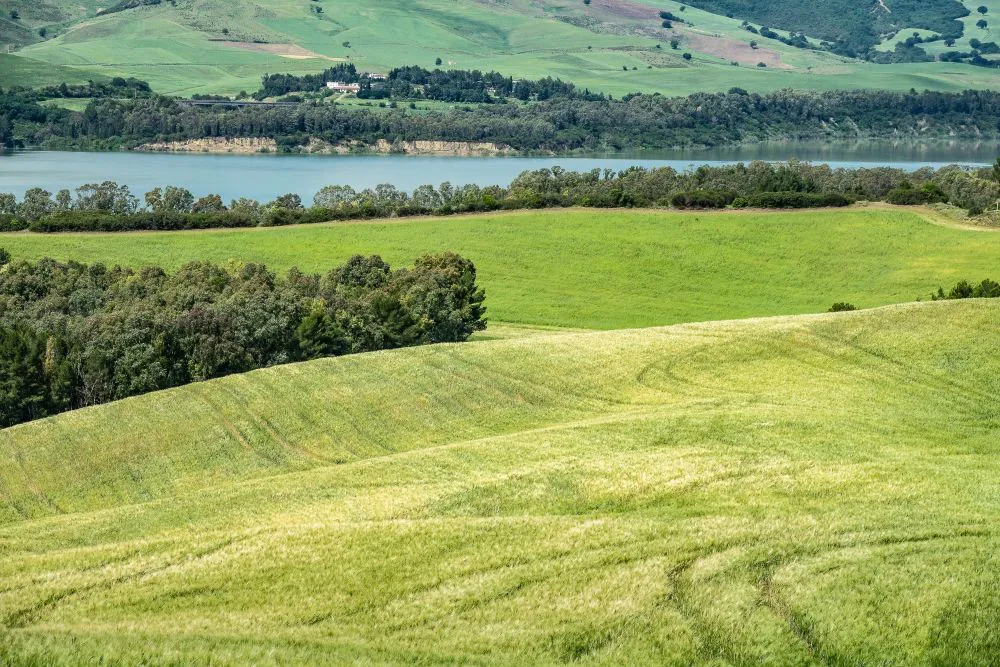
West Sussex vineyards sit within easy reach of the South Downs National Park, which means rolling chalk hills, wide skies and some of the most breathtaking walking country in southern England.
The chalk that runs beneath the vineyards also shapes the surrounding hills. From the ridgeline paths right down to the white cliffs at the Seven Sisters, a landscape National Geographic has written about in the context of England’s sparkling wine rise.
Add a country pub, a garden, a castle or a beach, and a tour becomes a full day out. Vineyards are working farms too, and the good ones look after the land around them, with hedgerows, wildflowers and grass alleys between the rows. The industry now has its own independently audited sustainability certification, with 41 producers certified as of March 2026 according to the ICAEW.
How Do You Plan A Vineyard Visit This Summer?
Book ahead, allow two to three hours, arrange your transport before you set off, and check what your ticket includes. Vineyard tours run to a fixed timetable and are rarely a drop-in affair, especially in August.
Here is what the vines are up to across the summer, so you can time your visit to catch the bit you most want to see:
| June | July | August | |
|---|---|---|---|
| Vine stage | Flowering and fruit set | Berries swelling, veraison from late month | Ripening, sugars climbing |
| What you can see | Tiny green flowers, first hard berries | Bunches speckled green and purple | Fully coloured bunches, netting going up against birds |
| Vineyard work | Shoot tucking, keeping an eye on disease | Trimming, leaf removal, thinning the crop | Testing ripeness, planning harvest |
| Good to know | English Wine Week falls in late June | Longest evenings, best month for sunset tastings | Busiest month, so book earliest |
Who is a vineyard day out good for?
Best for: working out what to book, and for whom
- Couples: A tasting is an easy, unhurried date, and there is a real reason wine and romance go together so reliably.
- Families: Tours are generally adults-only, but the café or restaurant is usually the family-friendly part, so book a table and let the tour group come and find you.
- Groups and celebrations: Birthdays, hen parties, work days out, and adult family gatherings all suit a tour and tasting, since it gives everyone something to do together.
- Dog owners: Many estates welcome dogs on the grounds and in outdoor seating, though usually not inside the winery on a tour.
- Non-drinkers and drivers: There is plenty to enjoy without a glass in hand. Walking through the vines and the winery, the views, and everything you learn about winemaking along the way. Most vineyards offer soft drinks, and some may also bottle your tasting into miniatures to take home.
A handful of practical things before you book:
- Book early: Summer slots and English Wine Week events fill up fast.
- Sort transport first: A tasting means alcohol, so agree on a driver, a taxi or a train before the day arrives. Alternatively, make sure you use the spittoons to taste wines without drinking them.
- Wear flat shoes: Vine rows are uneven ground and usually on a slope.
- Check what is included: Tickets range from a short tour with three wines to a leisurely half day with lunch.
- Check the age and dog policy: These vary between estates and between the tour and the wider site.
- Bring a bag: Almost nobody leaves empty-handed after visiting the estate shop.
Come and see a Sussex vineyard for yourself
If this has you excited to walk a vineyard while the fruit is still on the vine, Bolney Wine Estate runs tours and tastings in West Sussex right through the summer.
Frequently Asked Questions
Do you need to know about wine to visit a vineyard?
Not at all. English vineyard tours are built for people with no wine knowledge, and guides expect beginners. Asking the simplest question in the room is completely normal and usually very welcome. You can also brush up on your wine tasting knowledge beforehand if you wish, but it’s not necessary.
How long does a vineyard tour and tasting take?
Most English vineyard tours and tastings run between 90 minutes and three hours. That typically covers a walk through the vines, a look inside the winery, and a seated tasting of three to six wines.
When is the best month to visit an English vineyard?
July and August are the best months to see grapes on the vine, as ripening is underway and the fruit has begun to change colour. Go in June if you want to catch the flowers in bloom, and in late September into October for harvest.
How many vineyards are there in England?
More than 1,150 vineyards were registered with the Food Standards Agency across the UK in 2025, with around 4,357 hectares of vines in active production. Hundreds of them welcome visitors for tours and tastings.
Can you visit an English vineyard without drinking alcohol?
Yes. Vineyards regularly welcome drivers and non-drinkers, and most offer soft alternatives or a reduced non-taster ticket. Mention it when you book so the team can plan for it.
Is English sparkling wine any good?
Very. At the 2026 Decanter World Wine Awards, judged blind, UK wines took 217 medals in the country’s strongest ever showing, and led the world in medals for magnums of sparkling wine. The best examples use the traditional method, the same bottle-fermentation process behind Champagne.
Are children and dogs allowed at an English vineyard?
Tours and tastings are usually adults only, but many estates welcome children in the café or restaurant and dogs on the grounds and in outdoor seating. Policies differ from one vineyard to the next, so it is worth checking before you travel.
Sources
- Decanter, A new dawn for UK wine at Decanter World Wine Awards 2026 — growth in UK vineyard area since 2005 and rising average temperatures
- CNN Travel, The US wins big at Decanter World Wine Awards for 2026 — UK’s 217 medals, judging scale and sparkling wine results
- Decanter, Sussex wine producers celebrate after earning PDO status — Sussex PDO entering the register on 5 July 2022
- Food Standards Agency, UK wine production data 2025 — 16.5 million bottles, 1,158 registered vineyards and hectares in production
- The Grocer, British wine production grew by more than half in 2025 — scale of the 2025 rise and sector employment
- The Drinks Business, How is English wine really doing in 2026? — 1.5 million visits to English and Welsh wineries and the growth of wine tourism
- Wine Enthusiast, In All Its Sparkling Glory, English Wine Continues Its Meteoric Rise — England as the world’s fastest-growing wine region
- Wine Enthusiast, What Does ‘Veraison’ Mean in Wine? — colour change, berry softening and size increase during veraison
- Wine Folly, Veraison: When Grapes Turn Red — timing of veraison and the ripening window that follows
- The World of Fine Wine, Chalk Talk: The Geology of English Sparkling Wine — water retention in chalk and the debate over its importance
- National Geographic, Discover the sparkling wine from England that tastes like champagne — the South Downs chalk landscape and warming English summers
- Country & Town House, How To Celebrate English Wine Week 2026 — dates and character of the annual celebration
- ICAEW, Vineyards and wineries in the UK industry profile — regional concentration of vineyards and sustainability certification numbers
What Happens At An English Vineyard In Summer?
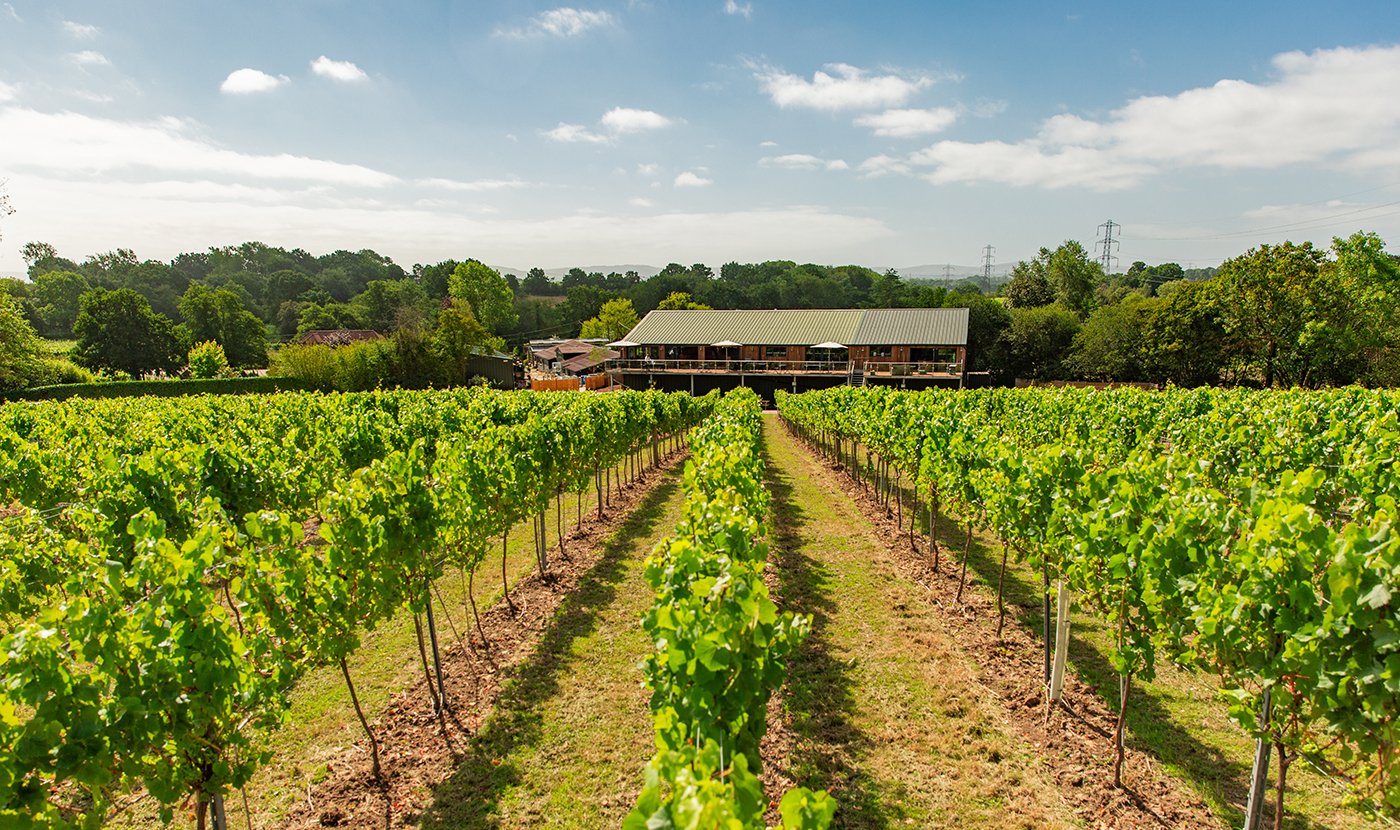
As life begins to return to normal and our estate is filled with the sounds of glasses clinking, bottles popping and people enjoying themselves, you may notice that our vineyard is a hive of activity. The team have been busy caring for our vines after a frosty start to the year, ensuring that they are ready for our harvest season.