Account






9 Things To Know Before Your First Wine Tasting
Start exploring

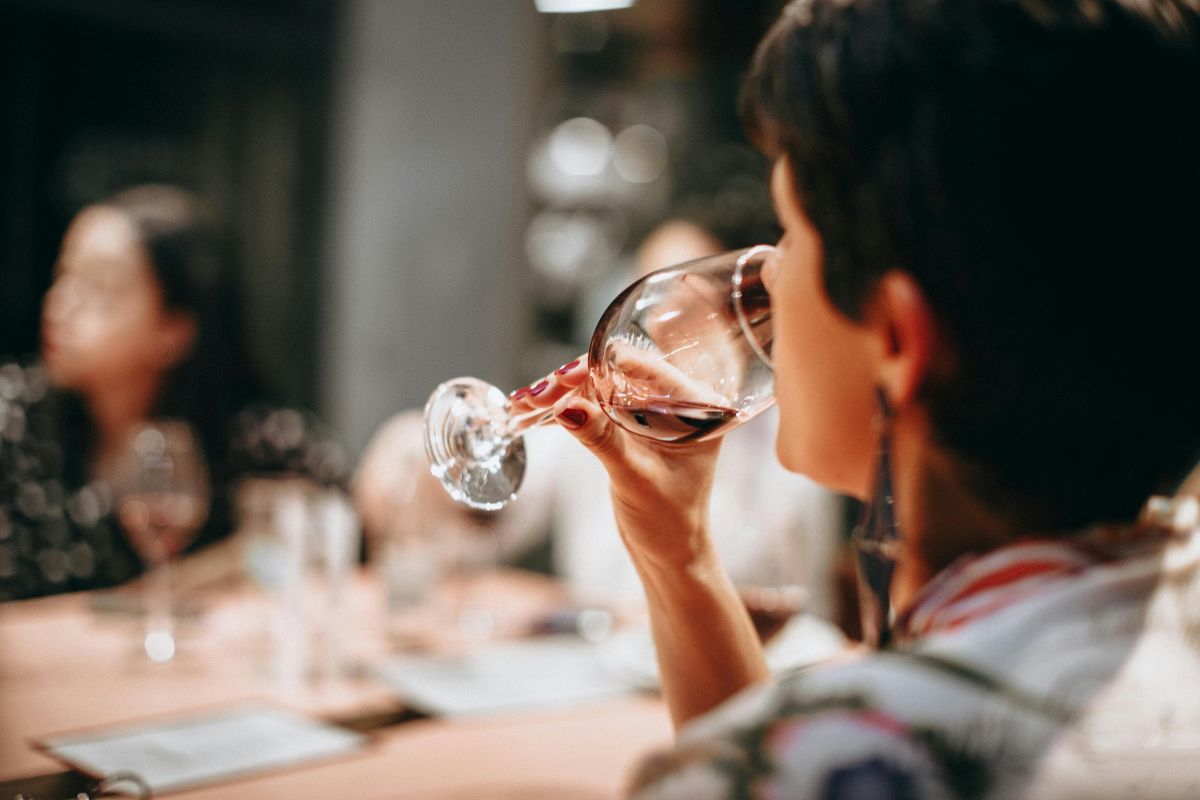
Walking into your first wine tasting can feel a little intimidating. Will everyone else know what they’re doing? Are you supposed to spit? What on earth is a “long finish”? Take a breath. Wine tasting is far less serious (and far more fun) than the films make out.
A good tasting is really just a guided conversation about what’s in your glass of wine, led by someone who genuinely loves the stuff. Whether you can name a dozen grape varieties or you’re still working out which end of the corkscrew goes in first, you’re welcome.
Here are nine things every first-timer should know before they arrive at the cellar door, plus a few honest answers to the questions everyone wonders about but feels too shy to ask.
1. What Happens at a Wine Tasting? Here’s the Short Version
If you’ve never been before, here’s roughly how a vineyard or winery wine tasting works from start to finish.
You’ll usually be greeted with a glass of something sparkling and a short introduction to the estate: its history, its vineyards and the people behind the wines. Many tastings include a walk through the grape vines themselves, where your host will explain how the grapes are grown, why the soil and climate matter, and what makes English wine such a fast-rising star on the world stage. Shorter cellar-door tastings skip the walk and focus purely on the glass in front of you, which is perfect if you’re short on time or visiting on a wet afternoon.
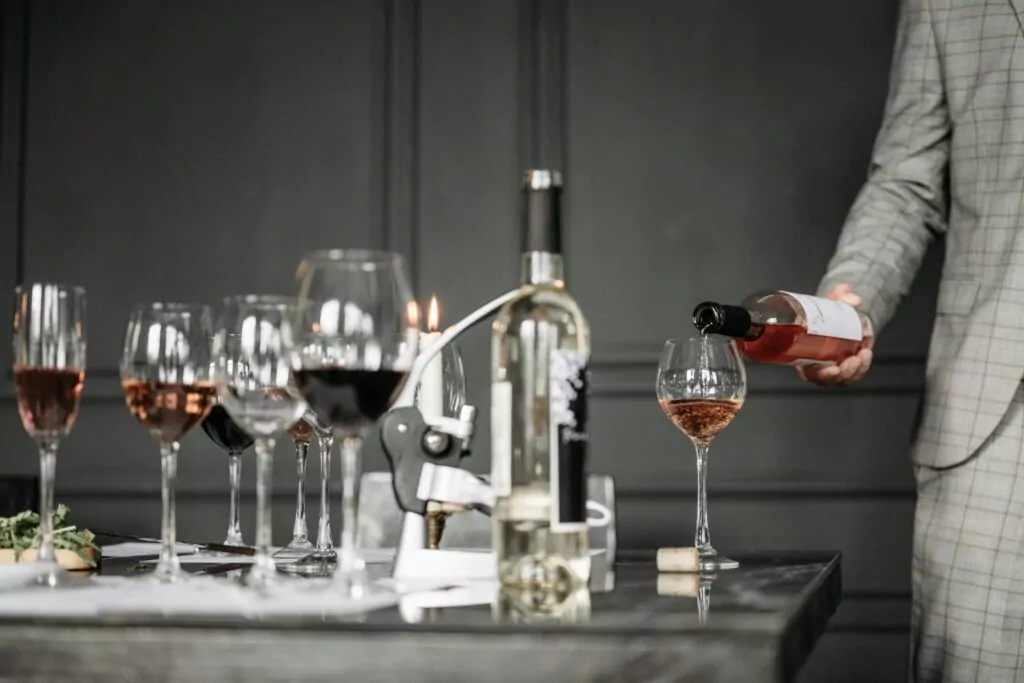
Either way, you’ll be poured a flight of wines (typically four to six), working from sparkling through whites, rosés and reds, with anything sweet or fortified at the end. Your host will guide you through each one, discussing the grape, the vintage, and the flavours to look out for. You taste, you chat, you ask questions. That’s it.
Most tastings last between 30 and 90 minutes. You’ll leave knowing more about wine than when you walked in, and almost certainly with a bottle or two of a new favourite.
Want the full guide on what tasting actually means? Read our deeper dive in What is Wine Tasting?
2. Master the 5 S’s: Look, Swirl, Smell, Sip, Savour
Every guided tasting follows the same simple rhythm. Once you know the 5 S’s, you have everything you need to get more out of every glass, whether you’re at a vineyard wine tasting session or at home.
| Step | How to do it | What you’re looking for |
|---|---|---|
| 1. Look | Hold the glass against something white (a tablecloth, a napkin, your sleeve) and tilt it slightly. | Colour and clarity. A young white might be a pale lemon shade, an older one deep gold. A young red leans purple, an older one brick. Already, you’re learning something about the wine. |
| 2. Swirl | Keep the base of the glass on the table and move it in small circles. If you’re nervous about flicking wine across the room, this is the safest way to start. | Aerating the wine (letting air into it) releases its aromatic compounds and prepares the glass for the next step. |
| 3. Smell | Put your nose right into the glass and inhale. Don’t worry about identifying every note. | Whatever’s there: fruit, flowers, something toasty or buttery. Smell does most of the heavy lifting in tasting, which is why a head cold can ruin the experience. |
| 4. Sip | Take a small sip and let it move across your whole palate. Some tasters draw a little air through the wine to amplify the flavour (yes, it makes a slurping noise). | How the wine feels in different places: sweetness at the tip of the tongue, acidity on the sides, tannin, and bitterness at the back. |
| 5. Savour | Swallow (or spit, see point 4) and pay attention to what happens next. | The finish. Does the flavour disappear instantly, or linger for fifteen seconds? A long, evolving finish is usually the sign of a quality wine. |
Want to go deeper on the technique? Our full guide to How To Taste Wine breaks down each of the 5 S’s step by step. And if your tasting opens with a glass of bubbles (most do), How To Drink Sparkling Wine covers the right glass, the right temperature, and how to taste it properly.
3. You Don’t Have to be a Wine Expert
This is the single most important thing to know. A tasting is for curious people, not connoisseurs. Your host doesn’t expect you to identify “blackcurrant leaf” or “wet stones.” They want you to enjoy yourself and learn something.
If a wine reminds you of pear drops, or your gran’s garden, or a holiday you took in 2019, say so. Personal associations are exactly how professional tasters build their vocabulary in the first place. There are no wrong answers.
That said, a small handful of words come up at almost every tasting, and it helps to recognise them. These are used to describe the characteristics of the wine:
- Dry: not sweet
- Body: how heavy or light a wine feels in your mouth, a bit like the difference between skimmed and full-fat milk
- Tannin: that drying, gripping sensation on your gums, mostly noticeable in reds
- Nose: the smell
- Finish: how long the flavour lingers after you swallow
- Vintage: the year the grapes were picked
That’s plenty of vocabulary for your first visit. If you want the full list, we have a guide to wine-tasting terminology coming soon that covers everything else you might hear.
4. Do You have to Spit at a Wine Tasting?
No, you don’t have to spit, but you absolutely can, and many people do. Spittoons (the little buckets on the table or bar) are there for a reason.
Here’s the maths: a typical tasting flight pours around 25–50ml per wine. Across six wines, that’s the equivalent of one to two large glasses. If you’re driving, doing more than one tasting in a day, or simply want to keep your palate sharp, spitting is the sensible choice. It’s what every sommelier and wine buyer in the world does, all day, every day.
The technique is straightforward: take your sip, swirl it briefly in your mouth to taste it properly, then aim into the spittoon. It feels strange the first time and completely normal by the third. No one will judge you. In fact, your host will probably nod approvingly.
5. Can You Drive After a Wine Tasting?
This one matters, so we’ll be straight with you. Even if you spit every sip, you will absorb a small amount of alcohol, and the UK drink-drive limit is unforgiving.
- England, Wales and Northern Ireland: The legal limit is 80mg/100ml blood
- Scotland: The legal limit is 50mg/100ml blood
- Number of Glasses: These limits can be reached after as little as a single large (250ml) glass of wine, with the variables that affect it (body weight, sex, metabolism, food)
Remember that there is no reliable way to count the alcohol units that you drink. The safest options are to nominate a designated driver, book a taxi, arrange a transfer or stay locally for the night. Many of our visitors make a day of it, pairing a tasting with lunch nearby and a stroll through the Sussex countryside.
If you’re planning to drive yourself home, stick to one or two sips, spit the rest, and give yourself plenty of time before you set off. If in doubt, don’t. A pre-booked taxi is a small price to pay compared to the alternative.
Going as the Designated Driver, or Don’t Drink Alcohol?
You’re still very welcome, and you’ll still get plenty out of the experience. Most wineries are happy for non-drinking guests to join the tour, take in the vineyard walk, and learn alongside everyone else. You can use the look, swirl and smell stages of the 5 S’s without ever taking a sip, and a good host will make sure you feel just as included as the rest of the group.
6. What to Wear and Bring
What to wear depends on the kind of tasting you’ve booked. Some sessions are seated and cellar-door based, with no walking involved. Others include a vineyard tour on foot, which can mean uneven ground, gravel paths, grass, and the occasional muddy patch after rain.
If your tasting includes a walking tour, comfortable flat shoes or boots are essential. Heels will sink into the turf, and thin soles won’t thank you on a stony track. If your tasting is indoors only, you can dress as smartly or casually as you like.
Either way, dress in layers. Cellars and barrel rooms are kept cool to protect the wine, and the British weather rarely commits to a single mood for long. A light jacket or jumper covers all bases.
There’s no hard dress code at most wineries, so feel free to come as casual or as stylish as you like. If you’d like to dress up for photos (the views from the South Downs really do deserve it), here are a few pointers:
- Colour palette: the classic winery look leans towards crisp whites and neutrals, which photograph beautifully against green vines and stone-and-timber cellars. That said, there are no rules. Wear whatever colours you enjoy.
- Summer: a wide-brimmed hat, breathable cotton or linen, and comfortable flat sandals or stylish trainers you can still walk in.
- Autumn: a chunky knit, ankle boots and a longer coat that won’t drag through wet grass.
- Year-round: a light scarf or shawl works hard, finishing an outfit in photos and doubling as a layer in cool cellars.
Glamour has a helpful winery dress code guide if you’d like more outfit inspiration. Just keep the practical bits in mind: comfortable shoes underneath whatever you’ve got on, and nothing too precious if there’s a chance of a spill.
One thing to actively avoid: strong perfume, aftershave or scented hand cream. Smell does most of the work in wine tasting, and a heavy fragrance (yours or the person next to you) will overwhelm everything in the glass. Save the spritz for after you leave.
7. Wine Tasting Etiquette in a Nutshell
You don’t need a finishing-school education, but a few small habits will make you look like a regular. Here are a few tips to make you look like a pro:
- Hold the glass by the stem, not the bowl. This keeps your hand from warming the wine and keeps fingerprints off the glass when you’re checking the colour.
- Don’t fill anyone else’s glass: the host pours the measures, and they’re deliberately small so you can taste several wines without losing the plot.
- Eat bread, crackers, or olives between wines to reset your palate.
- Pace yourself with the water on the table.
- And if a wine isn’t for you, it’s perfectly polite to pour the rest into the spittoon and move on. No one is offended.
If you’d like the full finishing-school treatment, The English Manner’s quick guide to wine etiquette goes into more detail.
8. What to Expect When You Visit Bolney
Tucked into the rolling South Downs of West Sussex, Bolney has been making award-winning English wine for over fifty years. Our chalk and sandstone soils, our cool maritime climate and the long, slow ripening of our grapes give our wines their distinctive character: fresh, bright, beautifully balanced.
We offer four different ways to experience our wines, from a quick 30-minute introduction to a leisurely three-course meal in the restaurant:
| Experience | Duration | What’s included | Best for |
|---|---|---|---|
| Cellar Door Tasting | 30 minutes | A guided tasting of our award-winning sparkling and still wines, led by one of our wine experts who’ll walk you through the grape varieties, our winemaking process and the stories behind each vintage. Daily at 11am (excluding Saturdays). | A relaxed first taste of Bolney, a quick visit, or rounding off a country walk. |
| Bolney Wine Pairing Tour and Tasting | Approx. 90 minutes | A guided tour of the estate followed by a tasting of our award-winning wines, thoughtfully paired with locally sourced cheeses. | A first proper tour with a relaxed cheese-and-wine pairing. |
| Bolney Experience Tour and Tasting | Approx. 2 hours | An in-depth tour of the estate, a tutored tasting of a handpicked selection of our wines, plus a curated food matching plate, a seasonal mezze board and petits fours. | Anyone who wants to dig deeper into the winemaking and enjoy a more substantial food pairing. |
| Grape to Table Tasting | Approx. 2.5 to 3 hours | A welcome glass of our Classic Cuvée served in the restaurant with views over the vineyard, a curated tasting of our finest still and sparkling wines, and a seasonal three-course meal paired with our wines. Every Friday at 11am and 5pm. | A long, leisurely lunch or evening combining wine, food and the full estate. |
Whichever you choose, your host will talk you through each wine, from our celebrated sparklings to our still whites, rosés and reds, and there’s always plenty of time for questions. You can extend any visit with lunch in our bistro or a bite to eat al fresco on our terrace when the weather plays ball. It’s the kind of afternoon that quietly turns into early evening.
9. Book Ahead and Plan the Day Around It
Wine tastings at Bolney book up quickly, especially across spring and summer weekends, so reserve your spot in advance. A bit of forward planning also lets you build the rest of the day around it: a walk, a long lunch, perhaps a visit to a nearby town or attraction if you’re making the trip from London.
Coming soon: Our complete guide to visiting an English vineyard, including Plan a Vineyard Visit, covering opening hours, accessibility, group bookings, where to stay nearby and how to make a full day of it.
Ready to Book Your First Wine Tasting?
There’s no better introduction to English wine than tasting it where it’s made. Whether you’re treating someone special, marking an occasion or simply curious about what all the fuss is about, our cellar door is open, and our hosts are ready to pour.
Book a tour and tasting at Bolney →
Frequently Asked Questions About Wine Tasting
How long does a wine tasting last?
It depends on the format. A short cellar-door tasting can take as little as 30 minutes, while a full guided tour and tasting usually runs 90 minutes to two hours. Longer experiences with food pairings can last three hours or more.
Do I need to book a wine tasting in advance?
Yes, we recommend booking ahead, especially at weekends and during the summer. Walk-ins are sometimes possible but rarely guaranteed.
Will my tour go ahead if it rains?
Yes, tours run rain or shine. Routes may be adjusted for safety and comfort, but please come dressed for the weather. In extreme conditions, we may need to reschedule, and we’ll always be in touch in advance if that’s the case.
Is food included in a wine tasting?
A small selection of palate cleansers (bread, crackers, sometimes cheese) is usually provided. Full meals are available separately at our bistro or restaurant and can be added to your booking.
Can children come along?
Children are very welcome on the estate and in the restaurants. However, only guests aged 18 and over may participate in the vineyard tours and tastings.
Can I do a wine tasting if I don’t drink alcohol?
Yes. Non-drinking guests are welcome to join the tour and tasting, take part in the look, swirl and smell stages of each wine, and learn alongside everyone else.
What if I’m the designated driver?
Drivers can absolutely come along. The safest approach is to skip the swallowing entirely and use the spittoon for every sip, or to opt for a tour-only experience without the tasting flight. Even better, leave the car at home and book a taxi or transfer.
Can I leave my car overnight?
Yes. Our estate gates lock at 6pm and reopen at 8.30am, so if you’d rather fully enjoy the wines and pick up the car the following morning, just let your tour guide know on the day so we can plan accordingly.
What if I don’t like a particular wine?
Pour it into the spittoon and move on. Your host won’t be offended; palates differ, and finding out what you don’t enjoy is part of learning what you do.
Is wine tasting suitable for absolute beginners?
Absolutely. A good tasting is designed to teach you, not test you. If anything, beginners often get the most out of it because everything is new.
How much wine will I actually drink?
A standard tasting flight totals roughly 150–300ml across all the pours, about the equivalent of one to two large glasses if you swallow every sip. Spitting reduces this considerably.