Account






White Wine: A Complete Guide to Grapes, Styles & Food Pairings
Start exploring

White wine can feel more approachable than red, but that does not mean there is less to know. There are hundreds of grape varieties, styles ranging from bone-dry to lusciously sweet, and a wide range of regions producing bottles at every price point.
This is a plain-English guide to white wine for anyone who wants to understand what they are buying, how it is made, and what to do with it once the bottle is open.
Contents
- What Is White Wine?
- How Is White Wine Made?
- White Wine Grape Names & Skin Colours
- Types of White Wine
- How to Describe White Wine: A Tasting Vocabulary
- What Makes a White Wine Dry, Medium or Sweet?
- White Wine Regions at a Glance
- White Wine Categories at a Glance
- Sparkling White Wine and Champagne
- How Many Calories in White Wine?
- A White Wine Food Pairing Guide
- How to Choose a White Wine Without Feeling Overwhelmed
- White Wine Glasses
- What Temperature Should You Serve White Wine?
- How to Store White Wine at Home
- What Does “Vintage” Mean on a White Wine Label?
- Natural, Organic, Vegan and Low-Alcohol White Wines
- Visit a Vineyard to Learn More About White Wine
What Is White Wine?
White wine is made primarily from green or yellow-skinned grapes. Some white wines, including many Champagnes and English sparkling wines, are made from red-skinned grapes such as Pinot Noir. In those cases, the juice is pressed quickly, and the skins are removed before they can release any colour, giving a pale, clear wine.
The key difference from red wine is skin contact. Red wines ferment with their skins, which extract colour, tannin (the dry, grippy texture in red wine) and structure. White wines are pressed first, so the juice ferments without the skins. This is why whites are lighter in texture, lower in tannin and generally more delicate in aroma.
In short, white wine is:
- Made from green, yellow or occasionally red-skinned grapes
- Fermented without extended skin contact
- Lower in tannin than red wine
- Usually served chilled
- Available in styles from bone-dry to richly sweet
According to the International Organisation of Vine and Wine (OIV), white wine accounts for roughly 44% of global still wine production.
How Is White Wine Made?
The broad steps are similar to any wine, but the choices made at each stage (how quickly to press, whether to use oak, how long to rest on the lees) define the final style.
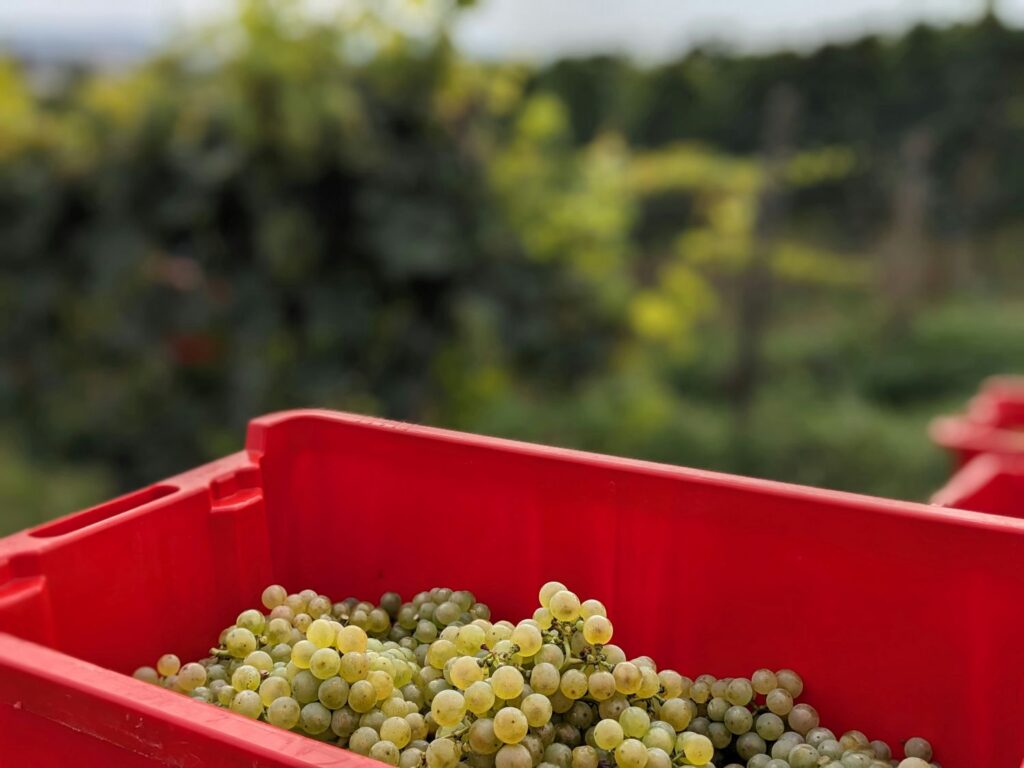
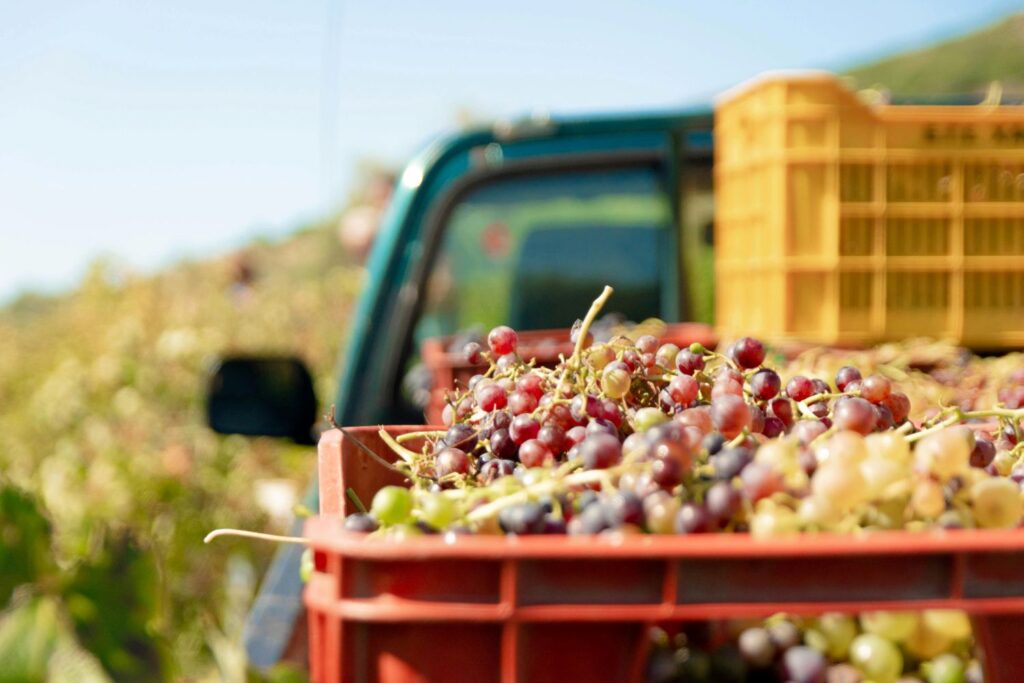
- Harvest — Grapes are picked when ripe. Timing is critical: pick too early, and the wine is thin and sharp; too late, and it loses freshness. In West Sussex, the English wine harvest typically runs from September into October.
- Pressing — Grapes are pressed quickly to extract juice while keeping the skins separate. For sparkling wine, gentle pressing is especially important to avoid picking up colour or bitterness.
- Settling — The juice is left to settle so grape solids sink to the bottom before fermentation begins. This step matters more for white wine than red because there is no tannin to mask off-flavours from solid particles.
- Fermentation — Yeast converts the grape’s natural sugars into alcohol. Cooler fermentation (around 12 to 18°C) preserves delicate aromas and fresh fruit flavours.
- Ageing — The wine matures in stainless-steel tanks, oak barrels, or bottles, depending on the style. A crisp Pinot Grigio or aromatic Bacchus is kept in steel to stay fresh. A rich Chardonnay may spend months in oak barrels.
- Bottling — Most everyday whites are released young and are at their best within one to three years.
Oaked vs Unoaked White Wine
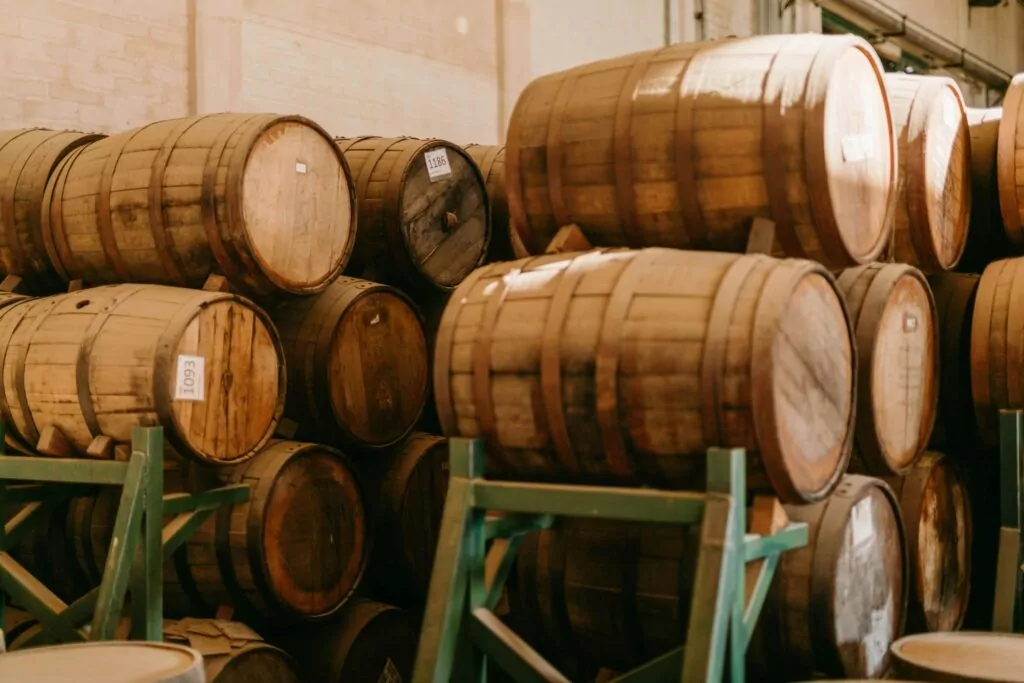
When a white wine is described as “oaked,” it means the wine spent time in oak barrels at some point during its production. This can happen in two ways:
- Fermented in oak — the grape juice is poured directly into oak barrels and ferments there, rather than in a stainless steel tank. This gives the wine a deeper, more integrated oak flavour.
- Aged in oak — the wine ferments in stainless steel first, then rests in oak barrels for weeks or months before bottling. This is the more common approach and gives a subtler oak influence.
Either way, the wine absorbs compounds from the wood: vanilla, butter, toast and spice. The longer it spends in oak, and the newer the barrel, the stronger those flavours become. An unoaked wine spent no time in oak at any stage. It was made entirely in stainless steel or another neutral vessel, so only the grapes’ natural flavours come through.
This single choice is the biggest reason two wines made from the same grape can taste completely different. A Chablis (unoaked Chardonnay) tastes lean, mineral, and citrus-fresh. A white Burgundy (lightly oaked Chardonnay) made a few kilometres away tastes creamy, rich, and complex.
| Style | Typical aromas and texture | Examples |
|---|---|---|
| Unoaked | Fresh fruit, flowers, citrus; lighter texture | Chablis, Sauvignon Blanc, Pinot Grigio, Bacchus |
| Lightly oaked | Subtle vanilla, gentle creaminess alongside fruit | White Burgundy, English Chardonnay, white Rioja |
| Heavily oaked | Butter, toast, coconut, spice; full-bodied | New World Chardonnay (Napa, Barossa), Viognier |
What Are Lees?
Lees are the dead yeast cells left in the tank after fermentation finishes. Leaving the wine in contact with them (known as sur lie ageing) adds richness, creaminess and a biscuity depth without using oak. It is common in white Burgundy, Muscadet, and quality English white wine.
White Wine Grape Names and Skin Colours
Almost all white wines come from the same species of grapevine: Vitis vinifera. The differences in skin colour and style come from how the grapes ripen on the vine. White wine grapes are often informally grouped by their skin colour at ripeness. These are the white wine grape varieties:
Green-skinned grapes (fresh, crisp styles)
These grapes stay pale green even when ripe and usually produce lighter, more zesty wines with higher acidity.
Common examples include:
Yellow-skinned grapes (riper, richer styles)
These grapes turn golden or yellow as they ripen and tend to produce fuller-bodied wines with softer acidity and more ripe fruit flavours. The term “golden-skinned” is sometimes used informally to describe the same grapes at a very ripe stage, but it is not a separate classification.
Common examples include:
Red-skinned grapes (used for some white and sparkling wines)
A small number of white and sparkling wines are made from red-skinned grapes. This is possible because the colour in a grape sits in the skin, not the juice. If the grapes are pressed quickly and gently, the juice runs clear and produces a white wine. If the skins are left in contact with the juice, the wine turns pink or red.
This technique is used in Champagne and in English sparkling wine, where red-skinned grapes add body and structure to the blend. A wine labelled Blanc de Noirs (“white from blacks”) is made entirely from red-skinned grapes but is a white or very pale wine.
Common examples include:
- Pinot Noir — the most widely used red grape for white sparkling wine, including Champagne and English sparkling wine
- Pinot Meunier — used alongside Pinot Noir in Champagne blends
- Pinot Précoce — an early-ripening relative of Pinot Noir, grown in England and used in sparkling wine production
Types of White Wine
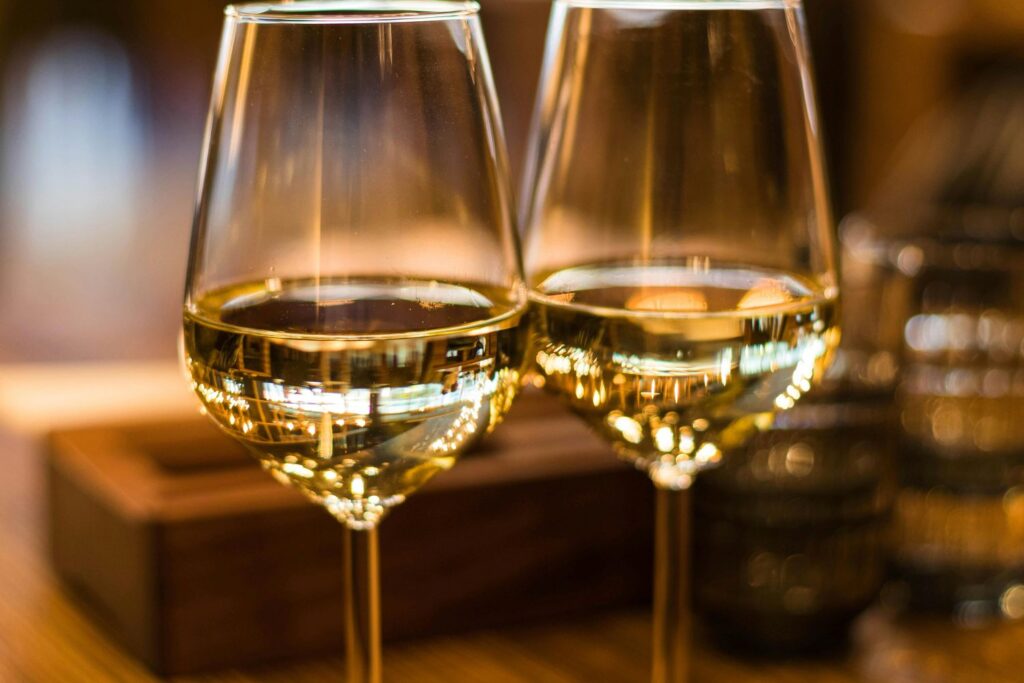
The table below covers the ones you are most likely to find on a UK supermarket shelf, a restaurant wine list, or in a vineyard shop.
| Grape | Style | Typical Flavours | Where It’s Famous |
|---|---|---|---|
| Chardonnay | Light to full (varies with oak) | Apple, lemon, vanilla, butter, toast | Burgundy, Champagne, Napa, England |
| Sauvignon Blanc | Light to medium, dry | Gooseberry, grapefruit, cut grass, elderflower | Loire Valley, New Zealand, England |
| Pinot Grigio / Pinot Gris | Light and crisp (Italy) to rich and spicy (Alsace) | Pear, white peach, lemon, honey | Northern Italy, Alsace, England |
| Riesling | Light, dry to sweet | Lime, green apple, petrol (with age), apricot | Mosel, Alsace, Clare Valley |
| Chenin Blanc | Dry to sweet, high acid | Quince, beeswax, green apple, honey | Loire Valley, South Africa |
| Gewürztraminer | Full, aromatic, off-dry to sweet | Lychee, rose, ginger, Turkish delight | Alsace, Germany, Alto Adige |
| Viognier | Full-bodied, low acid | Peach, apricot, violet, cream | Northern Rhône (Condrieu), Languedoc |
| Albariño | Light to medium, crisp | Citrus, white peach, saline | Galicia (Rías Baixas), Portugal |
| Grüner Veltliner | Light to medium, dry | White pepper, green herbs, grapefruit | Austria (Wachau, Kamptal) |
| Bacchus | Light to medium, aromatic | Elderflower, gooseberry, nettle, citrus | England (Sussex, Kent, Suffolk) |
| Pinot Blanc | Light to medium, dry | Pear, lemon zest, jasmine, green apple | Alsace, Italy, England |
| Muscaris | Aromatic, off-dry to medium | Orange blossom, lychee, grapefruit, nutmeg | England, Germany |
| Schonburger | Very aromatic, dry to off-dry | Rose, lychee, tropical fruit, blossom | England |
Chardonnay Wine
Chardonnay is the most widely planted white grape in the world and the most versatile. It thrives in almost every wine-growing climate, from the chalk soils of Chablis, France, to the sun-baked hillsides of Napa Valley, USA.
- Unoaked Chardonnay (Chablis is the classic example) tastes lean, mineral and citrus-fresh
- Oaked Chardonnay from Burgundy or California takes on butter, vanilla and toasted bread
- English Chardonnay is grown mainly for sparkling wine, where its natural acidity makes it ideal. Bolney’s Blanc de Blancs 2021 is made entirely from estate-grown Chardonnay, with notes of lemon, brioche and apple pie
Pinot Grigio White Wine
Pinot Grigio and Pinot Gris are the same grape with two very different characters.
- Italian Pinot Grigio is light, dry and easy to drink, with notes of pear, lemon and a clean finish. It is one of the most popular white wines in the UK.
- Alsace Pinot Gris is fuller-bodied, often slightly off-dry (a little sweeter than fully dry), with notes of honey, ginger, white peach, and spice.
- English Pinot Gris tends to sit between the two styles. Bolney’s Pinot Gris 2023 is made in the Alsace style, with honeyed pear, lemon sorbet and grapefruit rind on the nose, and a crisp, dry finish.
Muscaris
Muscaris is a modern hybrid grape variety, bred in Germany as a cross between Muscat Ottonel and Solaris. (A hybrid means it is a cross between two different grape species, rather than two varieties of the same species.) It is specially suited to cool, damp climates and produces intensely aromatic wines.
Muscaris wines are known for their citrus blossom and orange notes, with a grapey, almost perfumed quality and a refreshing acidity. They are often slightly off-dry, meaning a touch of natural sweetness sits alongside the fresh fruit rather than making the wine taste sugary.
Bolney grows Muscari in West Sussex and produces two versions each year:
- Winemaker’s Edition “Budburst” Muscaris 2023 — orange blossom, lemon peel and nutmeg, with gentle effervescence. Vegan-friendly. Pairs well with Parma ham and melon, miso-baked cod, and sponge cakes.
- Winemaker’s Edition Muscaris 2022 — off-dry with a hint of spritz, notes of orange blossom honey, lychee and Turkish delight. Vegan-friendly.
Orange Wine
Despite the name, orange wine is not made from oranges. It is a white wine made using the same technique as red wine: the grape skins are left in contact with the juice during fermentation, giving the wine an amber or copper colour and adding a gentle tannic texture.
The result is more complex and textured than a standard white, with savoury, oxidative notes alongside the fruit. It works well with food that would normally overpower a delicate white.
Bolney makes two orange wines using the highly aromatic Schonburger grape, both vegan-friendly:
- Winemaker’s Edition Orange Vol. 1 2023 — rose petals, lychee and tropical fruit, with balanced acidity and a dry finish. Pairs well with seared scallops, Scotch eggs and spaghetti with garlic and chilli.
- Winemaker’s Edition Orange Vol. 2 2023 — rich, with honeyed jasmine, cantaloupe melon and toasted walnut. Bottled unfiltered. Pairs well with roasted red pepper linguini, salmon ceviche and saffron chicken.
English White Wine
England has become one of the world’s most exciting white wine regions. Bacchus is the country’s signature still white variety: highly aromatic, with elderflower, gooseberry and a distinctly English freshness. It thrives on the well-drained soils of West Sussex and Kent.
Other varieties grown successfully in England include Pinot Gris, Pinot Blanc, Sauvignon Blanc, Muscat and Riesling. Bolney Wine Estate grows English white wines on the greensand and clay-with-flints soils of West Sussex, giving them a particular mineral freshness. The range includes:
- Lychgate White 2023 (Pinot Blanc) — ripe pear, lemon zest and spring jasmine, with a lively, dry finish
- Pinot Gris 2023 — made in the Alsace style, with honeyed pear, grapefruit and a crisp, dry finish
- Winemaker’s Edition Sauvignon Blanc — a Decanter and IWC Bronze Medal wine with classic gooseberry, elderflower, lime and lemon sherbet. Released each year as a limited vintage.
How to Describe White Wine: A Tasting Vocabulary
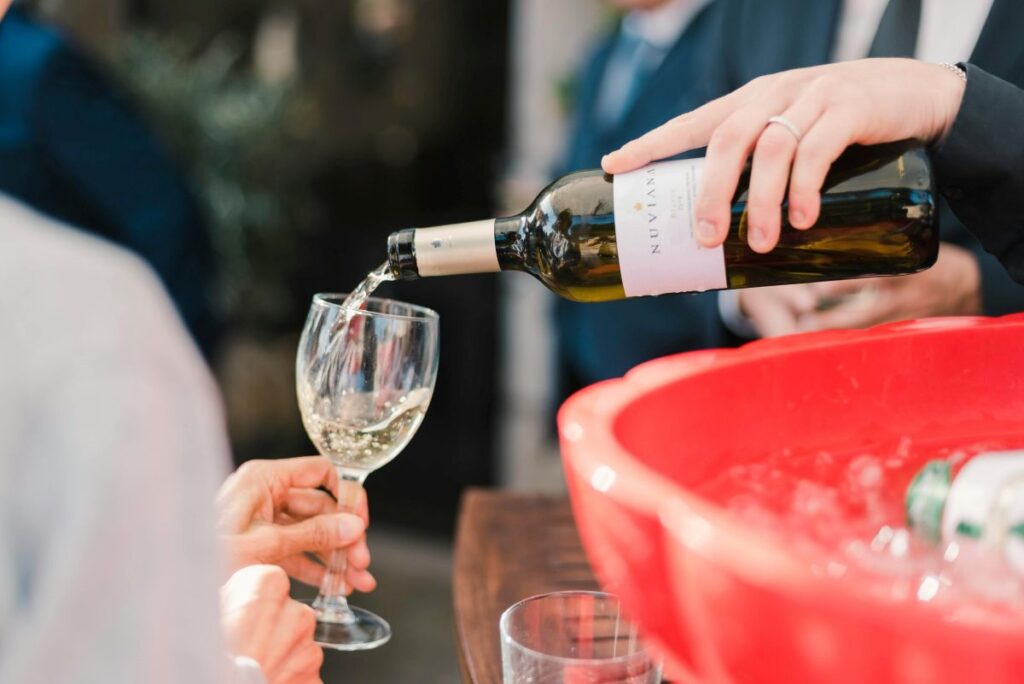
Tasting notes for white wine feel more approachable than for reds. For example, citrus, flowers and stone fruit are easier to recognise than leather or tobacco. For a full walk-through of the tasting process, see our guide on how to taste wine like a professional.
Body
Body is the weight or fullness of the wine in your mouth. Use the milk comparison:
- Light-bodied — like skimmed milk (Pinot Grigio, Muscadet, Bacchus)
- Medium-bodied — like semi-skimmed (Sauvignon Blanc, unoaked Chardonnay, Riesling)
- Full-bodied — like whole milk (oaked Chardonnay, Viognier, white Burgundy)
Acidity
Acidity is the backbone of white wine. Without it, a white tastes flat and heavy. High acidity makes your mouth water and gives a wine its freshness and length. Cool-climate whites, including English wines, Chablis and German Riesling, tend to have the highest natural acidity. Warm-climate whites have lower acidity, giving a rounder, softer texture.
Fruit Character
- Citrus — lemon, lime, grapefruit (Chablis, Sauvignon Blanc, Riesling)
- Green fruit — apple, pear, gooseberry (cool-climate whites, Pinot Grigio)
- Stone fruit — peach, apricot, nectarine (warmer-climate whites, Viognier)
- Tropical fruit — mango, pineapple, passion fruit (New World Sauvignon Blanc, warm-climate Chardonnay)
Other Common Flavour Notes
- Floral — elderflower, blossom, rose (Bacchus, Gewürztraminer, Muscaris)
- Herbaceous — cut grass, nettles, white pepper (Sauvignon Blanc, Grüner Veltliner)
- Mineral — wet stone, chalk, saline (Chablis, Muscadet, Albariño, English white wine)
- Oaky — vanilla, butter, cream, toast (oaked Chardonnay, white Rioja)
- Honeyed — beeswax, honey, candied lemon (sweeter Riesling, Chenin Blanc, Muscaris)
Top tip: Pour two white wines side by side and count how long the flavour lingers after each sip. The difference is often striking and tells you more about quality than any back label.
What Makes a White Wine Dry, Medium or Sweet?
Sweetness in wine is determined by how much sugar remains after fermentation. This is called residual sugar (RS). When the yeast converts nearly all the sugar into alcohol, you get a dry white wine. When fermentation stops early, or when you use very ripe grapes, some sugar is left behind.
- Dry white wine — less than 4g of sugar per litre. Most white wines you encounter, from Sauvignon Blanc to Chablis to English Bacchus, are dry. A wine can taste fruity without being sweet.
- Off-dry or medium — 4 to 12g per litre. A noticeable softness rather than obvious sweetness. Many Rieslings, Alsace Pinot Gris, Vouvray and Muscaris fall here.
- Medium-sweet — 12 to 45g per litre. Sweetness is clear but balanced by high acidity. German Spätlese Riesling is a good example.
- Sweet — 45g per litre and above. Sauternes, Tokaji and dessert wines. Rich and honeyed, typically served in small glasses with dessert or strong cheese.
A note on label language: The word “fruity” on a back label sometimes means “slightly sweet.” If you want a genuinely dry white wine, look for “dry” stated clearly, or choose well-known dry styles: Sauvignon Blanc, Pinot Grigio, Chablis, Bacchus or most English white wine.
White Wine Regions at a Glance
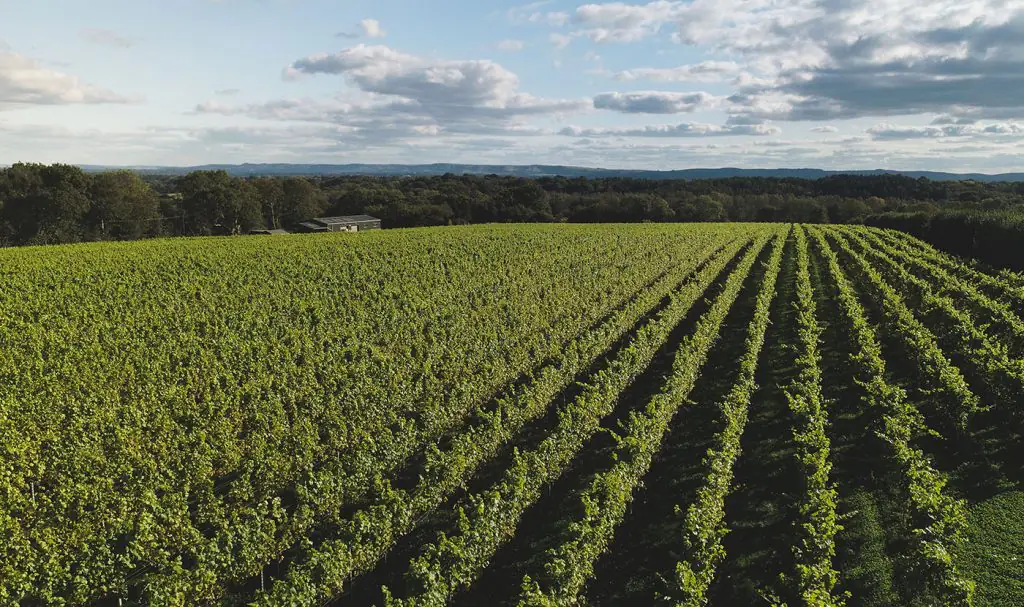
The regions below cover most of the white wines you are likely to find in a UK wine shop, supermarket or restaurant, arranged roughly from coolest to warmest.
| Region | Climate | Notable White Wines | Typical Style |
|---|---|---|---|
| South of England (Sussex, Kent) | Cool | Bacchus, Chardonnay, Pinot Gris, Pinot Blanc | Dry, aromatic, high acid |
| Mosel and Rhine, Germany | Cool | Riesling | Dry to sweet; steely, mineral |
| Chablis, France | Cool | Chardonnay (unoaked) | Dry, flinty, citrus-crisp |
| Loire Valley, France | Cool to moderate | Sauvignon Blanc (Sancerre, Pouilly-Fumé), Chenin Blanc | Dry to sweet; herbaceous to honeyed |
| Burgundy (Côte de Beaune), France | Moderate | Chardonnay (Meursault, Puligny-Montrachet) | Dry, rich, buttery, mineral |
| Alsace, France | Moderate | Riesling, Gewürztraminer, Pinot Gris | Dry to sweet; highly aromatic |
| Galicia (Rías Baixas), Spain | Moderate, Atlantic | Albariño | Dry, crisp, saline |
| Northern Italy (Veneto, Alto Adige) | Moderate | Pinot Grigio, Soave, Lugana | Dry, light to medium, clean |
| Marlborough, New Zealand | Moderate to warm | Sauvignon Blanc, Chardonnay | Dry, punchy, tropical fruit |
| Napa Valley and Sonoma, USA | Warm | Chardonnay, Sauvignon Blanc | Dry, full-bodied, oaky |
| Bordeaux (Sauternes), France | Warm | Sémillon and Sauvignon Blanc | Sweet, luscious, long-lived |
White Wine Categories at a Glance
Body and sweetness give you the clearest shorthand for navigating a white wine list or supermarket shelf.
| Category | Body and sweetness | Examples |
|---|---|---|
| Crisp and dry | Light, high acid, no sweetness | Pinot Grigio, Muscadet, Chablis, Bacchus, Vinho Verde |
| Aromatic and dry | Light to medium, fragrant, dry | Sauvignon Blanc, Albariño, English Bacchus, Pinot Blanc |
| Rich and dry (oaked) | Medium to full, creamy texture | White Burgundy, oaked Chardonnay, white Rioja, Viognier |
| Off-dry and aromatic | Touch of sweetness balanced by acidity | Riesling Spätlese, Alsace Pinot Gris, English Muscaris |
| Orange wine | Amber colour, textured, dry | English Schonberger, Georgian Rkatsiteli |
| Sparkling | Fizzy, usually dry to off-dry | Champagne, English sparkling wine, Prosecco, Crémant, Cava |
| Sweet and dessert | Full-bodied, rich, luscious | Sauternes, Tokaji, Trockenbeerenauslese, ice wine |
Sparkling White Wine and Champagne
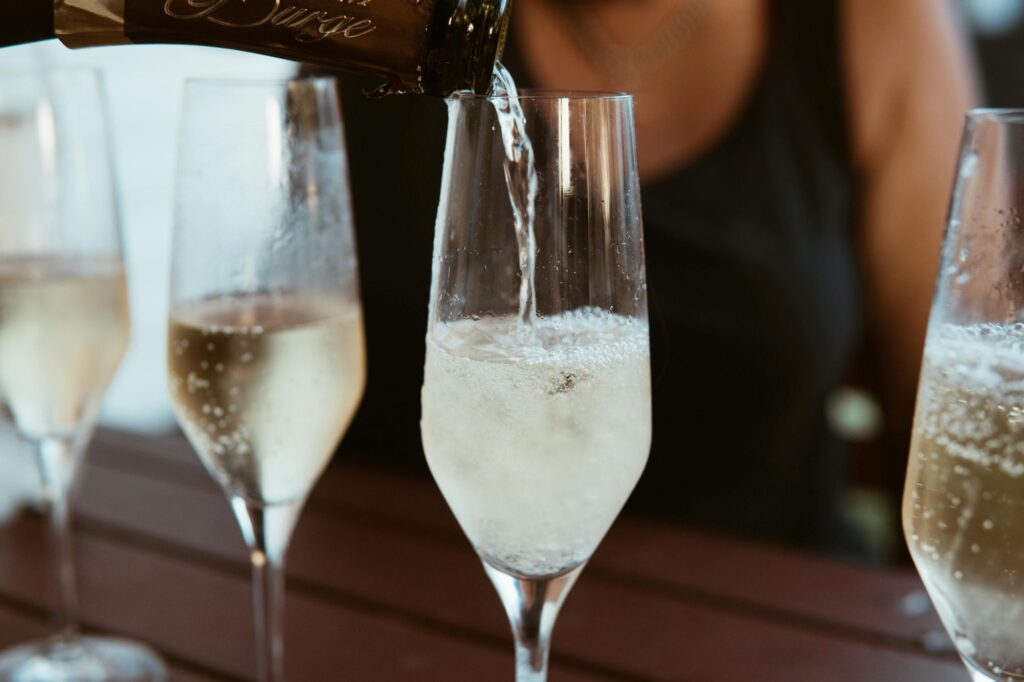
Sparkling wine deserves its own section because it is such a broad category, and because England’s contribution to it is genuinely world-class.
- Champagne (France) — made by the traditional method using Chardonnay, Pinot Noir and Pinot Meunier, then aged on the lees for at least 15 months. Toasty, creamy and complex. Blanc de Blancs Champagne is made entirely from Chardonnay and tends to be crisper and more citrus-led.
- English sparkling wine — made using the same traditional method on the chalk soils of southern England, which are geologically similar to the Champagne region. English sparkling wines have won international blind tastings against Champagne.
- Prosecco (Italy) — made by the tank method (called Charmat), where the second fermentation that creates the bubbles happens in large pressurised tanks rather than in each individual bottle. This gives Prosecco its frothy, fruity, easy-drinking character. It is lighter and less complex than traditional-method sparkling wine.
- Cava (Spain) — traditional method, mostly from Spanish grape varieties. Good value and underrated: apple, citrus and a slightly earthy quality.
- Crémant (France) — traditional-method sparkling wine made outside Champagne, from Alsace, the Loire and Burgundy. Often excellent value under £20.
Top tip: For more on serving, opening and enjoying sparkling white wine, see our guide to drinking sparkling wine.
How Many Calories in White Wine?
The calories in white wine come mostly from the alcohol, with a smaller contribution from any residual sugar. A dry white at 12% ABV (alcohol by volume) is generally a little lower in calories than a dry red at 13 to 14% ABV, because it contains less alcohol per glass.
How Many Calories in a Glass of White Wine?
| Serving | Dry white (12% ABV) | Medium white (11% ABV) | Sweet white (10% ABV) |
|---|---|---|---|
| Small glass (125ml) | 95–105 kcal | 100–115 kcal | 110–125 kcal |
| Medium glass (175ml) | 130–145 kcal | 140–155 kcal | 150–170 kcal |
| Large glass (250ml) | 185–205 kcal | 200–220 kcal | 215–240 kcal |
How Many Calories in a Bottle of White Wine?
| Style | Approx. calories per bottle (750ml) |
|---|---|
| Dry white wine (11–12% ABV) | 530–580 kcal |
| Medium white wine (off-dry) | 560–620 kcal |
| Full-bodied white wine (13–14% ABV) | 600–650 kcal |
| Sweet dessert white wine | 700–800 kcal (served in 75ml measures) |
The British Nutrition Foundation provides further detail on alcohol and energy intake. For a full breakdown by bottle size and wine style, see our guide on how many units are in a bottle of wine.
Is White Wine Lower in Calories Than Red?
Generally, yes, but only marginally. The difference comes down to alcohol content rather than colour. A light, crisp Vinho Verde at 9% ABV will be much lower in calories than a heavily oaked Chardonnay at 14%. The NHS recommends no more than 14 units of alcohol per week, spread over at least three days. One 175ml glass of 12% white wine is approximately 2.1 units.
Top tip: If you are watching your calorie intake, choose a lighter, lower-alcohol dry white such as an English Bacchus, a German Riesling Kabinett or a Portuguese Vinho Verde. Lower ABV means fewer calories per glass.
The Ultimate White Wine Food Pairing Guide
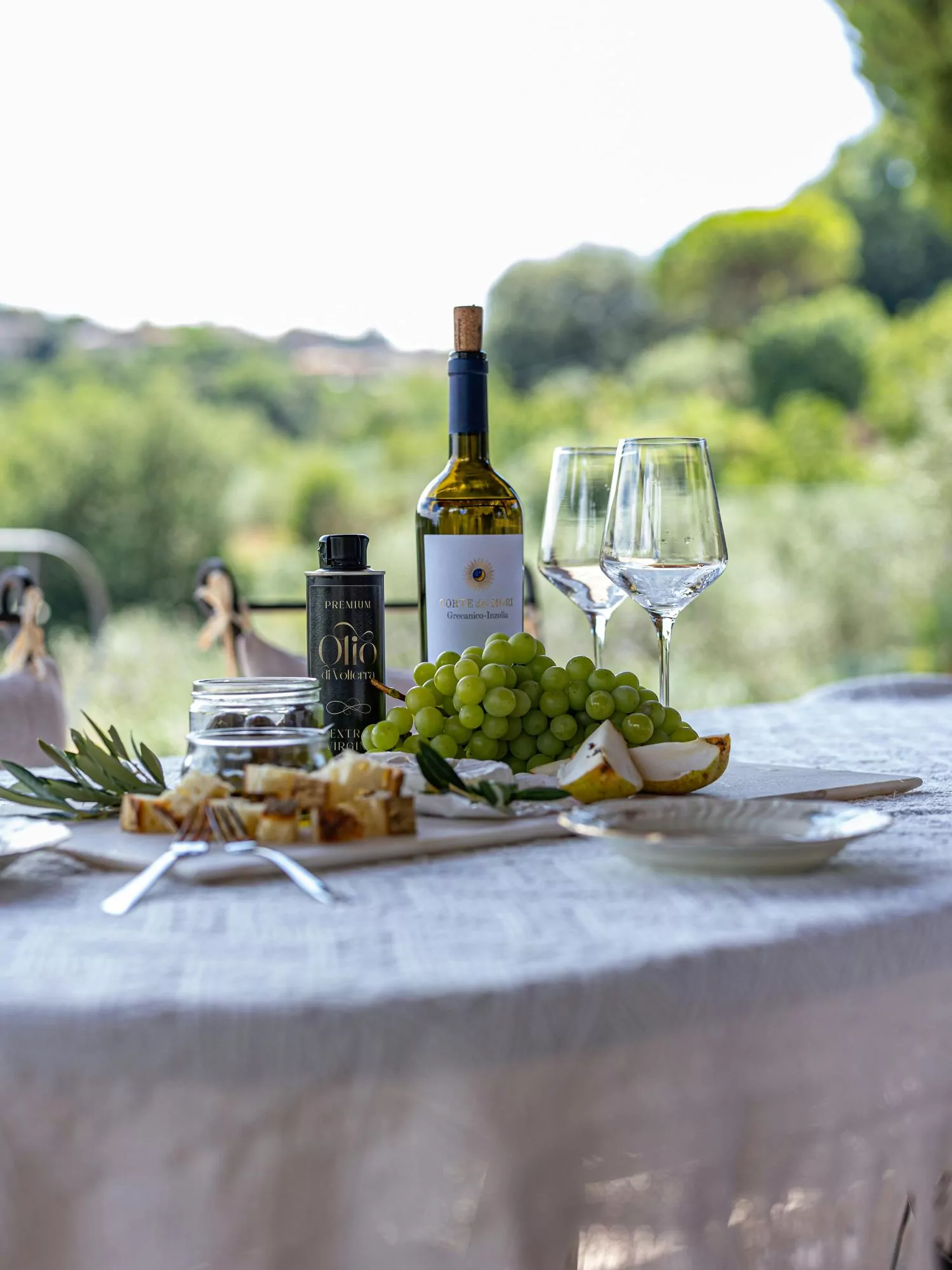
White wine is one of the most versatile food partners at the table. Its acidity cuts through richness, its freshness lifts delicate flavours, and it does not clash with fish and seafood the way red wine sometimes can. For a fuller walk-through of the principles, see our beginner’s guide to food and wine pairing.
| Food | Wine Style | Why It Works |
|---|---|---|
| Oysters, clams | Chablis, Muscadet, English Blanc de Blancs | Mineral, saline wines echo the sea |
| Grilled fish, sea bass, sole | White Burgundy, unoaked Chardonnay | The richness of the wine matches the texture of the fish |
| Seafood lasagne | English Pinot Gris | Citrus and pear cut through cream sauce |
| Seared scallops | English Schonberger orange wine, English sparkling | Aromatic intensity matches sweet shellfish |
| Herby lemon chicken | English Pinot Gris, Viognier | Stone fruit and citrus lift the herbs |
| Roast chicken, pork | Oaked Chardonnay, Pinot Gris | The fuller body of the wine matches the meat |
| Goat’s cheese salad | Sauvignon Blanc, English Bacchus, Pinot Gris | Herbaceous notes complement the tang |
| Creamy pasta, risotto | White Burgundy, oaked Chardonnay | Creamy texture mirrors the dish |
| Spicy Thai or Vietnamese food | Off-dry Riesling, English Muscaris | A touch of sweetness cools the heat |
| Parma ham and melon | English Muscaris | Floral sweetness mirrors the fruit |
| Sponge cakes, fruit tarts | English Muscaris, late-harvest Riesling | Off-dry aromatics complement light desserts |
What Cheese Goes With White Wine?
White wine is often a more natural partner for cheese than red. Our wine-and-cheese pairing guide for beginners covers the principles in full. Some reliable starting points:
- Brie and Camembert with English sparkling wine or Blanc de Blancs
- Goat’s cheese with Sauvignon Blanc or English Bacchus
- Baked Camembert with English Blanc de Blancs
- Gruyère or Comté with white Burgundy or Pinot Gris
- Blue cheese with Sauternes
White Wine and Seafood: Why It Works So Well
The “white wine with fish” rule exists because red wine’s tannins react with fish proteins, producing a metallic taste. White wine has no tannins, so that reaction doesn’t happen. White wine’s acidity also acts like a squeeze of lemon, brightening and lifting the dish’s flavour.
For more pairing ideas matched to Bolney’s own wines, see our Bolney wine and cheese pairings.
How to Choose a White Wine Without Feeling Overwhelmed
A few quick questions narrow things down fast:
- Crisp and dry, or rich and round? For crisp and dry: Sauvignon Blanc, Pinot Grigio or English Bacchus. For rich and round: oaked Chardonnay or white Burgundy.
- Something aromatic? Try Bacchus, Muscaris, Gewürztraminer or Riesling. All have distinctive scents that are interesting on their own.
- What are you eating? Delicate dishes (fish, salads) suit lighter whites. Richer dishes (roast chicken, creamy sauces) suit fuller whites.
- Totally dry? Stick to Sauvignon Blanc, Pinot Grigio, Chablis, Bacchus or Grüner Veltliner. Avoid anything labelled “fruity” if you are not sure.
- Old World or New World? European wines (France, Italy, Germany, England) tend to be more restrained and mineral. New World wines (New Zealand, Australia, California) tend to be more fruit-forward and generous. (“Old World” means the traditional wine-producing countries of Europe. “New World” means wine regions in the Americas, Australasia and South Africa.)
- Budget? A good everyday dry white in a UK supermarket starts from around £8 to £12. Estate-bottled English white wine typically sits in the £16 to £30 range, reflecting the care that goes into smaller-batch winemaking on home soil.
White Wine Glasses
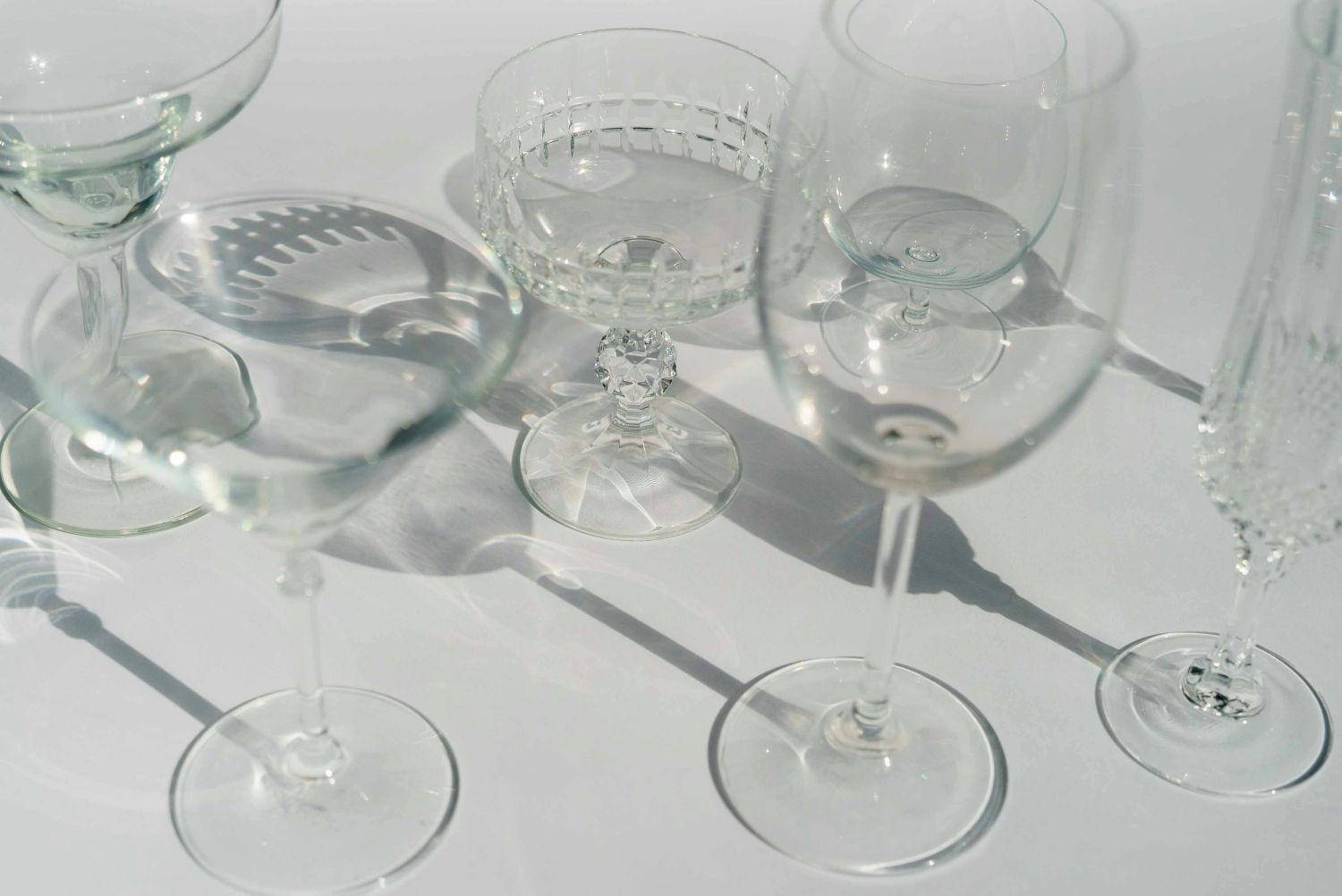
White wine glasses are generally smaller and narrower than red wine glasses. A smaller glass keeps the wine from warming up too quickly, and a narrower bowl focuses delicate aromas, which is especially important for highly aromatic whites like Bacchus, Riesling or Muscaris.
| Glass Type | Best For |
|---|---|
| Standard white wine glass (tulip shape) | Everyday whites: Sauvignon Blanc, Pinot Grigio, Bacchus |
| Larger, wider tulip (Burgundy-style) | Oaked Chardonnay, white Burgundy: captures creamy, complex aromas |
| Tall, narrow glass | Riesling, Gewürztraminer, Muscaris: focuses on delicate floral aromatics |
| Flute or tulip flute | Sparkling wine: shows the bubbles and preserves freshness |
Top tip: One good universal white wine glass is all you need to start. Our guide to wine glasses covers shapes and styles in more detail.
What Temperature Should You Serve White Wine?
The most common mistake with white wine is serving it too cold. Wine straight from a standard fridge (around 4°C) has suppressed aromas and muted flavours. Taking it out of the fridge for a few minutes before pouring makes a real difference.
| Style | Ideal Serving Temperature |
|---|---|
| Sparkling white (Champagne, English sparkling, Prosecco) | 6–8°C |
| Crisp, light whites (Pinot Grigio, Muscadet, Vinho Verde) | 8–10°C |
| Aromatic whites (Bacchus, Riesling, Sauvignon Blanc, Muscaris) | 10–12°C |
| Full-bodied whites (oaked Chardonnay, Viognier, white Burgundy) | 12–14°C |
Do You Need an Ice Bucket for White Wine?
An ice bucket is useful but not essential. Its main job is to keep an already chilled bottle at the right temperature while you drink it, especially on a warm day or at a table away from the fridge.
If you do use one:
- Use a mix of ice and water, not ice alone. Ice and water together conduct cold far more effectively than ice alone, and the bottle chills evenly rather than just at the base.
- Add a handful of salt to the water to lower the temperature faster if you need to chill a bottle quickly.
- Do not over-chill. If a bottle has been sitting in an ice bucket for more than 20 to 30 minutes, it may be too cold. Lift it out a few minutes before pouring.
Good alternatives to an ice bucket include a neoprene wine sleeve (a close-fitting insulating jacket that keeps a pre-chilled bottle cool without ice), or simply chilling the wine in the fridge for two to three hours before you need it.
How to Store White Wine at Home
Most white wines are made to be drunk young, within one to three years of the vintage. They are designed to be fresh, and that freshness fades over time. Unlike many reds, most everyday whites do not improve with long storage.
The basics:
- Cool — 10 to 15°C is ideal. Avoid warm kitchens and places with large temperature swings.
- Dark — UV light degrades wine over time. White wine is particularly vulnerable as it lacks the protective pigments found in red wine.
- On its side — If the bottle has a cork, store it horizontally to keep the cork moist and prevent oxidation (where air gets in and spoils the wine).
- Away from vibration and strong smells — Both can affect the wine over time, as corks are slightly porous.
Exceptions include quality white Burgundy, aged Riesling and top-end English Chardonnay, all of which can develop well over five to ten years in a proper cellar. If you are not sure whether a bottle is still good after storage, our guide on how long wine lasts unopened covers what to look for.
Do You Need a Wine Fridge for White Wine?
A wine fridge (also called a wine cooler) is a temperature-controlled cabinet designed to store wine at a consistent temperature. It is not essential, but it is the single most useful upgrade for anyone who regularly buys and keeps white wine.
Here is why a standard kitchen fridge is not ideal for storing white wine long-term:
- It is too cold (around 4°C), which slows the wine’s natural development and can dry out corks over time
- It is dry, which damages cork-sealed bottles
- It is full of strong food smells, which can seep through the cork into the wine
- Opening and closing it constantly causes small vibrations
A wine fridge is set to 10 to 14°C for whites and sparkling wines, keeping them ready to serve without the risk of over-chilling. Many models have two zones, letting you store whites and reds at their ideal temperatures in the same unit.
If a wine fridge is not an option, a cool, dark cupboard away from the oven and boiler is a perfectly good short-term solution for bottles you plan to drink within a few months. For ideas on how to set up a practical and enjoyable home wine storage space, see our guide to setting up a home wine bar.
Top tip: Entry-level wine fridges start from around £100 to £150 and hold 12 to 18 bottles. For a household that drinks two or three bottles of white wine a week, this is often the most cost-effective investment in wine quality you can make.
What Does “Vintage” Mean on a White Wine Label?
The vintage year is simply the year the grapes were harvested. For most white wines, freshness is everything, and freshness fades. A 2023 Bacchus will typically be livelier and more fragrant than the same wine from 2019.
In cool-climate regions like England, vintage variation is particularly noticeable. A warm, sunny year produces whites with riper fruit and more concentration. A cooler year produces lighter wines with higher acidity. This variation is part of what makes English wine interesting: each bottle records a specific year on a specific hillside.
Non-vintage (NV) sparkling wines are blended across multiple years to maintain a consistent style. For more on what vintage means in practice, see our guide on when wine becomes vintage.
Natural, Organic, Vegan and Low-Alcohol White Wines
These categories are growing fast in UK retail, and white wine is where many shoppers first encounter them.
- Organic white wine — made from grapes grown without synthetic pesticides or fertilisers. Look for the Soil Association logo on certified English organic wines.
- Biodynamic white wine — organic farming taken further, following a holistic farming approach based on the natural calendar. Some of the world’s finest white wines are biodynamic.
- Natural white wine — minimal intervention in both vineyard and winery, with little or no added sulphites (sulphites are a preservative used in most conventional wines). Natural whites can be slightly cloudy or amber in colour, with complex, textural characters. This is intentional, not a fault.
- Vegan white wine — most conventional wines are clarified (cleared of cloudiness) using animal-derived ingredients such as egg whites, milk protein, fish bladder (called isinglass) or gelatin. Vegan wines use plant- or mineral-based alternatives, such as bentonite clay or pea protein. The Vegan Society sunflower logo is the most reliable mark to look for. Several wines in the Bolney range, including the Muscaris and orange wines, are vegan-friendly.
- Low-alcohol white wine — typically 5.5 to 9% ABV, made by stopping fermentation early or using a process called dealcoholisation (where alcohol is removed after the wine is made). A growing choice for drinkers who want to moderate without giving up wine entirely.
For more on plant-based wine choices, see our guide to vegan wines.
Visit a Vineyard to Learn More About White Wine
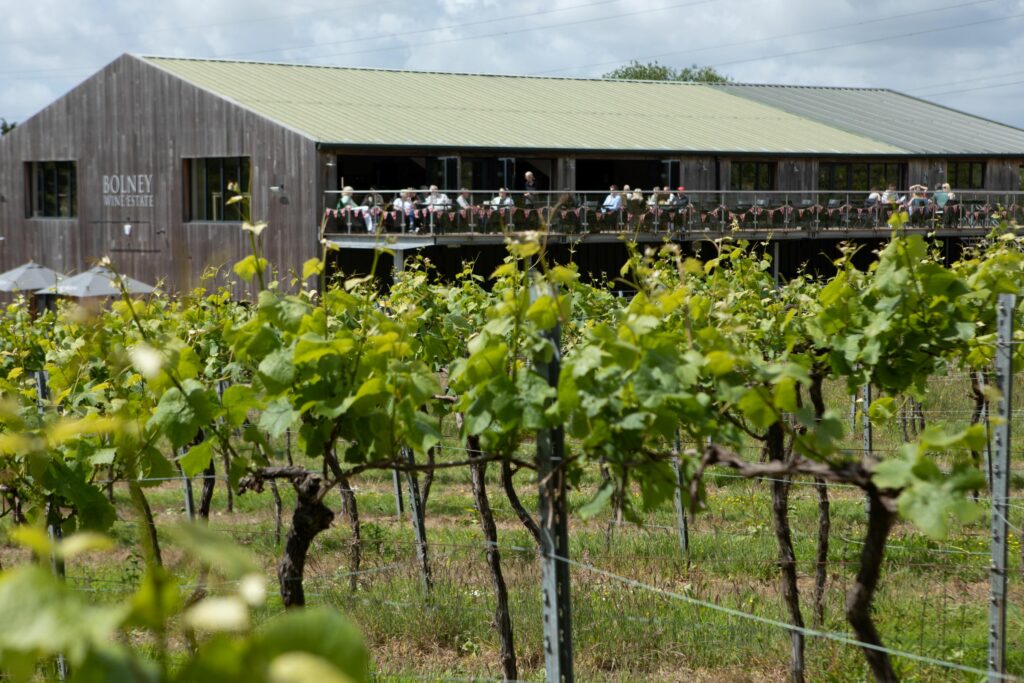
The fastest way to understand white wine is to taste it where it is made. An afternoon in the vineyard tells you more than months of reading.
If you have never been to a wine tasting before, our guide to what wine tasting involves explains what to expect. A typical visit might include:
- A guided walk through the vineyard with an explanation of white grape varieties and soils
- A tour of the winery to see how white wine is pressed, fermented and aged on-site
- A tutored tasting comparing still and sparkling styles side by side
- Lunch or a tasting board overlooking the vines
West Sussex has become one of the UK’s most exciting white wine regions, with producers working across still and sparkling styles on chalk, sandstone and greensand soils, all within an hour of London and Brighton.
Come and visit Bolney Wine Estate in West Sussex, where we have been growing white wine grapes on these slopes since 1972.