Account






Red Wine: The Ultimate Guide To Grapes, Styles & Food Pairings
Start exploring

Red wine can feel like a closed-off subject. There are hundreds of grapes, dozens of major regions, and a wall of vocabulary that turns up on every back label and restaurant list. This guide is a complete, plain-English introduction to red wine for drinkers who want to know more about what they are buying and drinking.
Contents
- What Is Red Wine?
- How Is Red Wine Made?
- Red Wine Types: The Grapes You’ll Meet Most Often
- How to Describe Red Wine: A Tasting Vocabulary
- What Makes a Red Wine Dry, Medium or Sweet?
- Red Wine Categories at a Glance
- Fizzy Red Wine and Sparkling Red Wine
- Is Red Wine Good for You?
- The Ultimate Red Wine Food Pairing Guide
- How to Choose a Red Wine Without Feeling Overwhelmed
- Red Wine Glasses
- What Temperature Should You Serve Red Wine?
- Should You Decant Red Wine?
- How to Store Red Wine at Home
- What Does “Vintage” Mean on a Red Wine Label?
- Natural, Organic, Vegan and Low-Alcohol Red Wines
- Visit a Vineyard to Learn More About Red Wine
What Is Red Wine?
Red wine is made from black or dark-skinned grapes. The colour comes from the grape skins, which are left in contact with the juice during fermentation. White wine, by contrast, has the skins removed early on.
That skin contact also gives red wine its tannins — the dry, gripping sensation you might notice on your gums after a sip. Tannins act as natural preservatives, which is why many reds can age for years (or even decades) in a cellar.
In short, red wine is:
- Made from dark-skinned grapes
- Fermented with the skins on
- Higher in tannins than white or rosé
- Usually served at cool room temperature
According to the International Organisation of Vine and Wine (OIV), red wine makes up just over half of global wine production by volume, with roughly 130 million hectolitres produced each year.
How Is Red Wine Made?
The process is simple in principle, even if every winemaker has their own twist.
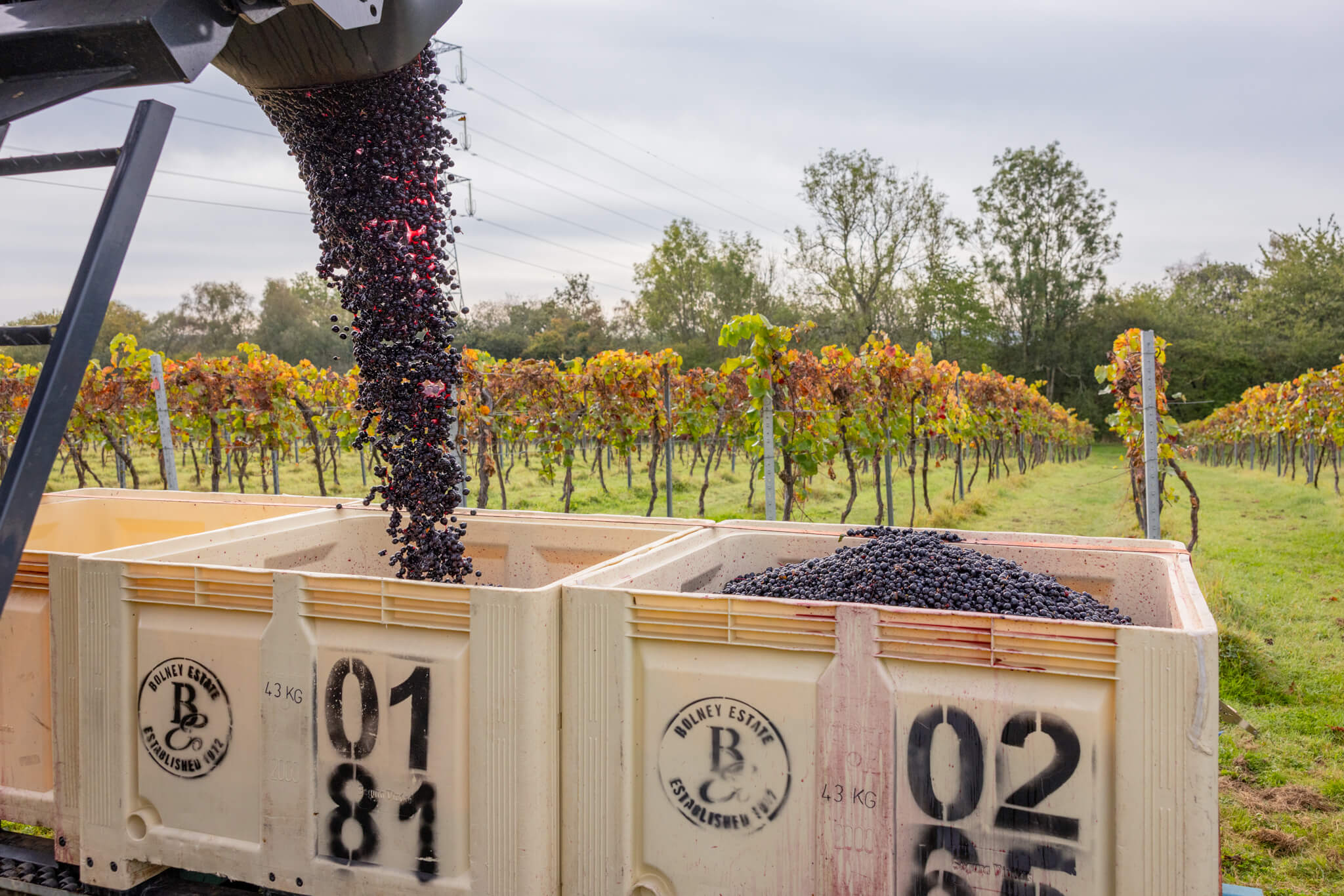
- Harvest — Grapes are picked when ripe, usually in autumn. In West Sussex, the English wine harvest typically runs from September to October.
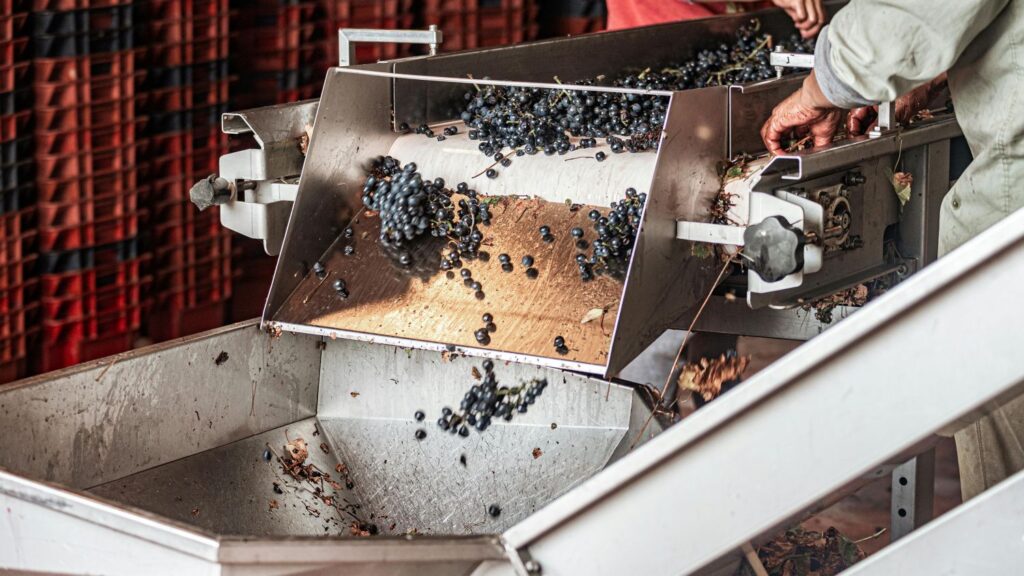
- Crushing — Grapes are gently crushed to release juice while keeping skins and pips in the mix.
- Fermentation — Yeast converts the natural sugars into alcohol. This is where colour, flavour, and tannin develop.
- Pressing — Grape skins are separated from the new wine.
- Ageing — Wine matures in oak barrels or stainless steel tanks for months or years.
- Bottling — Once the winemaker is happy, the wine is bottled and rested before release.
The UC Davis Department of Viticulture and Oenology, one of the leading academic centres for wine science, publishes free educational material covering the chemistry behind each of these stages.
Red Winemaking: Cool Climate vs Warm Climate
The grape is only half the story. Climate fundamentally shapes how a wine is made and what it tastes like.
| Stage | Cool Climate (England, Burgundy, Oregon, Mosel) | Warm Climate (Napa, Barossa, Mendoza, Sicily) |
|---|---|---|
| Harvest timing | Late, often hand-picked to select ripe fruit (September to October in West Sussex) | Earlier in the day to preserve acidity |
| Sugar / alcohol | Lower (often 11–13% ABV) | Higher (often 14–15% ABV+) |
| Acidity | Higher, fresher | Lower, softer |
| Skin maceration | Often longer to extract colour and tannin | Often shorter to avoid bitterness |
| Oak influence | Lighter touch, used barrels is common | More tolerant of new oak |
| Vintage variation | Pronounced | Generally consistent |
Research by van Leeuwen and Darriet, published in the Journal of Wine Economics, has tracked how rising temperatures are reshaping the map of red wine. Classic red wine regions like Bordeaux are now picking their grapes two to three weeks earlier than they did in the 1980s, and the reds they produce tend to be riper and higher in alcohol as a result. At the same time, cooler areas like the South of England have warmed just enough to ripen red grapes like Pinot Noir — turning Sussex and Kent into genuine red wine territory for the first time.
What Is Terroir in Wine?
You’ll see the French word terroir (pronounced teh-rwah) on wine labels, in tasting notes and on restaurant menus. It refers to the factors that give a wine the taste of where it came from:
- The weather
- The soil
- The slope of the vineyard
- How much sun the vines get
It’s why the same grape variety produces very different wines in different regions. When someone says a wine “expresses its terroir,” they simply mean it tastes distinctly like where it came from.
Take Pinot Noir as an example. Planted in three very different places, you get three very different wines:
- Sussex chalk: light and fresh, with bright red fruit
- Burgundy limestone: earthier and more savoury
- Oregon volcanic soil: richer, with darker fruit
Same grape, same winemaking. Very different glass.
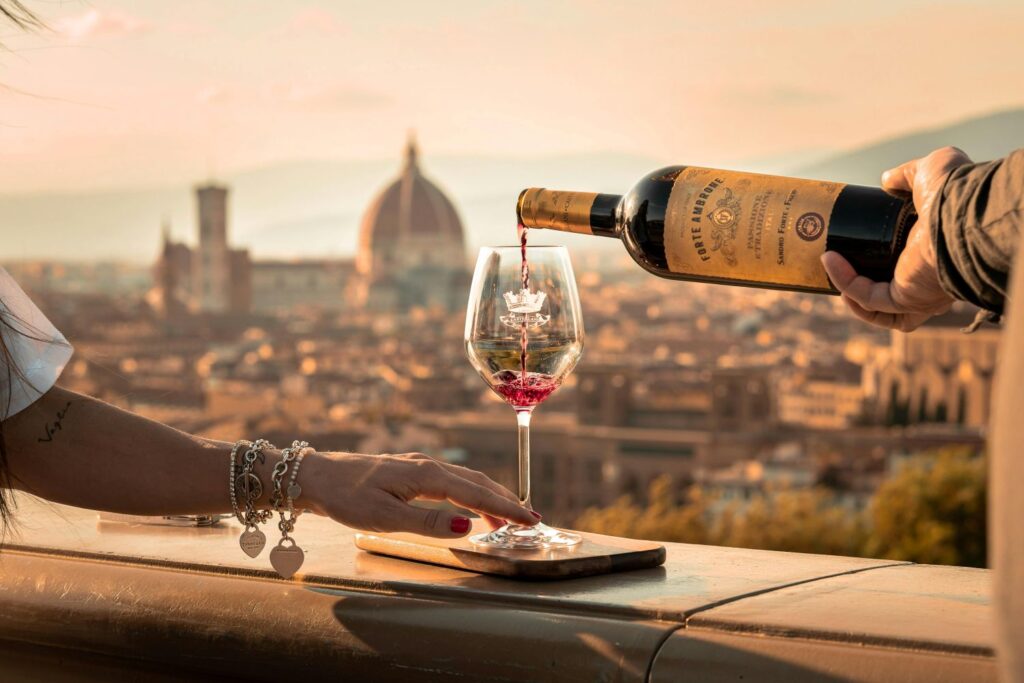
Red Wine Types
There are thousands of red grape varieties grown worldwide, but a handful do most of the heavy lifting.
| Grape | Style | Typical Flavours | Where It’s Famous |
|---|---|---|---|
| Pinot Noir | Light to medium | Red cherry, raspberry, earth | Burgundy, England, New Zealand |
| Cabernet Sauvignon | Full-bodied | Blackcurrant, cedar, tobacco | Bordeaux, Napa Valley |
| Merlot | Medium to full | Plum, chocolate, soft herbs | Bordeaux, Chile |
| Syrah / Shiraz | Full-bodied | Black pepper, blackberry, smoke | Rhône, Australia |
| Sangiovese | Medium | Sour cherry, tomato leaf, leather | Tuscany |
| Tempranillo | Medium to full | Cherry, vanilla, leather | Rioja, Ribera del Duero |
| Malbec | Full-bodied | Plum, violet, cocoa | Argentina, Cahors |
| Grenache | Medium to full | Strawberry, white pepper, herbs | Rhône, Spain |
| Nebbiolo | Full-bodied | Rose, tar, sour cherry | Piedmont (Barolo, Barbaresco) |
| Gamay | Light | Cranberry, banana, violet | Beaujolais |
| Pinot Précoce / Rondo | Light to medium | Bramble, cherry, earth | England |
Bordeaux wine is a blend, typically built around Cabernet Sauvignon, Merlot and Cabernet Franc, sometimes with Petit Verdot or Malbec. The wines are structured and age-worthy.
Italian red wine is a category in itself — Italy grows more native varieties than any other country. Sangiovese (Chianti, Brunello di Montalcino) and Nebbiolo (Barolo, Barbaresco) lead the way, with savoury, herbal notes and bright acidity.
English red wine is a small but growing category. Pinot Noir leads on the cool chalk soils of Sussex and Kent, while the cool-climate variety Rondo produces medium-bodied reds with red and black fruit, smoky notes and peppery spice. Lychgate Red 2021, made from Rondo grown on Bolney Wine Estate, is a working example of what the grape can do in West Sussex.
How to Describe Red Wine: A Tasting Vocabulary
Wine descriptions can sound silly until you realise they’re shorthand for real, repeatable sensations. Here’s how professional tasters talk about the characteristics of wine and what the most common words mean. For a step-by-step walk-through of the tasting process itself, see our guide on how to taste wine like a professional.
Body
How heavy or light the wine feels in your mouth. Milk is the closest comparison:
- Light-bodied — like skimmed milk (Pinot Noir, Gamay)
- Medium-bodied — like semi-skimmed (Merlot, Sangiovese)
- Full-bodied — like whole milk (Cabernet Sauvignon, Shiraz)
Tannin
The dry, grippy texture from grape skins. Words you’ll see:
- Silky / smooth — soft tannins, easy to drink
- Grippy / firm — noticeable structure, often in young Cabernet
- Drying / astringent — tannins dominate (often need food or more bottle age)
- Velvety — soft and rich (often older reds)
Acidity
Acidity is what makes your mouth water. High-acid reds taste fresh and lively, whereas low-acid reds taste rounder and softer. Cool-climate reds generally have more acidity than warm-climate ones.
Fruit Character
This is where most of the colourful tasting notes live:
- Red fruit — cherry, raspberry, strawberry, cranberry (often cool-climate)
- Black fruit — blackberry, plum, blackcurrant (often warmer-climate)
- Jammy — very ripe, cooked-fruit flavours, like fruit preserves (a hallmark of warm-climate Zinfandel, Shiraz or Malbec)
- Stewed / dried — prune, fig, raisin (often older or very warm-climate wines)
Other Common Flavour Notes
- Earthy — forest floor, mushroom, damp leaves (Burgundy, Nebbiolo)
- Spicy — black pepper, clove, cinnamon (Syrah, Grenache)
- Herbal — bay leaf, mint, eucalyptus (Cabernet Franc, Cabernet Sauvignon)
- Oaky — vanilla, toast, coconut, smoke (from barrel ageing)
- Floral — violet, rose (Malbec, Nebbiolo)
Finish
The finish is how long the flavour lingers in your mouth after you swallow. A “long finish” is one of the clearest signs of a well-made wine.
When a wine has plenty of natural acidity, tannin and ripe fruit flavour, all three keep working on your tongue after the wine has gone. A finish that fades in a couple of seconds usually means there’s less of all of them to begin with. Climate plays a big part in how a red wine finishes.
Warm-climate reds like Barossa Shiraz, Napa Cabernet or Argentinian Malbec tend to build big, ripe tannins that coat the mouth and linger. A study of four contrasting Australian wine regions found that warmer sites consistently produced reds with deeper colour and higher tannin levels, giving them their fuller-bodied, lasting character.
Cool-climate reds like English Pinot Noir, Burgundy or German Spätburgunder have a different finish. They tend to be lighter and lower in tannin, but their bright acidity and fresh fruit flavour can still give a beautifully long, refreshing finish. Research on vineyard-scale climate effects on Pinot Noir found that cool climate vineyards produced wines with quite different chemistry. These red wines were noted for being fresh and elegant rather than big and powerful.
Top tip: Anything over 30 seconds counts as a long finish. Try counting in your head after your next sip and you’ll start to spot the difference between bottles quickly.
What Makes a Red Wine Dry, Medium or Sweet?
The terms refer to how much sugar is left after fermentation.
- Dry — Almost no residual sugar. Most reds you’ll meet are dry.
- Off-dry / medium — A touch of sweetness, often balanced by acidity.
- Sweet — Noticeable sugar. Think Port, Recioto della Valpolicella, or late-harvest reds.
A jammy wine is dry but tastes very ripe because the grapes reached high sugar levels at harvest, and the yeast then converted all of it into alcohol.
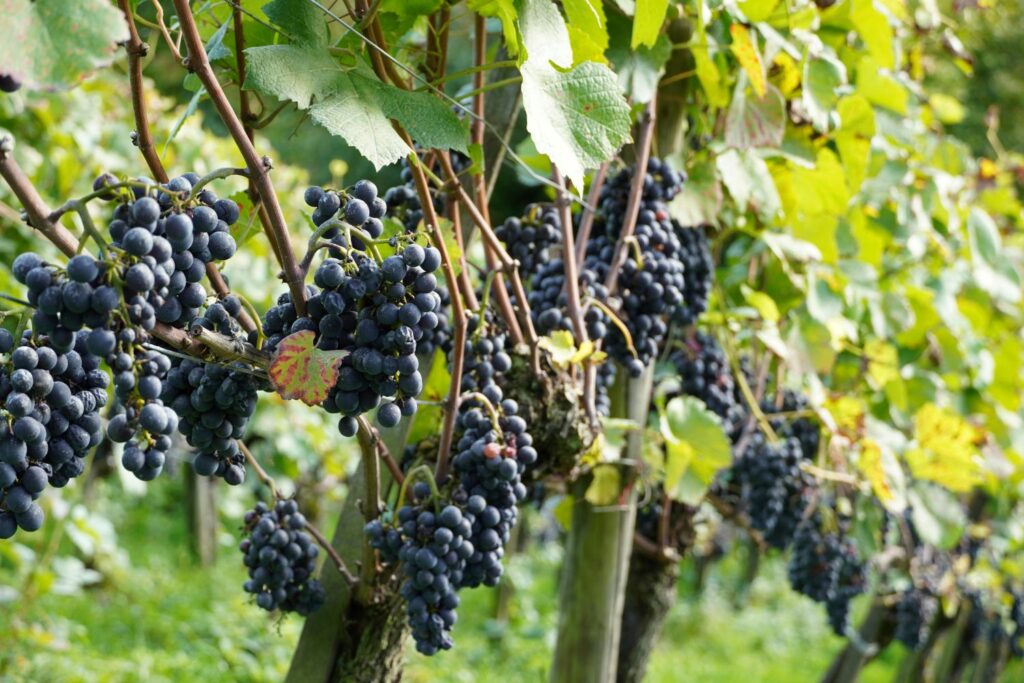
Red Wine Regions and Sweetness at a Glance
Climate is the biggest single clue to how a red wine will taste. The table below covers the regions you’re most likely to encounter in a UK winery, shop, or restaurant, arranged from coolest to warmest.
| Region | Climate | Notable Red Wines | Typical Sweetness |
|---|---|---|---|
| South of England (Sussex, Kent) | Cool | Pinot Noir, Pinot Précoce | Dry |
| Burgundy, France | Cool | Red Burgundy (Pinot Noir) | Dry |
| Loire Valley, France | Cool | Cabernet Franc (Chinon, Bourgueil) | Dry |
| Mosel and Pfalz, Germany | Cool | Spätburgunder, Dornfelder | Dry to off-dry |
| Willamette Valley, Oregon | Cool | Pinot Noir | Dry |
| Central Otago, New Zealand | Cool | Pinot Noir | Dry |
| Bordeaux, France | Moderate | Cabernet Sauvignon and Merlot blends | Dry |
| Northern Rhône, France | Moderate | Syrah | Dry |
| Piedmont, Italy | Moderate | Nebbiolo (Barolo, Barbaresco) | Dry |
| Tuscany, Italy | Moderate to warm | Sangiovese (Chianti, Brunello) | Dry |
| Rioja, Spain | Warm | Tempranillo | Dry |
| Southern Rhône, France | Warm | Grenache blends (Châteauneuf-du-Pape) | Dry |
| Napa Valley, USA | Warm | Cabernet Sauvignon | Dry (often jammy) |
| Mendoza, Argentina | Warm | Malbec | Dry (often jammy) |
| Barossa Valley, Australia | Warm | Shiraz | Dry (often jammy) |
| Emilia-Romagna, Italy | Warm | Lambrusco | Dry (secco) to sweet (dolce) |
| Veneto, Italy | Warm | Amarone, Recioto della Valpolicella | Dry (Amarone) to sweet (Recioto) |
| Douro Valley, Portugal | Warm | Port | Sweet (fortified) |
| Sicily, Italy | Warm | Nero d’Avola, Passito reds | Dry to sweet |
As a quick rule: cool-climate reds are almost always dry and lighter, while the genuinely sweet reds tend to come from warm regions where grapes ripen quickly enough to leave sugar behind, either by stopping fermentation early or by drying the grapes first (as with Recioto and Amarone).
Red Wine Categories at a Glance
Body, the weight a wine has in your mouth, is one of the most useful clues to look for on a wine label. Supermarket shelf tags, back-label tasting notes and restaurant menus often describe a red as light, medium or full-bodied, and many bottles include a small body scale on the back label.
Body also tracks climate fairly closely: cool-climate regions like Burgundy, the South of England and Oregon tend to produce lighter reds, while warm regions like Napa, Barossa and Mendoza tend to produce fuller-bodied reds.
The table below sums up the five main categories with familiar examples for each.
| Category | Body | Examples |
|---|---|---|
| Light-bodied | Like skimmed milk in feel | Pinot Noir, Gamay, Schiava |
| Medium-bodied | Like semi-skimmed | Merlot, Sangiovese, Tempranillo |
| Full-bodied | Like whole milk | Cabernet Sauvignon, Shiraz, Malbec |
| Sparkling | Fizzy, lower tannin | Lambrusco, sparkling Shiraz, English Cuvée Noir |
| Sweet / fortified | Rich, dessert-style | Port, Banyuls, Recioto |
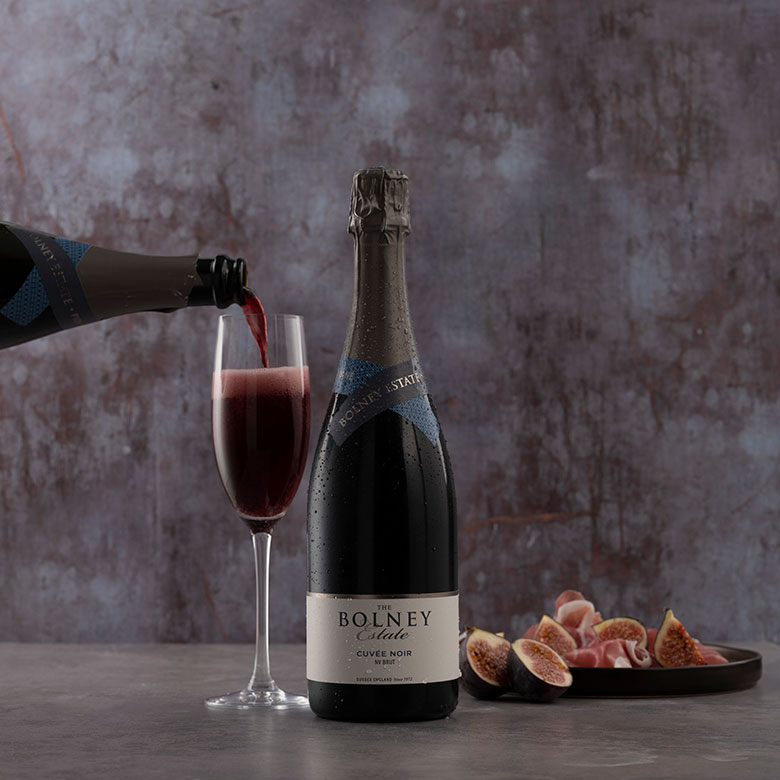
Fizzy Red Wine and Sparkling Red Wine
Sparkling red wine (sometimes called fizzy red wine) is far less common than its white and rosé cousins, but it deserves a place at the table.
The main styles include:
- Lambrusco (Italy) — fruity, frothy, and far better than its 1980s reputation suggests. Emilia-Romagna’s signature.
- Sparkling Shiraz (Australia) — bold, dark and surprisingly good with Christmas turkey.
- Brachetto d’Acqui (Italy) — a sweeter, lower-alcohol Italian fizz that pairs beautifully with chocolate.
- English sparkling red — Often labelled “Cuvée Noir” or similar, these are made using the traditional method (the same process as Champagne) from Pinot Noir and Pinot Précoce grown in the South of England. A small but growing category, English sparkling red is elegant, dry, food-friendly, and unlike sparkling reds from anywhere else in the world.
Top tip: Serve sparkling reds chilled at around 8–10°C to keep them fresh on the palate. For more on serving, opening and storing fizz, see our guide to drinking sparkling wine.
Is Red Wine Good for You? Here’s What the Research Says
Red wine has been linked to heart health for decades. The connection took off with a 1992 paper by Renaud and de Lorgeril in The Lancet, which proposed the “French paradox”: the observation that French populations had relatively low rates of coronary heart disease despite a diet high in saturated fat. Red wine, rich in a polyphenol (a naturally occurring micronutrient found in plants) called resveratrol, was floated as a possible explanation.
The picture has become more complicated since.
What Recent Research Suggests
- A 2018 Lancet study from the Global Burden of Disease collaborators concluded that the safest level of alcohol consumption is zero, and that the health risks rise steadily with intake.
- A 2019 review in Molecules summarised the evidence for red wine’s cardiovascular effects, finding that moderate consumption may have some protective effect linked to polyphenols, but that the alcohol itself carries risk.
- The PREDIMED trial, one of the largest studies of the Mediterranean diet, included red wine as part of the dietary pattern associated with lower cardiovascular events — though it’s difficult to isolate wine from the rest of the diet.
- A 2022 review in JAMA Network Open pulled together decades of studies that suggested one or two drinks a day might be healthier than drinking nothing at all. When the researchers looked more carefully, they found that many of the supposed “non-drinkers” in those older studies had actually given up drinking because they were already unwell, which made moderate drinkers look healthier by comparison. Once that was taken into account, the apparent health benefit of moderate drinking largely disappeared.
How many units is healthy? The NHS recommends no more than 14 units of alcohol per week, spread over at least three days. Drinkaware offers balanced guidance on units and risk.
Is Red Wine Healthier Than Other Wines?
A common question, and the honest answer is: it depends on what you mean by healthier. Red, white and rosé wines differ in the compounds they contain, but they all contain alcohol, which carries its own risks regardless of colour.
| Compound | Red Wine | White Wine | Rosé |
|---|---|---|---|
| Resveratrol | Higher (skin contact) | Trace amounts | Low |
| Total polyphenols | ~1,800 mg/L | ~250 mg/L | ~400 mg/L |
| Calories (per 175ml) | ~150 | ~130 | ~140 |
| Alcohol (typical ABV) | 12–15% | 10–13% | 11–13% |
Red wine contains significantly more polyphenols than white wine because of the extended skin contact during fermentation. A 2020 study in Nutrients found these compounds may have antioxidant and anti-inflammatory effects.
Even so, both are alcoholic, and the alcohol itself remains the dominant health factor. Whichever colour you prefer, moderation matters more than the type of wine.
How Many Calories in a Bottle of Red Wine?
A 750ml bottle of dry red wine at 13% ABV contains roughly 600–650 calories.
| Serving | Approx. Calories |
|---|---|
| Small glass (125ml) | 100–110 |
| Medium glass (175ml) | 140–155 |
| Large glass (250ml) | 200–220 |
| Bottle (750ml) | 600–650 |
Sweeter reds and higher-alcohol styles (15% ABV and above) sit at the upper end. The British Nutrition Foundation publishes further details on alcohol and energy intake.
How Much Red Wine Is a Serving?
A UK standard small glass is 125ml — roughly 1.5 units. A 175ml glass is closer to 2.3 units. The NHS guidance of 14 units a week works out to about six 175ml glasses, spread across the week. For a full breakdown by bottle size and wine style, see our guide on how many units are in a bottle of wine.
The Ultimate Red Wine Food Pairing Guide
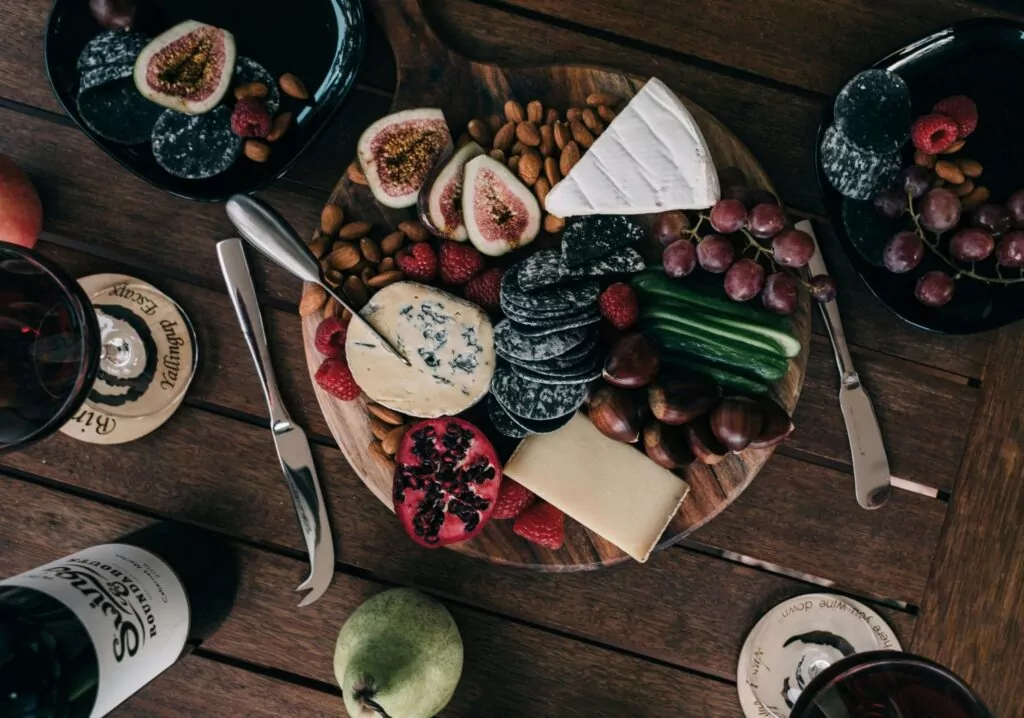
The classic rule — “red wine with red meat” — is a good start, but the real trick is matching the wine’s weight and intensity to the food. For a more in-depth walk-through of the principles behind food pairing, see our beginner’s guide to food and wine pairing.
| Food | Wine Style | Why It Works |
|---|---|---|
| Roast beef, lamb | Cabernet Sauvignon, Bordeaux blend | Tannins cut through fat |
| Charcuterie, pizza | Sangiovese, Chianti | Acidity matches tomato |
| Grilled salmon, tuna | Pinot Noir | Light body doesn’t overpower fish |
| Sunday roast chicken | English Pinot Noir, Beaujolais | Versatile, food-friendly |
| Burgers, BBQ ribs | Malbec, Shiraz | Bold flavours, smoky notes |
| Mushroom risotto | Pinot Noir, Nebbiolo | Earthy flavours echo each other |
| Hard cheese (Cheddar, Manchego) | Tempranillo, Cabernet | Tannins balance fat |
| Dark chocolate | Port, sparkling Shiraz | Sweetness matches sweetness |
| Christmas dinner | Sparkling red, Pinot Noir | Cuts through richness |
What Cheese Goes With Red Wine?
A few reliable pairings to start with (our wine and cheese pairing guide for beginners covers the principles in more detail):
- Aged Cheddar with Cabernet Sauvignon
- Stilton with Port
- Manchego with Tempranillo or Rioja
- Goat’s cheese with light Pinot Noir
- Brie with Beaujolais
Red Wine and Chocolate
Yes, it works — but only if you match the sweetness. A dry red against very sweet chocolate will taste sour and bitter. Pair dark chocolate (70% or higher) with a fruity, low-tannin red like Zinfandel, or go for a fortified wine like Port with anything sweeter.
Our guide on how to pair chocolate with wine goes into more detail on which chocolates pair well with which wine styles.
Surprising Foods That Pair Well With Red Wine
- Sushi — Light Pinot Noir works beautifully with salmon nigiri.
- Indian curry — A fruity, low-tannin red like Beaujolais handles spice better than you’d think.
- Mushrooms on toast — Earthy and savoury, made for Pinot Noir.
- Roast vegetables — Charred aubergine and peppers love a medium-bodied Merlot.
For specific suggestions matched to our own wines, see our Bolney wine and cheese pairings.
How to Choose a Red Wine Without Feeling Overwhelmed
A few quick questions narrow things down fast.
-
- What are you eating? Match weight to weight.
- Light or bold? If you usually drink white, start with Pinot Noir or Beaujolais.
- Smooth or firm? For an easy-drinking, smoother red, look for Merlot, Grenache or Malbec. Younger Cabernet Sauvignon and Nebbiolo feel firmer and a bit drier in the mouth due to their higher tannin levels. Older vintages of any red tend to feel smoother, as tannins soften with age.
- Sweet or dry? Almost all reds are dry. If you want a touch of sweetness, look for Lambrusco dolce, sweet sparkling Shiraz, or a fortified red like Port.
- Old World or New World? European wines (France, Italy, Spain) tend toward savoury and earthy. New World wines (Argentina, Australia, Chile) tend toward fruity and bold.
- Budget? £10–£20 in a UK supermarket is generally good value for an everyday bottle. For something more special, craft and estate-bottled reds (including most English red wines) sit in the £30–£55 range.
A fine red wine doesn’t have to cost the earth. Many small producers and vineyards across the world make beautifully crafted bottles from around £30, and the small-batch nature of estate-grown wines is a big part of what gives them their character.
Red Wine Glasses
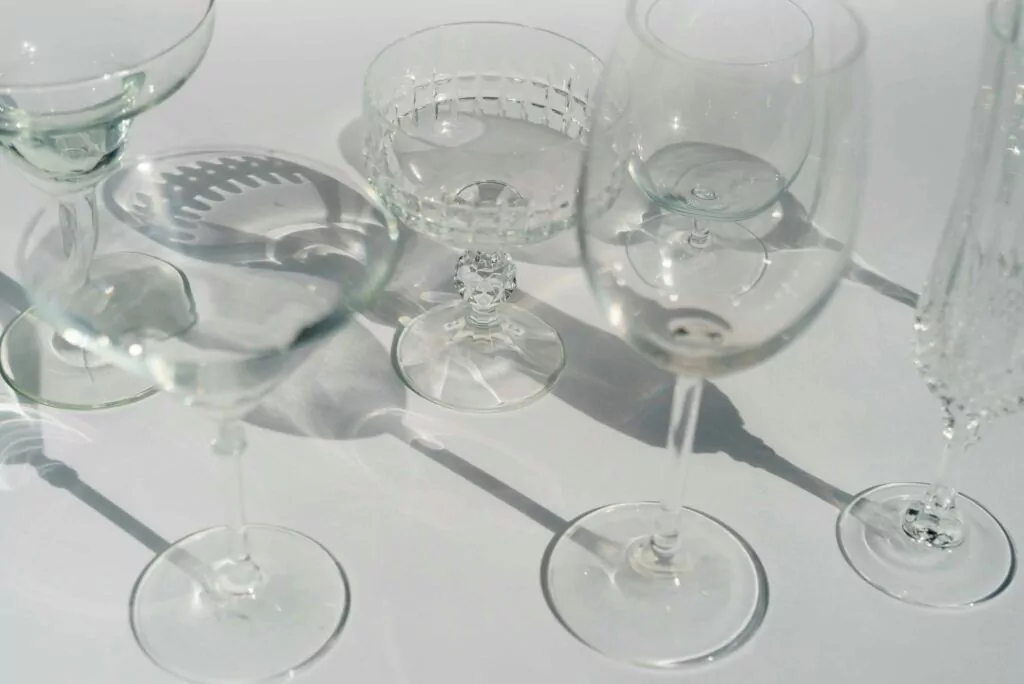
Does it matter if you use red wine glasses? A little, yes. The shape of the glass affects how aromas reach your nose and how the wine hits your tongue.
| Glass Type | Best For |
|---|---|
| Large bowl (Burgundy) | Pinot Noir, Nebbiolo — captures delicate aromas |
| Tall bowl (Bordeaux) | Cabernet, Merlot, Syrah — directs wine to the back of the palate |
| Standard tulip (a typical white wine glass) | Everyday reds |
| Flute, tulip flute or white wine glass | Sparkling reds |
A 2015 study published in the Royal Society of Chemistry journal Analyst used a special “sniffer-camera” to track how alcohol vapour rises out of different glass shapes. The researchers found that traditional wine glasses create a ring of higher alcohol concentration around the rim, allowing the wine’s aromas to drift up through the middle without being masked by alcohol. Tumblers and straight glasses don’t do this. So that classic curved shape isn’t just for show.
Top Tip: You don’t need a cupboard full of wine glasses. One good universal red wine glass will serve you well for almost any bottle. For a closer look at which glass suits which wine, our guide to wine glasses goes into more detail.
What Temperature Should You Serve Red Wine?
“Room temperature” is a Victorian phrase from before central heating. Indoors, in most modern British rooms, the temperature is too warm for red wine.
| Style | Ideal Temperature |
|---|---|
| Light reds (Pinot Noir, Beaujolais) | 12–14°C |
| Medium reds (Merlot, Chianti) | 14–16°C |
| Full-bodied reds (Cabernet, Shiraz) | 16–18°C |
| Sparkling reds | 8–10°C |
Twenty minutes in the fridge before serving will bring a too-warm red back into shape.
Should You Decant Red Wine?
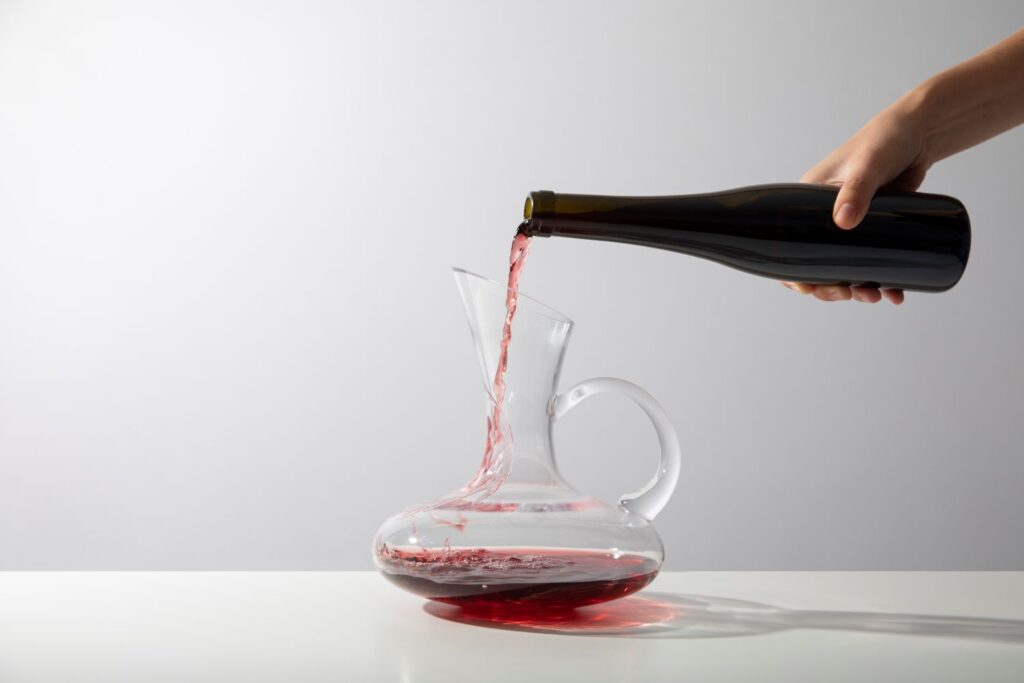
Decanting means pouring the wine from the bottle into another container (a carafe, a glass jug, or a proper decanter) before you serve it. Decanting does two things. It separates the gritty sediment that builds up in older wines and gives younger wines time to be in contact with air, which softens their tannins and makes them easier to drink.
Here’s a guide to decanting red wine:
-
-
- Young, full-bodied reds (under five years old): pour the wine into the carafe and leave it to sit for 30–60 minutes before serving. The time in contact with air is what does the softening.
- Older reds (10+ years): pour slowly and steadily to leave the sediment behind in the bottle, then serve fairly soon afterwards. Too much time in the air can flatten the more delicate flavours of an aged wine.
- Light reds: generally don’t need decanting at all.
-
Top Tip: If you’re not sure whether to decant your red wine, try this. Pour a glass straight away, then taste the bottle again 30 minutes later. The difference is often striking.
How to Store Red Wine at Home
You don’t need a Bond villain cellar. The basics:
-
-
- Cool — 10–15°C is ideal. Avoid temperature swings.
- Dark — UV light damages wine.
- Sideways — If the bottle has a cork. Keeps the cork moist.
- Still — Vibrations can disturb sediment over time.
- Away from strong smells — Cork is permeable.
-
Most reds bought from a supermarket are made to be drunk within a few years. Only a small fraction of wines genuinely improve with long ageing — research by the Australian Wine Research Institute on wine closures, oxygen ingress and ageing potential is the most thorough public resource on the subject.
If you’ve got a bottle sitting in a cupboard and aren’t sure whether it’s still good, our guide on how long wine lasts unopened covers what to look for.
What Does “Vintage” Mean on a Red Wine Label?
Vintage is simply the year the grapes were harvested. In cool climates like England, vintage matters a lot — a warm year produces riper, more concentrated wines, while a cool year gives lighter, more acidic ones.
In warmer regions, vintage variation is less pronounced, but still worth noting.
For a deeper look at when and how a wine officially becomes a vintage, see our guide on when wine becomes vintage.
Natural, Organic, Vegan and Low-Alcohol Red Wines
These categories are growing fast in the UK.
-
-
- Organic wine: made from grapes grown without synthetic pesticides or fertilisers.
- Biodynamic wine: goes further, following a holistic farming calendar based on lunar cycles.
- Natural wine: minimal intervention in the winery, with little to no added sulphites.
- Vegan wine: made without animal-derived ingredients used to clarify the wine. Most conventional wines are fined with egg whites, milk protein, gelatin or fish bladder (called isinglass) to remove cloudiness. Vegan wines use plant- or mineral-based alternatives, such as bentonite clay or pea protein, so the finished bottle contains no animal products.
- Low-alcohol red wine: typically 5.5–9% ABV. A growing category as drinkers cut back without giving up wine altogether.
-
In practice, organic, vegan and low-alcohol reds are now widely stocked in UK supermarkets, so they’re easy to try.
Most major supermarkets clearly label vegan wines on the back, and the Vegan Society sunflower logo is the most reliable mark to look for. Natural and biodynamic wines tend to live in independent wine shops or come directly from small producers. Look for the Soil Association logo to know a UK organic wine is genuinely certified. And don’t be put off if a natural wine looks slightly cloudy or tastes a bit funky in the glass: that’s part of the style, not a fault.
Top Tip: For more on plant-based options and what to drink during Veganuary or any other time of year, see our guide to vegan wines.
Visit a Vineyard to Learn More About Red Wine
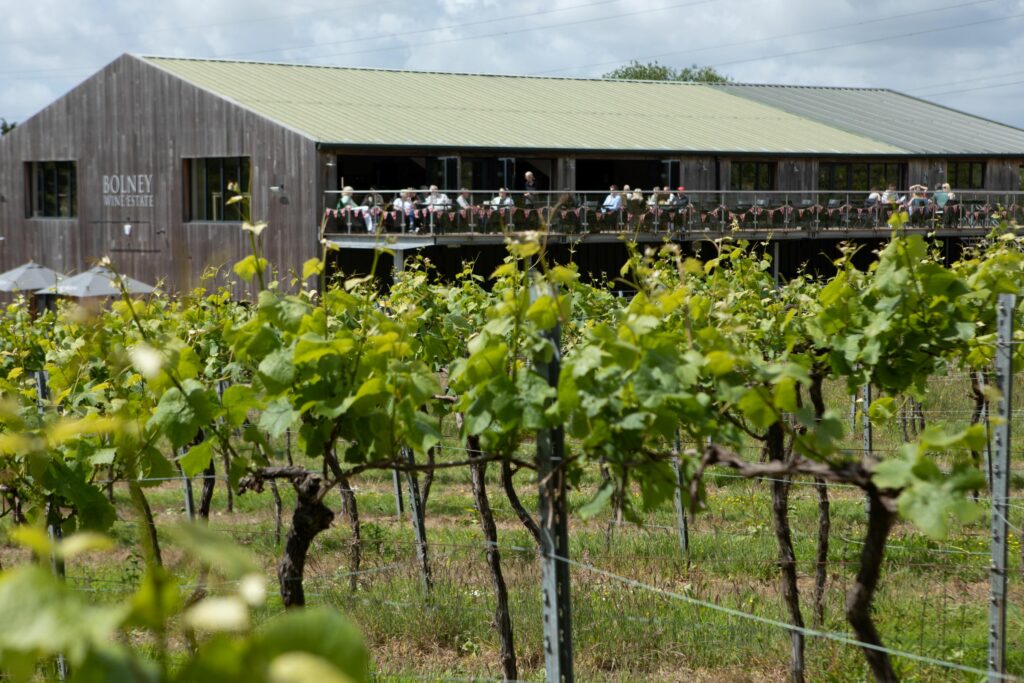
The fastest way to deepen your understanding of red wine is to stand among the vines, smell the cellar and taste with the people who made the bottle. Vineyard visits are widely available across the UK, and West Sussex has become one of the country’s most exciting wine regions.
If you’ve never been to a tasting before, our guide to what wine tasting actually involves explains what to expect.
A typical visit might include:
-
-
- A guided walk through the vineyard with an explanation of grape varieties and soils
- A look inside the winery to see how red wine is made on-site
- A tutored tasting comparing styles side by side
- Lunch or a tasting board overlooking the vines
-
Come and visit Bolney Wine Estate in West Sussex, where we’ve been growing grapes on these slopes since 1972.