Account




How To Read A Wine Label
Start exploring

For those who aren’t wine experts, reading a wine label can be a little bit confusing or ambiguous. Once you know what to look for, you can tell where the wine is from, what it’s made of, how sweet or dry it is, and roughly how it will taste before you’ve even opened the bottle.
Here’s a walkthrough of the main parts of a wine label in plain English, covering still and sparkling wines, plus a few other labels you might spot along the way. It ends with a handy checklist for picking a bottle.
If you’re starting from scratch, our beginner’s guide to wine covers the basics of how wine is made and tasted first.
Jump to a section
- What information is on a wine label
- Is there vegan information on a wine label?
- Other label claims worth knowing
- Old World vs New World: two ways of labelling wine
- How to read a still wine label
- How to read a sparkling wine label
- How an English sparkling wine label differs from Champagne
- A simple checklist for choosing wine by the label
- Book a wine tasting
- FAQs
- Sources
What Information Is on a Wine Label
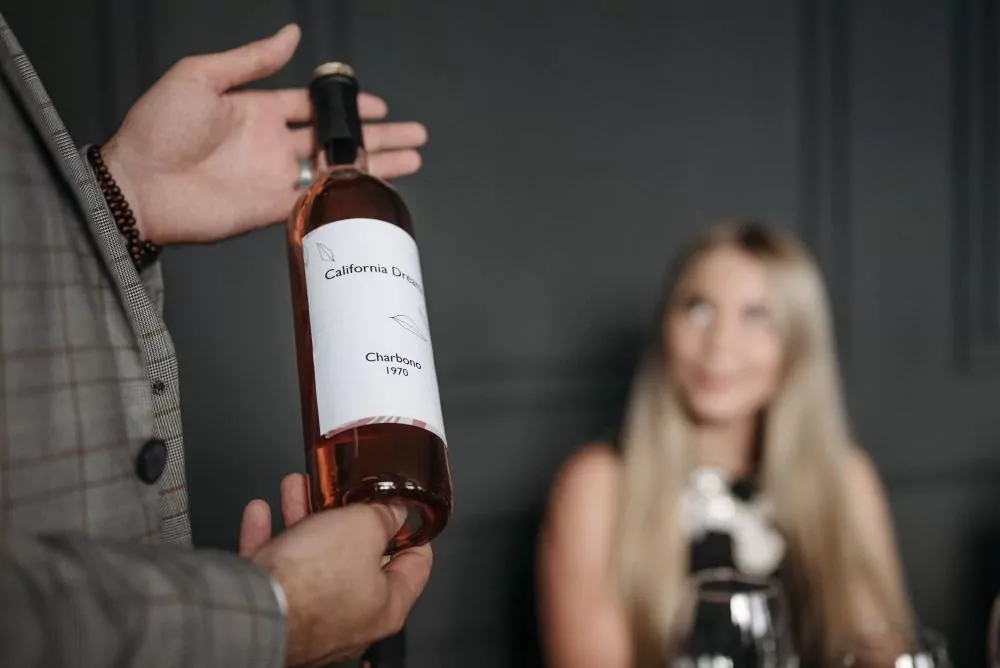
In the UK, wine labels must include certain information, as set out by the Food Standards Agency. Here’s what to expect and what each part tells you.
| Label element | What it tells you |
|---|---|
| Producer or brand name | Who made the wine |
| Country and region | Where the grapes were grown |
| Grape variety | The type of grape used, if shown |
| Vintage | The year the grapes were picked, if shown |
| Alcohol by volume (ABV) | The strength of the wine as a percentage |
| Wine category | Still, sparkling or semi-sparkling |
| Allergen information | Sulphites, egg or milk products used in fining, if present |
| Volume | How much wine is in the bottle, usually 750ml |
A few of these are worth a closer look:
- ABV must appear on every UK bottle, shown to one decimal place. It’s also what determines how many units are in a bottle of wine.
- Allergen information is required if the wine contains more than a trace of sulphites, or was fined with milk or egg products, a step used to clear the wine before bottling.
- Volume is usually 750ml, enough for about six glasses. Larger formats like magnums exist too.
Jargon buster: Fining
A step in winemaking that clears small particles from the wine, making it bright and clean. Traditional fining agents include egg white and milk proteins, which is why some labels carry a dairy or egg allergen warning.
Grape variety and vintage are not always compulsory. It depends on the wine’s classification, one of the biggest differences in how wine is labelled around the world, covered below.
Is There Vegan Information on a Wine Label?
Some wine labels do carry vegan information, though UK law doesn’t require it. Wine’s vegan status often comes down to fining, the clarifying step above. Traditional fining agents are often animal-derived, and even tiny traces can remain in the finished wine:
- Egg albumen, or egg white
- Casein, a milk protein
- Gelatine, made from animal skin and connective tissue
- Isinglass, taken from fish bladders
Jargon buster: Vegan wine
Wine made without animal-derived fining agents. Producers use plant-based or mineral alternatives instead, such as bentonite clay, activated carbon or pea protein, or skip fining altogether.
According to the GOV.UK, there’s no legal definition of “vegan” in UK food law, so producers decide for themselves when to use it on a label. Because of that gap, many vegan wines feature a symbol rather than just text. Look out for:
- The Vegan Trademark, run by the Vegan Society since 1990, is shown as a small green sunflower logo with the word “vegan” underneath.
- A green “V” symbol, sometimes inside a circle, used by some retailers and producers as a quick visual flag.
- Plain wording such as “suitable for vegans” or “vegan friendly.”
A bottle without any of these symbols isn’t automatically off-limits for vegans. Many producers simply haven’t applied for certification yet.
Other Label Claims Worth Knowing
A few other claims turn up on wine bottles too, and they’re worth a quick mention:
- Organic: Grapes grown without most synthetic pesticides and fertilisers, shown with the green EU leaf logo or, in the UK, the Soil Association logo.
- Fairtrade: The FAIRTRADE Mark shows that farmers were paid a fair, guaranteed price for their grapes, which is common for wine from South Africa, Chile, and Argentina.
- Gluten-free: Wine is naturally gluten-free since it’s made from grapes, according to Wine Enthusiast, so this wording is mostly a matter of reassurance rather than a legal requirement.
- Biodynamic or sustainable: Biodynamic wine follows organic principles and a farming calendar based on the moon and is often Demeter-certified. “Sustainable” has no fixed legal meaning, so it’s worth a quick check to see which standard, if any, underlies the claim.
Old World vs New World: Two Ways of Labelling Wine
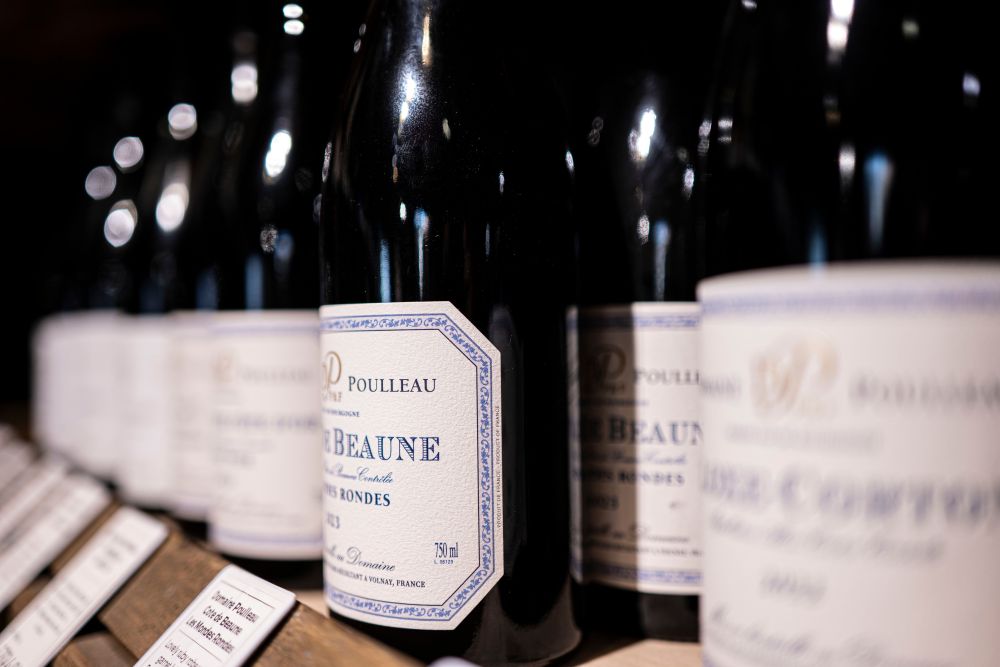
Wine-producing countries are often grouped into two categories, Old World and New World, a split based on labelling habits rather than quality. Knowing the difference makes labels much easier to read.
| Old World | New World | |
|---|---|---|
| Example countries | France, Italy, Spain, Germany | USA, Australia, South Africa, Chile, England |
| What’s on the label | The place, such as Chablis | The grape, such as Chardonnay |
| The idea behind it | Place shapes the wine more than the grape | Grape shapes the wine more than the place |
According to Wine Enthusiast, Old World producers place more weight on the growing site, sometimes called terroir, while New World producers see the grape as the bigger factor in taste.
Jargon buster: Terroir
The combination of soil, climate, slope and local growing conditions that shape how a wine tastes. Two vineyards growing the same grape can produce different wines because of terroir.
Neither approach is better than the other, just different information up front. If a label leads with a place, you may need to look up which grapes are typically grown there. If it leads with a grape, that step is done for you, since the variety is printed on the bottle.
How to Read a Still Wine Label
Still wine is wine without bubbles, covering most red, white and rosé wines. Here’s what to check.
- Country and region: Points to the climate the grapes grew in, one of the biggest clues to flavour.
- Grape variety: If shown, tells you a lot on its own. A Sauvignon Blanc tastes very different to a Chardonnay, wherever it’s grown.
- Vintage: Marks the year the grapes were harvested, not the year the wine was bottled. Weather varies year to year, so vintage can affect quality, especially in cooler climates like the UK.
- Appellation or classification: Many European labels carry a Protected Designation of Origin (PDO) or Protected Geographical Indication (PGI). A PDO wine must be made entirely from grapes grown in the named area. A PGI wine needs at least 85% of its grapes from there.
- Grape percentage rules: If a label names a single grape, EU regulations require that at least 85% of the wine be that grape. So a wine labelled “Pinot Noir” might not be 100% Pinot Noir, and that’s allowed.
Jargon buster: PDO and PGI
PDO stands for Protected Designation of Origin. PGI stands for Protected Geographical Indication. Both link a wine’s name to a place, but PDO has stricter rules about where the grapes must come from.
Region and grape variety are the two biggest clues to how a wine will taste, so here’s a bit more detail on each.
How Region Affects Flavour
| Climate | Acidity | Body | Common flavours |
|---|---|---|---|
| Cool (England, northern France, Germany) | High | Light | Green apple, citrus, red berries |
| Warm (southern Italy, Spain, Australia, California) | Lower | Fuller | Ripe dark fruit, jam, dried fruit |
How Grape Variety Affects Flavour
| Grape trait | What it means for the wine | Examples |
|---|---|---|
| Thin-skinned | Lighter colour, softer tannins | Pinot Noir, Gamay |
| Thick-skinned | Deeper colour, firmer tannins | Cabernet Sauvignon, Syrah |
| Aromatic | Strong, distinct aromas | Gewürztraminer, Sauvignon Blanc |
| Neutral | Subtle aroma, lets winemaking show | Pinot Grigio, Chenin Blanc |
For a wider list of terms, our wine terminology guide for beginners covers more ground.
How to Read a Sparkling Wine Label
Sparkling wine labels include everything above, plus a few extra terms for sweetness and how the wine was made. The sweetness term is usually the most important on the label, and it trips up many people. “Extra Dry” sounds like it should be drier than “Brut,” but it’s the other way round. Here’s how the main styles compare:
| Term | Residual sugar (g/L) | Taste | Roughly tastes like |
|---|---|---|---|
| Brut Nature | 0 to 3 | Bone dry | Sparkling water |
| Extra Brut | 0 to 6 | Very dry | Dry still white wine |
| Brut | 0 to 12 | Dry | A crisp, dry cider |
| Extra Dry | 12 to 17 | Slightly sweet | A medium cider |
| Dry (Sec) | 17 to 32 | Noticeably sweet | A sweet biscuit |
| Demi-Sec | 32 to 50 | Sweet | Sweetened iced tea |
| Doux | 50+ | Very sweet | Orange juice |
The same scale applies across Champagne and other sparkling wines made in the same style. For more detail, see our guide to Brut, Extra Dry and Demi-Sec.
Jargon buster: Residual sugar
Sugar left in a wine after fermentation ends. Higher residual sugar means a sweeter wine, measured in grams per litre and often shortened to “RS.”
- Vintage or NV. Many sparkling wines are labelled NV, meaning non-vintage, blending base wines from more than one year for a consistent house style. According to Wine Spectator, most Champagne and sparkling wine made worldwide is non-vintage. A vintage sparkling wine comes from a single exceptional year and is usually made in smaller quantities.
- Production method. Terms like “Traditional Method,” “Méthode Traditionnelle”, or “Méthode Champenoise” mean the wine had a second fermentation inside the bottle, creating fine, persistent bubbles. Our guide on how sparkling wine is made explains this in more detail.
Once you’ve picked a bottle, our guide on how to open a bottle of sparkling wine covers that safely, step by step.
How an English Sparkling Wine Label Differs From Champagne
English sparkling wine has grown quickly over the past two decades. According to WineGB, the trade body for English and Welsh wine, the UK now has over 1,150 vineyards, producing around 16.5 million bottles in the 2025 harvest. Champagne and English sparkling wine often use the same three grapes and the same bottle-fermented method, but the labels follow different rules.
| Label detail | Champagne | English sparkling wine |
|---|---|---|
| Country or region term | “Champagne,” a protected French region | “England” or “Wine of England” |
| Protected status | AOC, tied to the Champagne region | PDO, such as “English Quality Sparkling Wine” |
| Production method wording | “Méthode Champenoise” | “Traditional Method” or “Méthode Traditionnelle” |
| Grape variety on label | Rarely shown | Often shown |
According to Decanter, “méthode champenoise” was once used on labels from outside Champagne too, but the term is now reserved for Champagne itself, so everywhere else must say “traditional method” or a local equivalent. English sparkling wine’s habit of naming the grape follows the New World style covered earlier, even though the method is identical to Champagne’s.
A Checklist for Choosing Wine by the Label
Once you know what to look for, choosing a bottle becomes quicker. Here’s a short checklist to use in a shop.
- Check the country and region for a rough idea of climate and style.
- Look for the grape variety. If you already like Pinot Noir or Sauvignon Blanc, this narrows things down fast.
- Check the vintage. In cooler climates, especially, some years are better than others.
- For sparkling wine, check the sweetness term. Brut is dry, Demi-Sec is sweet, and Extra Dry sits confusingly in the middle.
- Look for PDO or PGI status for a guarantee about where the grapes came from.
- Check the ABV. Lighter wines tend to sit under 12.5%, while fuller reds and some sparkling wines run higher.
For sparkling wine, our guide on how to choose sparkling wine goes into more detail on matching a bottle to the occasion.
Reading a label is only the start. Tasting a few bottles side by side, ideally with food, is the best way to find what you enjoy. Our guide to hosting your own wine-and-cheese night is a good next step to take at home.
Learn More on a Vineyard Tour
If you’d like to learn more about reading a wine label, English sparkling wine, and tasting local wines for yourself, book a tour and tasting session at Bolney Wine Estate in West Sussex, England’s wine country.
FAQs
What is the most important thing on a wine label?
For most people, the grape variety and the sweetness level (for sparkling wine) give the clearest idea of taste. Region matters too, but it takes a little more background knowledge to read.
Does a higher price mean a better wine label?
No. Price reflects production cost, land value and demand, not what’s on the label. A modest bottle can carry the same PDO status as an expensive one.
What does NV mean on a wine label?
NV stands for non-vintage. It means the wine is blended from more than one year’s harvest to keep a consistent style.
Is Extra Dry sweeter than Brut?
Yes. Despite the name, Extra Dry sparkling wine contains more residual sugar than Brut and tastes slightly sweeter.
Do all wine labels show the grape variety?
No. Many European wines, particularly from France and Italy, name the region instead, since local tradition assumes you already know which grapes grow there.
Sources
- Wine labelling (Food Standards Agency)
- Protect a geographical wine name (GOV.UK)
- Wines and wine sector products: PDO, PGI, labelling and presentation (EUR-Lex)
- Champagne Sweetness Scale: From Brut to Doux (Wine Folly)
- What Do ‘Old World’ and ‘New World’ Mean in Wine? (Wine Enthusiast)
- What’s the difference between non-vintage, multi-vintage and vintage Champagne? (Wine Spectator)
- Méthode champenoise (Fr.) (Decanter)
- Industry Data (WineGB)
- Labelling food products as ‘vegan’ (Lexology)
- The Vegan Trademark (The Vegan Society)
- Organic wine (Soil Association)
- The Fairtrade Label (Fairtrade International)
- Is Wine Gluten-Free? (Wine Enthusiast)