Account






Wine Terminology for Beginners: 130+ Wine Words Explained
Start exploring

Learning more about wine starts with the language. Knowing your tannins from your terroir, or what a wine label is trying to tell you, makes tasting more interesting and far more rewarding.
A wine terminology guide is a handy resource for beginners. Use our guide to brush up on common wine terms before a wine tasting, when preparing for a vineyard tour, or to learn more about wine. Over 130 wine terms are explained here in plain English, covering tasting notes and descriptive words, label language, winemaking processes, and vineyard vocabulary.
Use the links below to jump to the section you need.
Jump to a Section
- Words used to describe how wine tastes and smells
- Words used at wine tastings
- Words on wine labels
- Winemaking terms
- Grape growing and vineyard terms
- Wine and food terms
Words Used to Describe How Wine Tastes and Smells
These are the descriptive words used most often for wine: in tasting rooms, on wine shop shelves, and in reviews. At a wine tasting session, these are the terms you’ll hear from a guide and find most useful when talking through a wine. They cover flavour, texture, aroma, and overall feel.
| Term | What it means |
|---|---|
| Acidity | The sharpness or brightness you feel on the sides of your tongue. Think of how lemon juice tastes. High-acid wines feel lively and fresh; low-acid wines feel softer and rounder. English wines, particularly sparkling, are often praised for their naturally high acidity. |
| Aroma | The smells coming from the wine in your glass. Every wine has its own mix: fruits, flowers, spices, earth, and so on. |
| Astringent | A drying, grippy feeling in your mouth, usually from tannins. Like drinking strong black tea. Most noticeable in young, tannic red wines. |
| Autolytic | A flavour character that comes from wine spending extended time ageing on its lees (dead yeast cells). Produces a biscuity, bread-like, sometimes creamy quality. Especially associated with high-quality traditional method sparkling wine. |
| Balance | When no single element (acidity, tannins, alcohol, sweetness, fruit) dominates. A balanced wine feels harmonious. |
| Biscuity | A toasty, yeasty quality, like freshly baked bread or digestive biscuits. A hallmark of good English sparkling wine aged on its lees. |
| Body | How heavy or light the wine feels in your mouth. Think skimmed milk (light-bodied), semi-skimmed (medium-bodied), and full-fat milk (full-bodied). |
| Bouquet | Similar to aroma, but usually refers to the more developed, complex smells in aged wines. |
| Bright | Describes a wine with good acidity and freshness. Feels lively rather than flat. |
| Creamy | A rich, smooth, rounded texture, often from malolactic fermentation or extended lees ageing. |
| Crisp | A wine with noticeable, refreshing acidity. Common with white wines and sparkling wines. |
| Dry | Not sweet. Most table wines are dry. It doesn’t mean the wine tastes of nothing — it means there’s no residual sugar left after fermentation. |
| Earthy | Flavours or smells that remind you of soil, forest floor, mushrooms, or wet stone. Common in many European red wines. |
| Finish | The taste left in your mouth after you swallow. A long finish means the flavour lingers pleasantly. |
| Flat | Low in acidity, which makes the wine taste dull or lifeless. In sparkling wine, it can also mean the bubbles have dissipated. |
| Floral | Smells of flowers: elderflower, rose, violet, blossom. Common in aromatic white wines and some English sparkling. |
| Fresh | A lively, clean quality, usually from acidity. Not flat or heavy. |
| Fruit-forward | The flavour of fruit (e.g. cherry, apple, peach) is the most prominent thing you taste. |
| Herbaceous | Tastes or smells of fresh herbs: grass, green pepper, nettle, mint. Common in Sauvignon Blanc and some red wines. |
| Hollow | Lacking flavour in the middle of the palate. Starts and finishes OK, but feels empty in between. |
| Length | How long the flavour lasts after you swallow. Longer is generally considered a sign of better quality. |
| Long finish | A finish that lingers notably after swallowing, sometimes for 30 seconds or more. Often mentioned as a marker of quality in both tasting notes and at wine tastings. |
| Minerality | A term for flavours that remind you of stone, slate, chalk, or flint — not fruit or flowers. Debated by experts, but useful shorthand, particularly when describing wines grown on chalk soils, as in parts of West Sussex. |
| Mousse | The texture of the bubbles in sparkling wine. Fine, persistent bubbles (a silky mousse) are generally a sign of quality. Coarse, fizzy bubbles suggest a less refined production method. |
| Mouthfeel | The overall physical sensation of wine in the mouth. A broader term than texture — it takes in weight, tannins, acidity, carbonation, and any sensation of warmth from alcohol. A wine described as having a good mouthfeel is pleasant and well-balanced to drink. |
| Nose | The smell of the wine. “On the nose” means what you can detect when you sniff the glass. |
| Off-dry | Slightly sweet — not fully dry, but not noticeably sweet either. A gentle hint of residual sugar. |
| Palate | The flavours you taste when the wine is in your mouth. “On the palate” means what you experience as you drink. |
| Pepper | A spicy, peppery quality. Black pepper is common in Syrah/Shiraz; white pepper in some lighter reds. |
| Plush | Rich, smooth, and velvety — generous texture without sharp edges. |
| Rounded | Smooth and balanced, with no sharp or harsh elements. |
| Savoury | Non-fruit flavours: herbs, leather, smoke, meat, olives. Often associated with older or more complex wines. |
| Silky | An exceptionally smooth, fine texture, like silk on the tongue. |
| Soft | Low in tannins or acidity, making the wine feel gentle and easy-going. |
| Steely | A firm, clean quality, usually from high acidity and no oak influence. Common in cool-climate white wines. |
| Structure | The backbone of a wine, made up of acidity, tannins, alcohol, and sweetness working together. A wine with good structure will age well. |
| Supple | Flexible and smooth on the palate — easy to drink, with gentle tannins. |
| Tannins | Natural compounds found in grape skins, seeds, and stems (and in oak barrels). They create a drying or gripping sensation in your mouth, mostly in red wines. Tannins soften with age and are part of what helps wine keep. |
| Texture | How the wine physically feels in your mouth: creamy, grainy, silky, grippy, etc. |
| Toasty | Flavours of toast, bread crust, or light smoke, usually from oak barrel ageing or extended lees contact. |
| Vegetal | Tastes or smells of cooked or raw vegetables. Can be intentional (e.g. slight green pepper in Cabernet Franc) or a fault (e.g. excessive cabbage or cooked vegetable notes). |
| Viscosity | How thick or syrupy the wine looks and feels. Wines with higher alcohol or sugar are more viscous. |
| Volatile | Sharp, vinegary smells — usually a sign of a wine fault. |
| Warm | A sensation of warmth in the throat, usually from a higher alcohol level. |
| Zesty | Fresh, citrus-like sharpness — bright and lively acidity with citrus fruit character. |
Words Used at Wine Tastings
At a tasting (at a vineyard, wine shop, or event), you’ll come across a few specific terms that describe how a tasting is structured and how to approach the wines.
| Term | What it means |
|---|---|
| Blind tasting | Tasting wine without knowing what it is — no label, no grape variety, no vintage. Removes assumptions and bias. |
| Decanting | Pouring wine from the bottle into a separate glass vessel (a decanter). Opens up the aromas and softens the tannins, especially in red wines. Also removes sediment from older bottles. |
| Flight | A selection of wines served together for comparison — for example, three sparkling wines from different English vineyards. |
| Glassware | The shape of the glass affects how a wine smells and tastes. A wider bowl lets the wine breathe; a narrower rim concentrates the aroma. Sparkling wine is typically served in a tall, narrow flute or a wider tulip glass. |
| Legs / Tears | The droplets that run down the inside of the glass after you swirl it. Thicker legs suggest higher alcohol or sugar, but don’t tell you much about quality. |
| Palate cleansing | Eating something neutral (like plain bread or crackers) between wines to reset your taste buds. |
| Spittoon | A container, usually a bucket or a specially designed vessel, used to spit wine into during a tasting. Allows you to try a wide range of wines without having to swallow them all. Normal and expected at any serious tasting. |
| Spitting | Spitting the wine out during a tasting instead of swallowing, so you can try many wines without getting drunk. Perfectly normal at professional and vineyard tastings. |
| Swirling | Rotating the wine in the glass to expose it to air and release aromas. Helps you get more from the wine’s aroma before tasting it. |
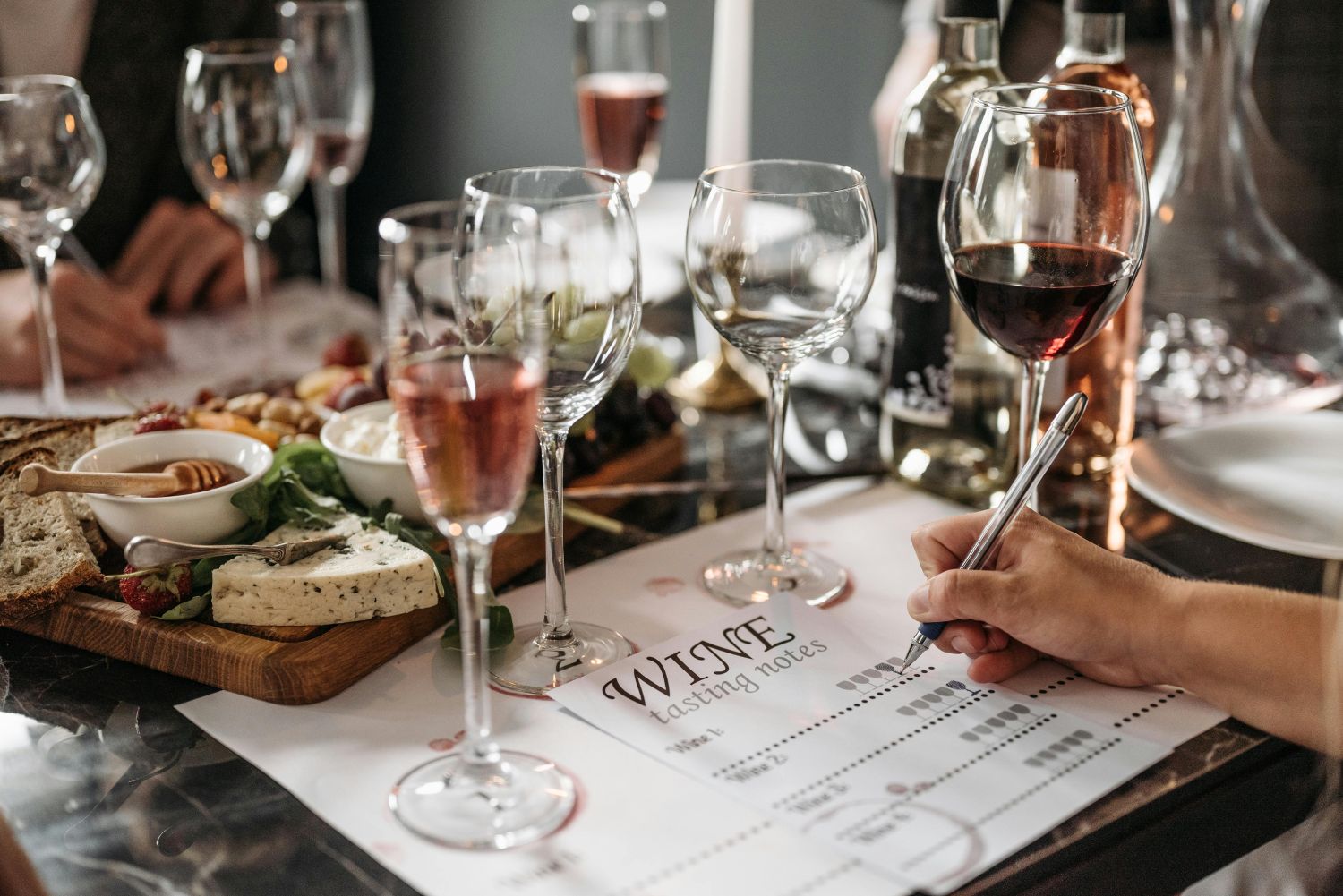
| Tasting notes | Written descriptions of a wine, including what it looks like, smells like, tastes like, and how it finishes. |
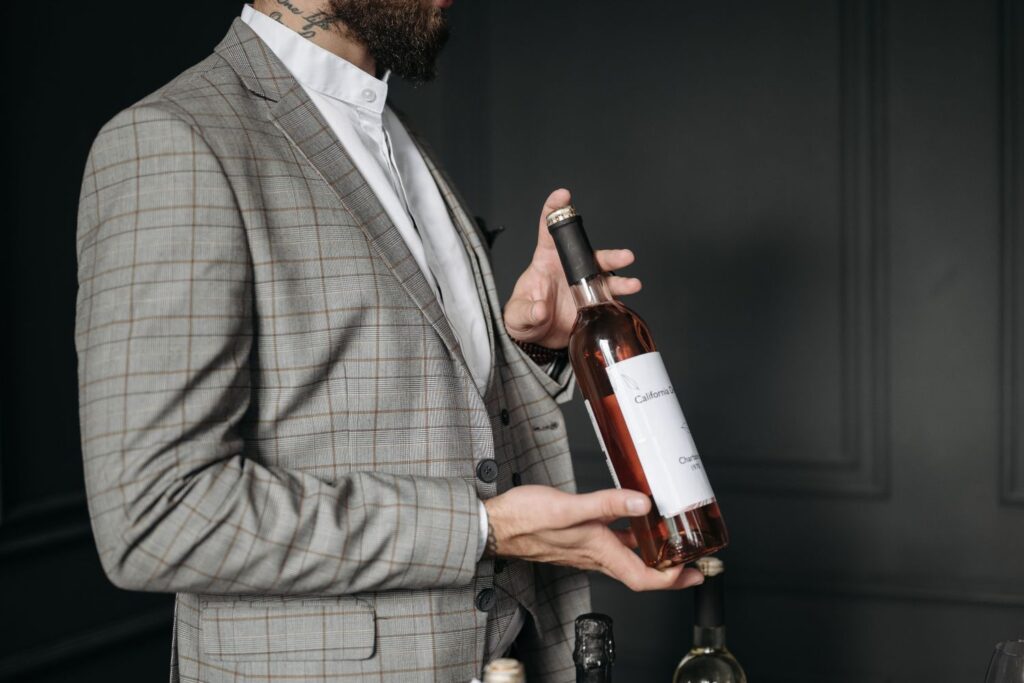
Words on Wine Labels
Wine labels contain a lot of information, but not all of it is obvious. Here’s what the most common terms mean.
General Label Terms
| Term | What it means |
|---|---|
| Appellation | The official, legally defined area where the grapes were grown. In France, this is called an AOC (Appellation d’Origine Contrôlée). In England and Wales, wines can carry a Protected Designation of Origin (PDO) or Protected Geographical Indication (PGI). |
| Château | French for “castle” — but on a wine label, it refers to a specific wine estate, not necessarily a grand building. |
| Cru | French for “growth” — used to classify the quality of a vineyard or estate. A Premier Cru is “first growth” (top quality in Burgundy); a Grand Cru is even higher. |
| Cuvée | French for a specific batch or blend of wine. In sparkling wine, it also refers to the first and finest juice from the press. A “prestige cuvée” is a producer’s top wine — for example, Dom Pérignon is Moët’s prestige cuvée. |
| Domaine | A French term for a wine estate that grows its own grapes and makes its own wine. |
| English Wine vs British Wine | English wine (or Welsh wine) is made from grapes grown in England or Wales. British wine is made from imported grape juice or concentrate — a very different product. |
| Estate grown / Estate bottled | The wine was made from grapes grown on the winery’s own land and bottled there. Indicates more producer control over quality. |
| Grand Vin | French for “great wine” — usually refers to a producer’s main, top-tier wine (as opposed to a second label). Not a legally regulated term everywhere. |
| Millésime | French for vintage — the year the grapes were harvested. |
| Mis en bouteille au château | Bottled at the château (estate). A sign that the producer controlled the wine all the way through to bottling. |
| Natural wine | Wine made with minimal intervention — no or very low added sulphites, often unfined and unfiltered. Not a legally defined category. Can be excellent or divisive depending on the producer. |
| Non-vintage (NV) | A blend of grapes from multiple years rather than a single harvest. Common in sparkling wines to maintain a consistent house style year on year. |
| Orange wine | White wine made by leaving the grape skins in contact with the juice during fermentation (like you would for a red wine). Produces a deeper colour and more tannin than typical white wine. |
| Organic | Grapes grown without synthetic pesticides, herbicides, or fertilisers. Some wines are certified organic; others follow organic principles without certification. |
| Reserve / Réserve | Suggests a higher-quality wine, often aged for longer. Not a regulated term in most countries, so use with slight caution — some producers apply it broadly. |
| Rosé | Wine made from red grapes, with the juice briefly in contact with the skins, producing a pink colour. In sparkling rosé, a small amount of red wine may also be blended in. |
| Sulphites / Sulphur dioxide (SO₂) | A preservative used in almost all winemaking to prevent oxidation and bacterial spoilage. “Contains sulphites” is required by law on EU and UK labels. Most wines contain them in small amounts; truly sulphite-free wine is rare. |
| Sur lie | French for “on the lees.” The wine is aged in contact with dead yeast cells after fermentation. Adds richness, creaminess, and a biscuity quality. Common in white Burgundy and English sparkling wine. |
| Table wine | A broad term for everyday drinking wine. In the EU, it refers to the lowest classification — wine with no specific geographical indication. |
| Varietal | A wine labelled by the grape variety it’s made from — e.g. “Chardonnay” or “Pinot Noir.” Common in New World countries. |
| Vegan wine | Wine made without any animal-derived fining agents (such as egg whites, isinglass from fish, or casein from milk). Not all wines are labelled as vegan, but many producers now make this clear on the label or their website. |
| Vieilles Vignes | French for “old vines.” Older vines produce fewer grapes, but the grapes tend to be more concentrated in flavour. Not a regulated term. |
| Vintage | The year the grapes were harvested. A 2022 vintage means the grapes were picked in 2022. Vintage matters because weather varies year to year, especially in England. |
Sparkling Wine Label Terms
Sparkling wine labels include specific terms, particularly regarding sweetness and grape composition, that are worth knowing.
Sweetness levels (from driest to sweetest):
| Term | What it means |
|---|---|
| Brut Nature / Zero Dosage | The driest style — no sugar is added after the second fermentation. Pure, clean, and often quite lean. |
| Extra Brut | Very dry, with only the tiniest amount of added sugar. Crisp and precise. |
| Brut | Dry. The most common style for English sparkling wine and Champagne. There’s a small permitted level of sugar, but you won’t notice sweetness. |
| Extra Dry | Confusingly, this is slightly sweeter than Brut despite the name. A touch of sweetness, but still quite dry overall. Common in Prosecco. |
| Sec | French for “dry” — but on a sparkling wine label, it actually means medium-dry. A noticeable hint of sweetness. |
| Demi-Sec | French for “half-dry” — but it’s noticeably sweet. Common in dessert-style sparkling wines. |
| Doux | The sweetest category. Rare in modern sparkling wine. |
Grape composition:
| Term | What it means |
|---|---|
| Blanc de Blancs | Sparkling wine made entirely from white grapes, usually Chardonnay. Tends to be lighter, more delicate, and citrus-driven. |
| Blanc de Noirs | Sparkling wine made from red-skinned grapes, usually Pinot Noir and/or Pinot Meunier, but the juice is pressed quickly, so the wine is white or very pale. Often fuller and more structured than a Blanc de Blancs. |
Bottle sizes:
| Size | Capacity | What it means |
|---|---|---|
| Half bottle | 37.5cl | Half a standard bottle. |
| Standard bottle | 75cl | The normal size. |
| Magnum | 1.5 litres (2 bottles) | Popular for celebrations and often said to age better than a standard bottle, as the ratio of oxygen to wine is lower. |
| Jeroboam | 3 litres (4 bottles) | A large format used for special occasions. |
| Methuselah / Imperial | 6 litres (8 bottles) | Rarely seen outside major events and auctions. |
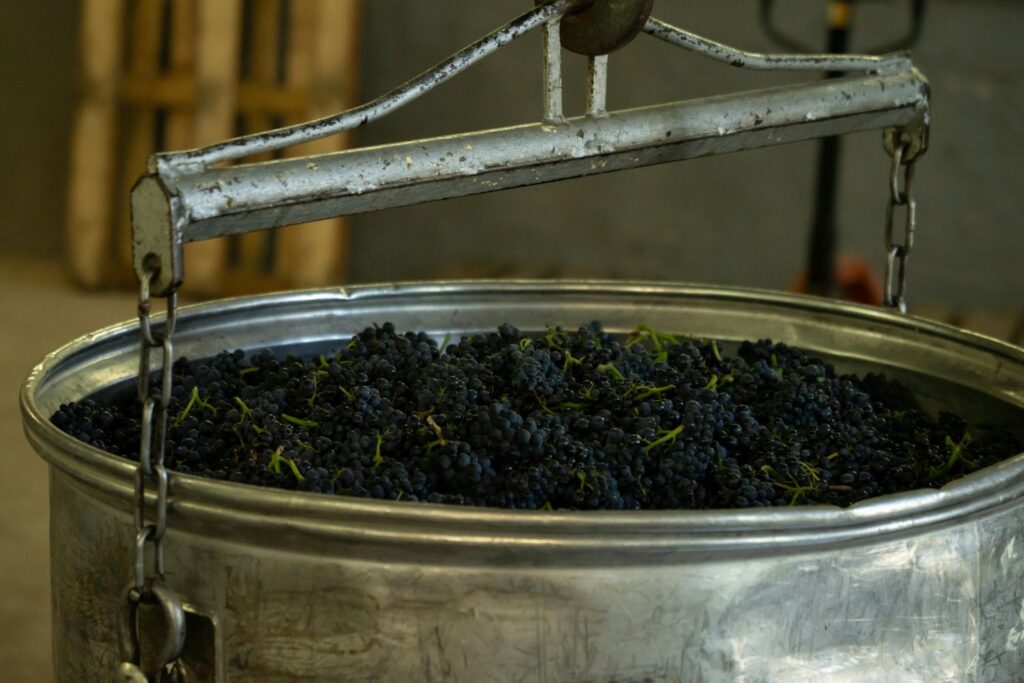
Winemaking Terms
You don’t need to know how wine is made to enjoy it, but understanding a few winemaking terms helps explain why wines taste the way they do.
General Winemaking
| Term | What it means |
|---|---|
| Assemblage | French for “blending.” In sparkling wine, it refers to the careful process of combining base wines from different grape varieties, plots, and/or vintages before the second fermentation. Each year’s assemblage determines the character of that release. |
| Barrel ageing | Storing wine in oak barrels after fermentation. The wood adds flavour and allows slow oxygen exposure, which softens the wine over time. |
| Barrel fermentation | Fermenting the wine inside oak barrels rather than steel tanks. Adds more oak character and creates a rounder, richer texture. |
| Base wine | The still wine produced before the second fermentation in sparkling wine production. It’s typically leaner and more acidic than a regular still wine — this is intentional, as it becomes the foundation for the finished sparkling. |
| Bâtonnage | French for “stirring.” The winemaker stirs the lees (dead yeast) back into the wine periodically to add texture and richness. Common in Chardonnay production. |
| Biodynamic | A farming philosophy that treats the vineyard as a self-contained ecosystem. Goes further than organic — follows a lunar calendar for planting, harvesting, and racking. Certified by organisations like Demeter. |
| Blending | Combining wines from different grape varieties, vineyard plots, or vintages to achieve a desired style or flavour profile. |
| Cap | During red wine fermentation, the grape skins rise to the surface and form a solid cap. Winemakers punch it down or pump juice over it regularly to extract colour and tannin. |
| Carbonic maceration | A fermentation technique where whole, uncrushed grapes ferment inside their own skins. Produces soft, fruity, low-tannin wines. The method behind Beaujolais Nouveau. |
| Carbonation | The simplest way to add bubbles to wine — CO₂ is injected directly into still wine, like carbonating a soft drink. Produces large, short-lived bubbles. Not how quality English sparkling wine is made — it’s used in cheap fizz and some canned wines. |
| Cold stabilisation | Chilling the wine before bottling to remove tartrate crystals (harmless, but aesthetically undesirable). |
| Disgorgement | The step in the traditional method of sparkling wine, where the yeast sediment collected in the bottle neck is frozen and removed as a small plug. The bottle is then topped up with the dosage before the final cork is inserted. The disgorgement date is sometimes printed on the label. |
| Dosage | A small amount of wine and sugar (called liqueur d’expédition) added to sparkling wine just after disgorgement. Determines the final sweetness level (Brut, Extra Dry, Demi-Sec, etc.). Some winemakers add no dosage at all — labelled Brut Nature or Zero Dosage. |
| Fermentation | The process by which yeast converts sugar in grape juice into alcohol and CO₂. This is what turns grape juice into wine. |
| Fining | Clarifying wine by adding a substance (egg whites, bentonite clay, isinglass, or others) that attracts and removes particles, making the wine clear. Some fining agents are animal-derived — relevant for vegan drinkers. |
| Filtration | Passing wine through a filter to remove particles and microbes before bottling. Some winemakers skip this to preserve texture and flavour — labelled “unfiltered.” |
| Indigenous / native yeast | Naturally occurring yeast (from the vineyard or winery) used for fermentation rather than commercially produced yeast. Gives more character but is less predictable. |
| Lees | The dead yeast cells and grape solids left over after fermentation. Some winemakers leave wine in contact with lees to add richness and complexity (see: sur lie). |
| Maceration | The time grape skins spend soaking in the juice. Longer maceration = greater extraction of colour, tannin, and flavour. Mostly relevant to red wine. |
| Malolactic fermentation (MLF) | A secondary process where sharp malic acid converts to softer lactic acid. Makes wine feel creamier and rounder. Common in Chardonnay and most red wines. Also known as “malo.” |
| Oxidation | What happens when wine is exposed to too much oxygen. Intentional oxidation (as in Sherry or some orange wines) adds nutty, complex flavours. Unintentional oxidation is a fault — the wine tastes flat and stale. |
| Pressing | Squeezing the juice from grapes after they’ve been harvested. White wines are usually pressed before fermentation; reds are pressed after. In sparkling wine production, the first juice (the cuvée) is the most prized. |
| Pump over / Punch down | Two ways of working the grape skins back into the fermenting juice during red wine production to extract colour and tannin. |
| Skin contact | Leaving the grape juice in contact with the skins during fermentation. Normal for red wines; less common for whites (see: orange wine). |
| Sorting table | A conveyor belt where grapes are inspected and any damaged or unripe bunches are removed by hand before pressing. |
| Stainless steel | Fermenting or ageing wine in inert steel tanks rather than oak barrels. Preserves fruit character and freshness without adding oak flavour. Common for aromatic whites. |
| Topping up | Adding wine to barrels to replace what evaporates during ageing. Prevents excessive oxygen exposure. |
| Whole cluster / whole bunch | Fermenting entire grape bunches, including stems. Adds structure, freshness, and sometimes a spicy quality. |
| Yeast | The microorganism that drives fermentation, converting sugar into alcohol. Either added commercially or allowed to occur naturally (indigenous yeast). |
Oak Terms
| Term | What it means |
|---|---|
| American oak | Barrels made from American white oak (Quercus alba). Gives pronounced flavours of vanilla, coconut, dill, and sweet spice. More dominant than French oak — common in many New World wines and traditional Rioja. |
| European oak (French oak) | Barrels made from European oak species, most commonly French. More subtle than American oak — adds flavours of toast, hazelnut, and gentle spice without overpowering the wine. The choice for most fine white wines and Burgundy-style reds. |
| New oak | A barrel being used for the first time. Imparts the most flavour to the wine. After several uses, the barrel becomes “neutral” and adds far less flavour while still allowing gentle oxygen exchange. |
Sparkling Wine Production Methods
| Term | What it means |
|---|---|
| Traditional method (Méthode traditionnelle / Méthode classique) | The process used to make Champagne and high-quality English sparkling wine. A second fermentation happens inside the bottle, creating bubbles. The wine is then aged on its lees for an extended period (months or years), which adds complexity and that characteristic biscuity quality. |
| Tank method (Charmat method) | The second fermentation takes place in a large sealed tank rather than in individual bottles. Quicker and less expensive than the traditional method. Produces fresher, fruitier wines with less yeasty complexity. Used for Prosecco. |
| Pétillant naturel (Pét-nat) | An ancient method in which the wine is bottled before fermentation is complete, allowing the bubbles to form naturally in the bottle. Produces a lightly sparkling, often hazy wine. Rustic in style; popular with natural wine producers. |
| Riddling (remuage) | In traditional-method production, bottles are gradually tilted and rotated so that yeast sediment collects in the neck, ready for disgorgement. Traditionally done by hand; now mostly done by gyropalette (a mechanical cage). |
| Reserve wine | Older, previously made wine is held back and blended into a current non-vintage release. This is what gives NV sparkling wines their consistency from year to year. |
| Tirage | The addition of a small, precise amount of sugar and yeast to the base wine before it’s bottled. This triggers the second fermentation inside the bottle, creating the bubbles. |
Grape Growing and Vineyard Terms
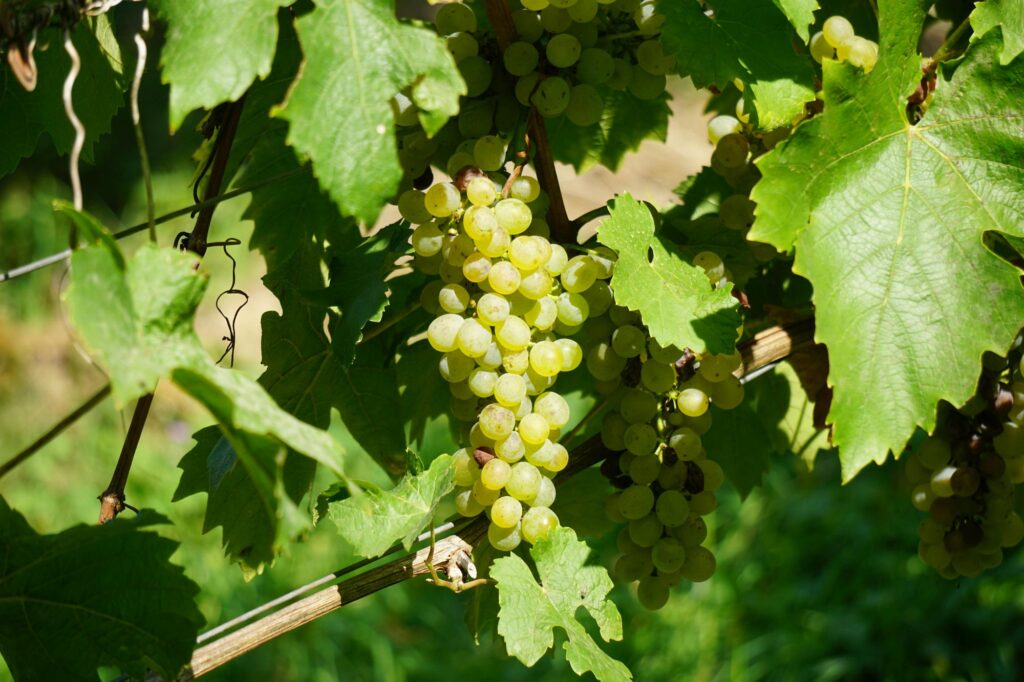
These terms come up when reading about where a wine comes from and how the grapes were grown.
| Term | What it means |
|---|---|
| Aspect | The direction a vineyard faces. South-facing slopes (in the Northern Hemisphere) receive more sunlight and warmth, helping grapes ripen — which is particularly important in England’s cooler climate. |
| Bud break | The point in spring when the vine wakes from dormancy and the first buds open. The start of the growing season. Frost at this stage can be devastating for the crop. |
| Canopy management | How the vine’s leaves and shoots are trained and trimmed throughout the growing season. Affects how much sunlight and airflow reach the grapes. |
| Clone | A genetically identical cutting from a specific vine. Different clones of the same grape variety can produce quite different flavours and styles. |
| Cover crop | Plants deliberately grown between vine rows to improve soil health, reduce erosion, and encourage biodiversity. |
| Dormancy | The period in winter when the vine stops growing and rests. Pruning happens during dormancy. |
| Grafting | Attaching one vine (the scion, which provides the grape variety) to the rootstock of another vine. Almost all vines worldwide are grafted after a 19th-century pest, phylloxera, wiped out ungrafted European vines. |
| Green harvest | Removing unripe grape bunches mid-season to reduce the vine’s yield and concentrate flavour in the remaining grapes. |
| Growing season | The period from bud break in spring to harvest in autumn. Weather during this time determines the character of each vintage — in England, the growing season runs from around April to October. |
| Grubbing up | Removing an established vineyard by uprooting the vines entirely. This might happen because a vineyard has reached the end of its productive life, because a different variety is being planted, or for commercial reasons. The opposite of planting. |
| Harvest / Vendange | The picking of ripe grapes. In England, this typically happens in September or October. Can be done by hand or by machine. |
| Microclimate | The local climate conditions of a specific vineyard or plot can differ significantly from the broader regional climate. A sheltered south-facing slope can be several degrees warmer than a nearby flat field. |
| Old vines (Vieilles Vignes) | Vines that are typically 25+ years old. They produce fewer grapes, but those grapes tend to have more concentrated flavour. |
| Organic farming | Growing grapes without synthetic pesticides, herbicides, or fertilisers. Uses natural alternatives to manage pests, disease, and weeds. |
| Phylloxera | A microscopic louse that devastated European vineyards in the late 1800s by attacking vine roots. The solution was grafting European vines onto resistant American rootstocks — still standard practice today. |
| Plot / Parcel | A defined section of a vineyard, often farmed or vinified separately to highlight differences in soil and exposure. |
| Pruning | Cutting back the vine’s shoots and canes during winter dormancy controls the vine’s shape and the size of the coming harvest. |
| Rootstock | The root system of a vine, onto which a grape-bearing variety is grafted. Chosen for disease resistance and suitability to the soil. |
| Soil types | The makeup of the ground vines are planted in: clay, chalk, flint, limestone, sand, etc. Soil affects drainage, temperature retention, and mineral uptake, all of which influence flavour. The chalk and greensand soils of the South Downs are particularly well-suited to growing the varieties used in English sparkling wine. |
| Terroir | A French word with no direct English translation. It covers everything that makes a specific place unique: soil, climate, aspect, altitude, and even local traditions. The idea is that where grapes grow shapes how the wine tastes. |
| Training system | The way the vine is shaped and supported, e.g. Guyot (a single or double cane system), cordon, or bush vine. Affects yield and fruit exposure. |
| Véraison | The point in summer when grapes start changing colour (red grapes turn from green to red/purple; white grapes turn from green to gold). Marks the start of the ripening phase. |
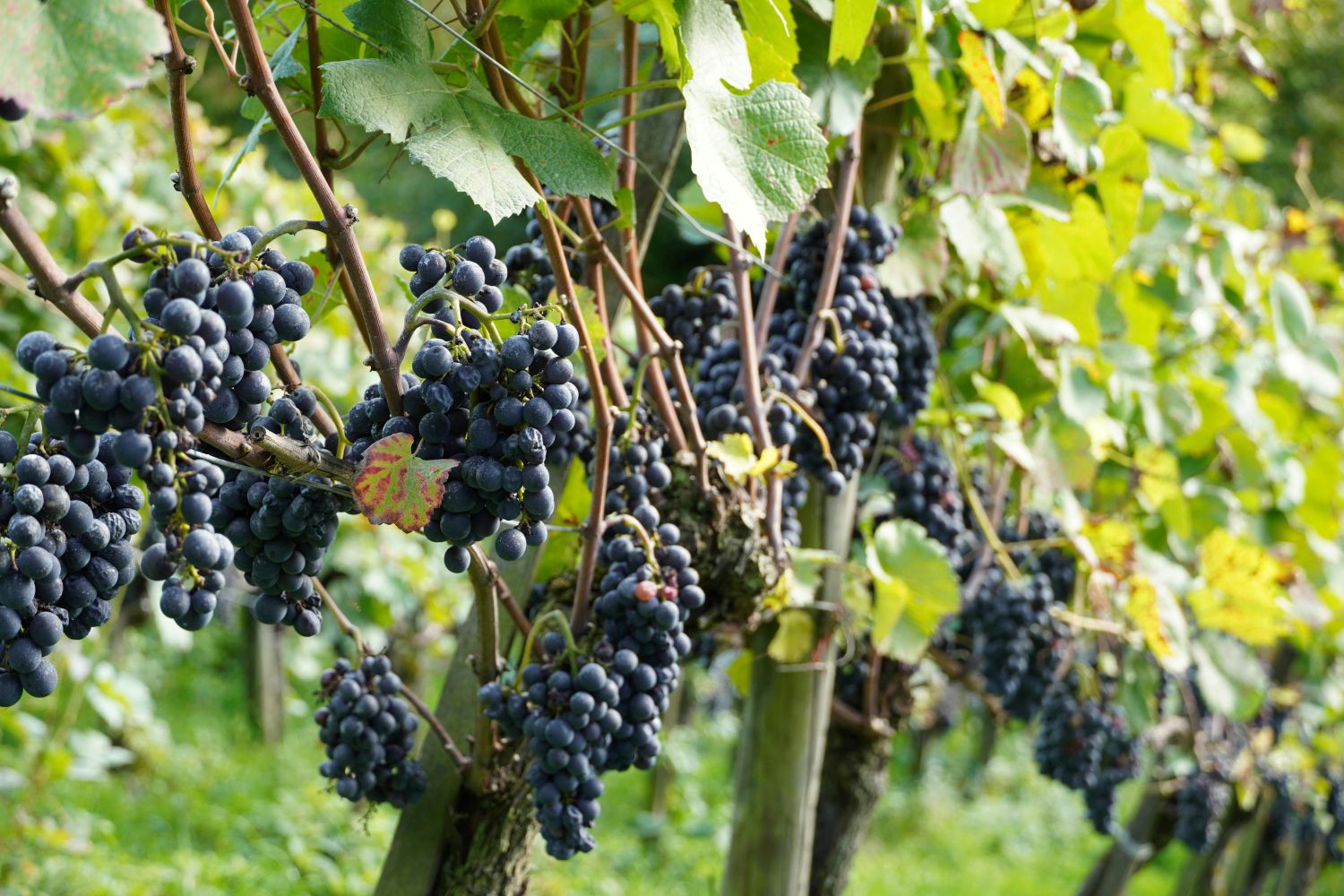
| Viticulture | The science and practice of growing grapes for wine. A viticulturist is someone who specialises in managing a vineyard — from pruning and canopy management to understanding soils and disease prevention. |
| Yield | How many grapes (or how much wine) a vineyard produces per hectare. Lower yields often produce more concentrated, complex wine. |
Wine and Food Terms
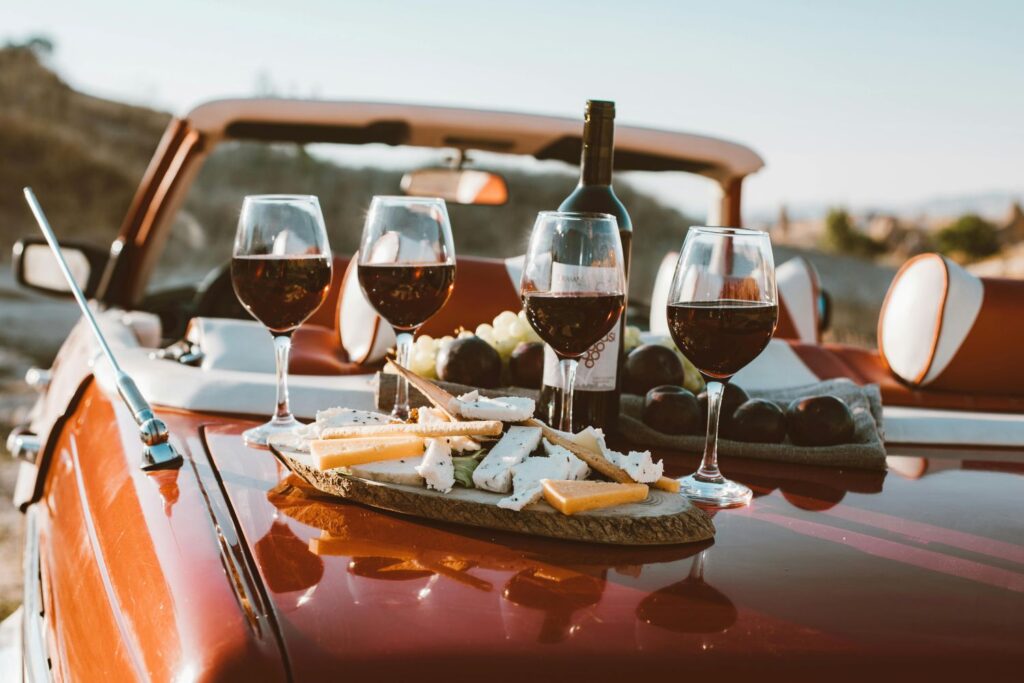
A few terms that come up when pairing wine with food, or talking about wine in a dining or retail context.
| Term | What it means |
|---|---|
| By the glass / BTG | Wine sold individually by the glass rather than by the bottle. |
| Carafe | A small glass jug used to serve wine by the measure in restaurants, usually a third, a half, or a full litre. Also used to decant wine. |
| Fortified wine | Wine that has had a spirit (usually brandy) added to it, increasing the alcohol level. Examples include Port (sweet, red, from Portugal), Sherry (ranging from bone dry to very sweet, from Spain), and Madeira (from the Portuguese island of the same name). Vermouth is also a fortified wine — white wine strengthened with a spirit and flavoured with botanicals such as herbs, roots, and spices. It’s drunk as an aperitif or used in cocktails. |
| House wine | A restaurant’s standard, everyday wine — usually the most affordable option on the menu. |
| Pairing | Matching wine to food so that both are complementary — neither overpowering the other. Classic pairings exist (white Burgundy with fish; red Bordeaux with lamb), but rules are loose — drink what you enjoy. |
| Sommelier | A trained wine professional working in a restaurant who selects the wine list, advises customers, and serves wine. |
| Wine by the case | Buying wine in a standard case of 12 bottles (or sometimes 6). Often cheaper per bottle than buying individually. |
Take a Guided Tour of a Working Vineyard
A guided vineyard tour and tasting is one of the best ways to bring wine terminology to life. You’ll see a working vineyard and winery up close, get a feel for how English wine is made, and taste through a range of wines with an expert guide on hand to answer your questions about viticulture, winemaking, and English wine.
Bolney Wine Estate in West Sussex has been growing grapes and making wine since 1972. Tours run throughout the year at our estate on the edge of the South Downs. We’d love to have you visit!
Book a tour and tasting at Bolney
Updated regularly. If there’s a term you’ve come across that isn’t here, get in touch — we’d love to add it.