Account






What Happens To Old Vines When A Vineyard Is Replanted?
Start exploring

When a vineyard is replanted, the old vines need a new home. Decades of growth, including roots, trunks, arms, and canes, must be removed, collected, and managed. The way a vineyard handles this woody material says a great deal about its approach to land stewardship and environmental responsibility.
In this guide, we explain what typically happens to old vines and pruning cuttings, why the traditional approach of burning is increasingly being replaced, and how modern vineyards turn what was once considered waste into a renewable resource.
Do Vines Have a Lifespan?
Yes, although grapevines (Latin: Vitis vinifera) can live for an extraordinarily long time. Some old-vine plots in Europe are more than a century old and still producing wine. But what is the lifespan of a vine in commercial terms? That depends on several factors:
- The grape variety and rootstock used
- Soil type and drainage
- Climate and annual rainfall
- Vineyard management practices over the vine’s life
Most commercial vines today are grafted onto Phylloxera-resistant rootstocks. According to Caroline Gilby MW writing for The Wine Society, this grafting process weakens the vine slightly, limiting the commercially viable lifespan to around 25 to 30 years. Yield tends to drop as vines age, and once crop levels fall below a viable level, replanting becomes the practical choice.
What is Phylloxera? Phylloxera is a tiny aphid-like insect that devastated European vineyards in the 19th century by attacking vine roots. The only solution was grafting grapevines onto resistant American rootstocks, which is now standard practice in most wine-growing regions worldwide. A small number of regions, including parts of Chile and South Australia, remain Phylloxera-free, allowing genuinely ancient ungrafted vines to survive.
That said, with care and commitment, vines can be nursed well beyond their productive peak. The Old Vine Conference, which works to document and preserve old vine heritage globally, uses the vine age categories first established by the Barossa Valley Old Vine Charter in Australia:
Vine age categories (Barossa Old Vine Charter):
- Old vines — 35 years and older
- Survivor vines — 70 years and older
- Centenarian vines — 100 years and older
- Ancestor vines — 125 years and older
Older vines tend to produce lower yields but, in many cases, grapes with greater concentration and complexity. This is one reason some estates choose to keep ageing vines going rather than replanting, even at reduced productivity. However, for most working vineyards, the balance between fruit quality and economically viable yield tips towards replanting somewhere in the 25 to 40-year range. When that decision is made, the question becomes: what happens to all that removed material?
What Is Grubbing Up, and How Much Material Does It Produce?
The process of removing established vines is known as grubbing up. It typically involves specialist machinery that uproots each vine, lifting the root ball and the entire above-ground structure, before the material is pushed into piles along the vineyard rows for collection.
What is grubbing up? Grubbing up is the complete removal of an established vine from the ground, including the root system, trunk, and all above-ground growth. It is distinct from pruning, which removes only this season’s canes and branches, leaving the permanent vine structure intact.
The volume of woody material this generates often surprises people. A single established vine can have a substantial root system and trunk accumulated over decades. Scale that across hundreds or thousands of vines and the total weight quickly becomes significant, often running to tens of tonnes on a mid-sized estate.
On top of replanting material, every working vineyard also produces significant quantities of cut cane and branches each winter through routine pruning. On a large estate, this annual waste can run to several tonnes.
Why Burning Is Problematic
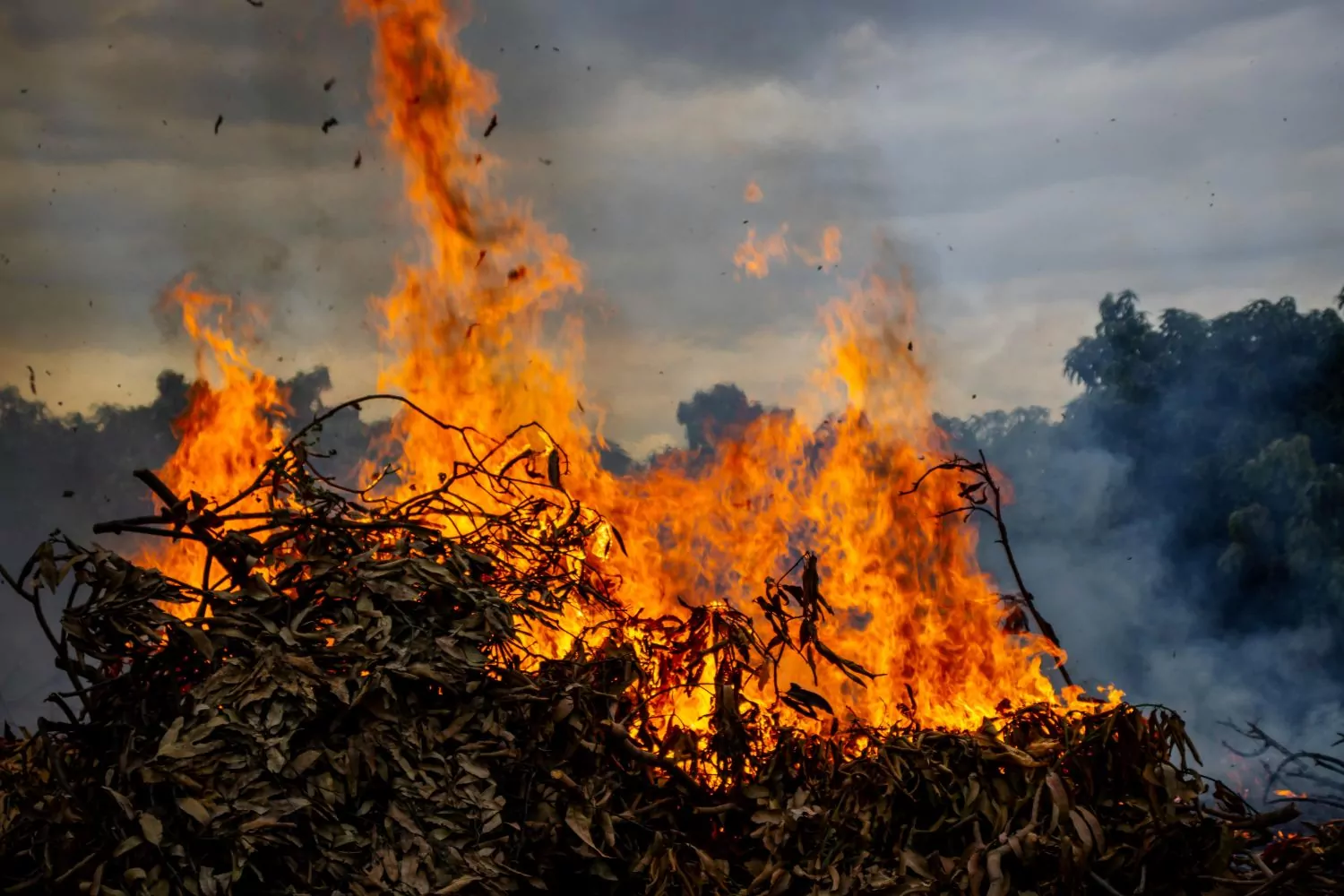
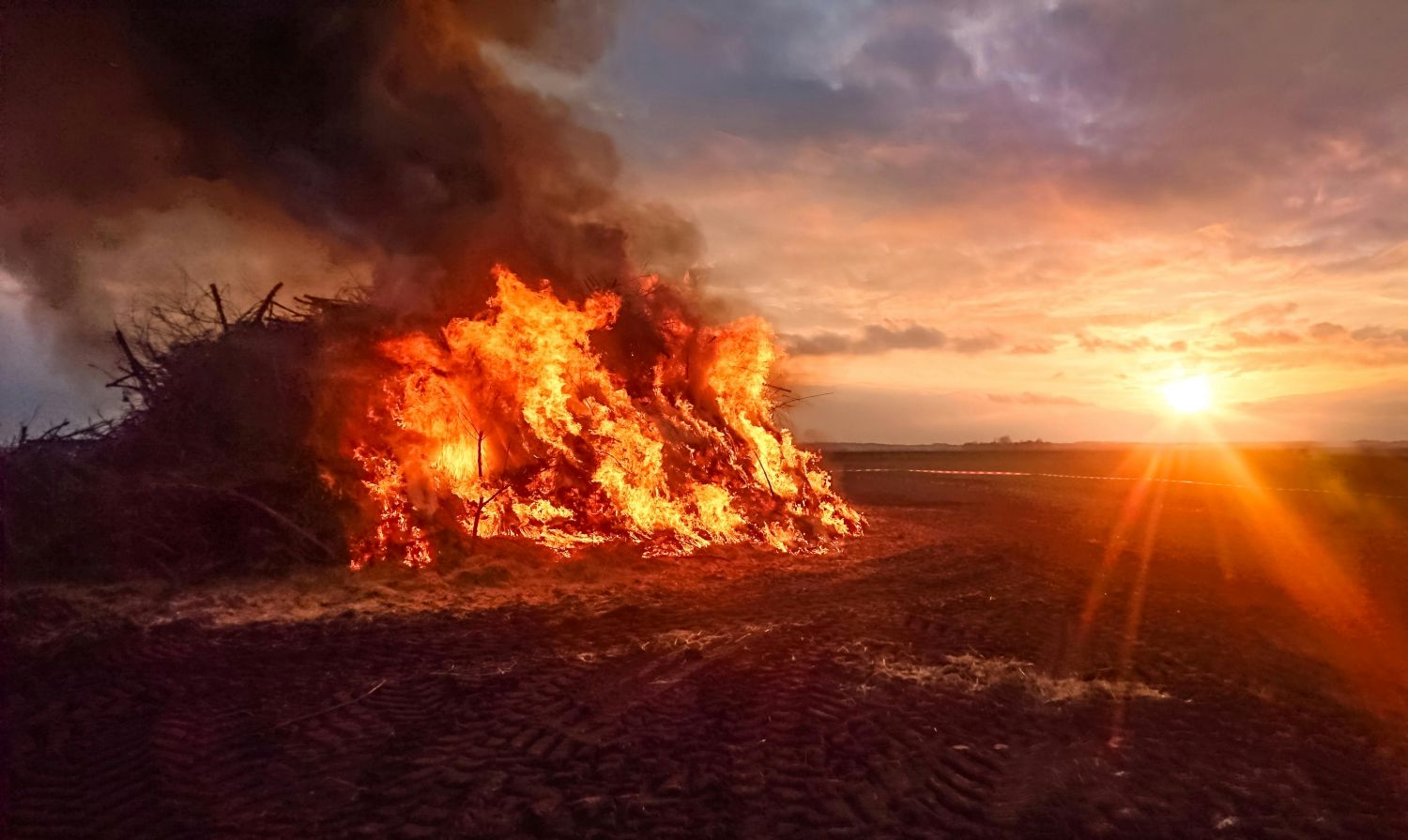
For most of viticulture’s history, the default answer to surplus vine material was fire. Pruning cuttings and grubbed-up vines were piled and burned on site: a fast, low-cost clearance method requiring no specialist equipment or logistics. In some wine regions, field burning remains a common practice today.
Advocates sometimes note that ash can return trace minerals to the soil. But the environmental cost is significant:
- All stored carbon is released immediately as CO₂, with no energy value recovered
- Smoke, particulate matter, and other pollutants affect local air quality and human health
- An energy-rich material is destroyed rather than put to use
- Any opportunity to give the material a second life is permanently lost
In England and Wales, open burning of crop residues is regulated under the Crop Residues (Burning) Regulations 1993. Responsible land managers are increasingly moving away from the practice, not only for compliance reasons but also because better alternatives are now widely available.
Sustainable Alternatives
There are several approaches to sustainably managing vine and pruning waste. The right choice depends on the scale of the operation and the type of material involved:
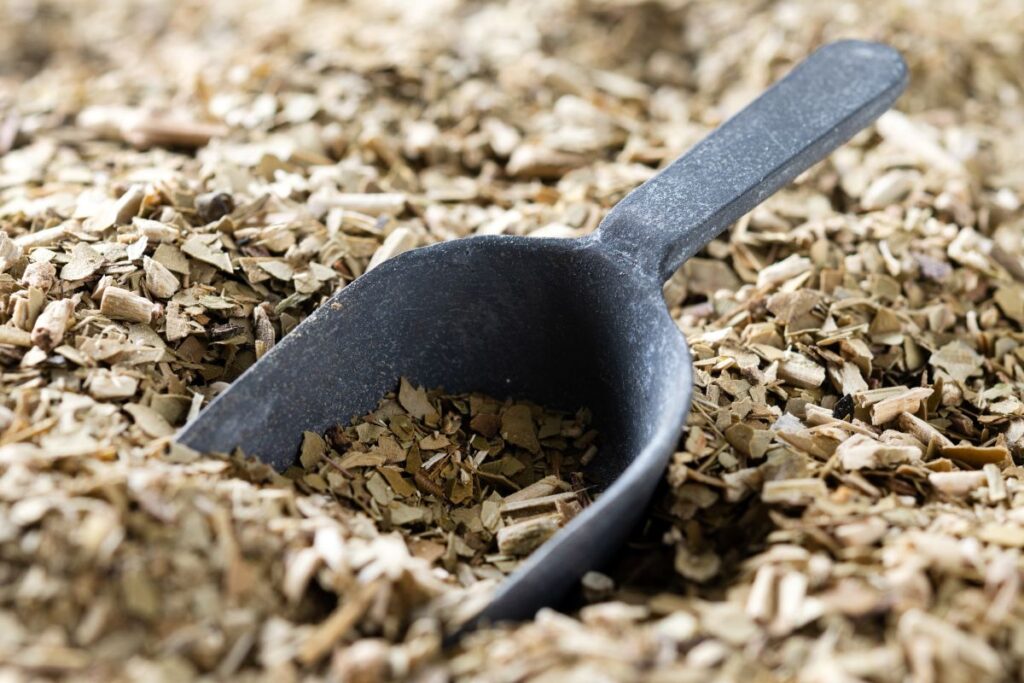
- Biomass recycling is the most practical route for large-scale replanting material. Woody plant material is collected and sent to a specialised facility, where it is shredded, processed, and converted into fuel as wood chips or pellets. These can then be used in industrial boilers or renewable energy systems, reducing dependency on fossil fuels and treating vineyard waste as a resource within a circular energy system.
- Mulching and composting suit lighter annual pruning waste. Cuttings are shredded on site and incorporated back into the soil as organic matter, improving soil structure and supporting biodiversity. Care is needed to avoid returning diseased material, and this approach is generally less practical for the heavier wood of a full replant.
- Biochar production is an emerging option in which vine material is heated in a low-oxygen environment to produce a stable, carbon-rich material that can be added back into the soil as a long-term carbon store. Research into biochar’s role in vineyard soil health and carbon sequestration is active and growing, though it is not yet widely adopted at a commercial scale.
What is biochar? Biochar is a charcoal-like substance made by heating organic material, such as vine wood, in a low-oxygen environment (a process called pyrolysis). Unlike burning, pyrolysis does not combust the material. Instead, it converts it into a stable carbon form that can be mixed into soil, where it can remain for hundreds of years, locking carbon away and potentially improving soil structure.
| Method | Best suited for | Energy recovered? | Environmental impact |
|---|---|---|---|
| Open burning | Small volumes, remote sites | None | High: releases stored CO₂ immediately; produces air pollutants |
| Biomass recycling | Large-scale replanting; heavy woody material | Yes: wood chips or pellets for fuel | Low: displaces fossil fuels; short supply chains reduce transport emissions |
| Mulching and composting | Annual pruning waste; lighter material | No, but improves soil health | Low: keeps material in the soil system; disease risk if not managed carefully |
| Biochar production | Smaller operations; research projects | Limited | Very low: sequesters carbon stably in soil long term |
How Vine Waste Management Differs: Cool and Warm Climates
The challenge of managing vine and pruning waste is universal, but the approach varies considerably between wine-growing regions. Climate affects not only how vines grow, but how their woody material behaves once removed and which disposal methods are most practical.
In warm wine-growing regions such as southern Spain, Sicily, California, and South Australia:
- Vine wood desiccates quickly after cutting, historically making open burning fast and straightforward
- Burning pruning waste remains a tradition in some areas, though this is changing under regulatory and environmental pressure
- California’s San Joaquin Valley Air Pollution Control District has introduced strict restrictions on agricultural burning in response to public health concerns
- In Australia, smoke taint from fires is a serious threat to wine quality, as smoke compounds can be absorbed through grape skins and carry through into the finished wine
- Drier conditions make on-site composting relatively straightforward, and some warm-climate estates are pioneering biochar as a soil amendment
In cool wine-growing regions such as England, northern France, and Germany:
- Higher rainfall and lower temperatures mean removed vine material retains moisture for longer, making on-site burning less effective
- Wetter conditions also make on-site composting more complex to manage without spreading vine disease
- Biomass recycling, where material is taken to a specialist off-site facility, is a more consistently practical solution regardless of the weather
- The English wine industry has seen growing adoption of biomass recycling as the sector matures and sustainability commitments increase
- Open burning of crop residues has been regulated under the Crop Residues (Burning) Regulations 1993 since the early 1990s
| Factor | Cool climate (e.g. England, northern France) | Warm climate (e.g. Spain, California, South Australia) |
|---|---|---|
| Vine lifespan before replanting | Typically 20 to 35 years | 15 to 30 years; drought stress can shorten the productive life |
| Wood moisture after cutting | High: slower to dry due to rainfall and lower temperatures | Low: desiccates quickly in dry, warm conditions |
| Traditional disposal method | Burning, though regulated since 1993 | Burning, still common in some regions |
| Burning regulations | UK: Crop Residues (Burning) Regulations 1993 | California: AQMD restrictions; Australia: state fire management rules |
| Composting suitability | Lower: wetter conditions increase disease risk | Higher: wood dries faster, lower moisture content |
| Biomass recycling adoption | Growing rapidly, especially in the English wine industry | Emerging in areas with burn restrictions |
| Key sustainability driver | Carbon emissions reduction; net-zero commitments | Air quality; wildfire risk; smoke taint damage to crops |
What Is Biomass Recycling and How Does It Work?
What is biomass? Biomass refers to organic material from living or recently living organisms. When plant-based biomass is used as fuel, the carbon it releases was absorbed from the atmosphere while the plant was growing, making it part of a natural short-term carbon cycle, rather than the ancient carbon released when burning fossil fuels.
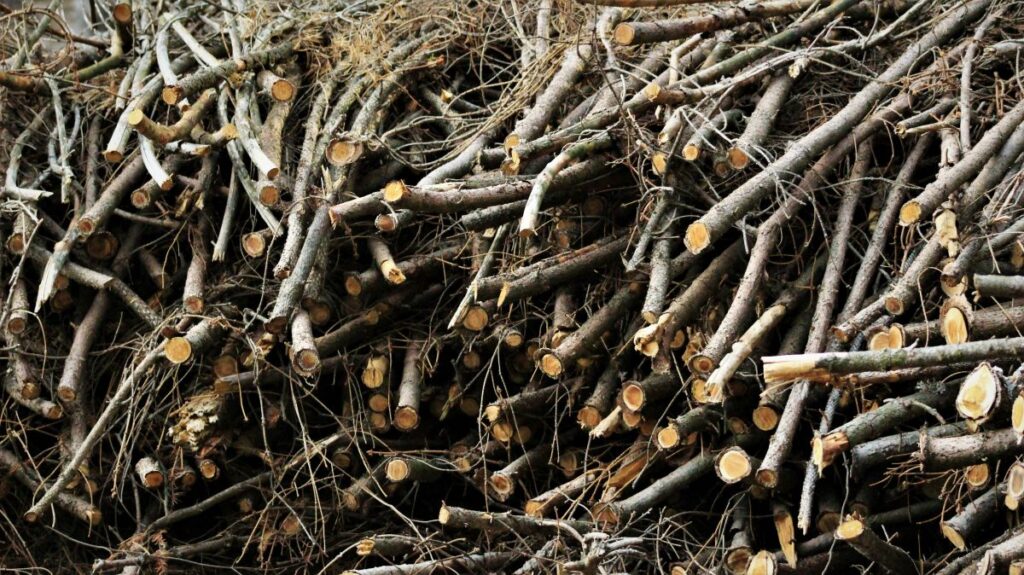
Biomass recycling is the process of converting organic plant material into renewable energy. For vineyard waste, the journey from brush pile to fuel typically involves the following stages:
- Collection and transport: Removed vines and pruning cuttings are collected from the vineyard rows and taken to a specialist biomass-processing facility.
- Shredding: The woody material is chopped into smaller, more uniform pieces, increasing surface area, speeding up drying, and making the material easier to handle.
- Drying: Freshly cut wood contains significant moisture, which reduces its energy value as a fuel. The shredded material is dried to bring the moisture content down to an efficient level.
- Sorting: Non-organic debris, such as stones, wire ties, or metal staples, is removed before processing continues.
- Compressing and pelletising: The dried, sorted material is compressed into wood chips or pellets, which are denser, easier to store, and more consistent as a fuel source than loose chippings.
The resulting biomass fuel is used in industrial boilers, district heating systems, and domestic wood-burning stoves, displacing fossil fuels such as coal and gas in the wider energy supply.
Why Biomass Recycling Is Better Than Burning on Site
This is a fair question, as both options ultimately release the carbon stored in the plant material as CO₂. The crucial distinction lies in what happens in between. The key difference is:
- Biogenic carbon (from vines) was absorbed recently from the atmosphere and is part of a short natural cycle
- Fossil carbon has been locked underground for thousands of years and adds genuinely new carbon to the atmospheric system when burned
- Burning vine biomass as fuel releases biogenic carbon, but only after displacing an equivalent quantity of fossil fuel that would otherwise have been burned
- Open burning on site produces no useful energy and releases the same carbon with nothing to show for it
This is why sustainably sourced biomass is recognised as a renewable energy source by bodies including the International Energy Agency and the UK government, provided it comes from responsibly managed land with short supply chains.
How Bolney Wine Estate Approaches Vine Recycling
As part of Bolney’s long-term vineyard renewal programme in West Sussex, we use biomass recycling to manage all removed vine and pruning material, working with a local specialist just a few miles from the estate. For a detailed look at how we handled the first phase of our replanting project, including the volumes collected and the environmental outcomes, read our vine recycling project update.
See Sustainable Viticulture in Action
Our vineyard tours give visitors insight into how we care for the land at every stage, from planting and pruning to what we do with what’s left over. Bolney Wine Estate is open year-round, and tours run throughout the year.
Book a vineyard tour and tasting at Bolney Wine Estate and see sustainable viticulture in practice.