Account






Are Wine Grapes Grown From Seeds?
Start exploring

Are wine grapes grown from seeds? It is one of the most common questions people ask once they start to look behind the scenes at a vineyard, and the answer surprises almost everyone.
The Short Answer
Wine grapes aren’t grown from seeds. Almost every wine grapevine in the world is grown from a cutting of an existing vine, not from a seed.
The Long Answer
The longer answer touches on genetics, a tiny insect called phylloxera, specialist vine nurseries, and a patient three-year wait before a young vine bears its first proper crop. This article will explain what is going on.
Why aren’t Wine Grapes Grown from Seeds?
If you planted a Chardonnay grape seed, the vine that grew from it would be genetically different from the Chardonnay vine the seed came from, a little like how a child is not an identical copy of a parent.
For a winery, that is a real problem. We need every Chardonnay vine to be reliably Chardonnay, with the same character year after year. Plant a row of grape seeds, and you would get a row of unique, unpredictable vines, each with its own profile and ripening time.
According to Britannica’s entry on viticulture, grapevines have therefore been propagated vegetatively (grown from cuttings rather than seeds) for thousands of years. It is one of the oldest farming techniques in the world.
Viticulture vocab – “Vegetative propagation”: growing a new plant from a cutting of a parent plant rather than from seed, so the new plant is genetically identical to the original.
How are Wine Vines Made?
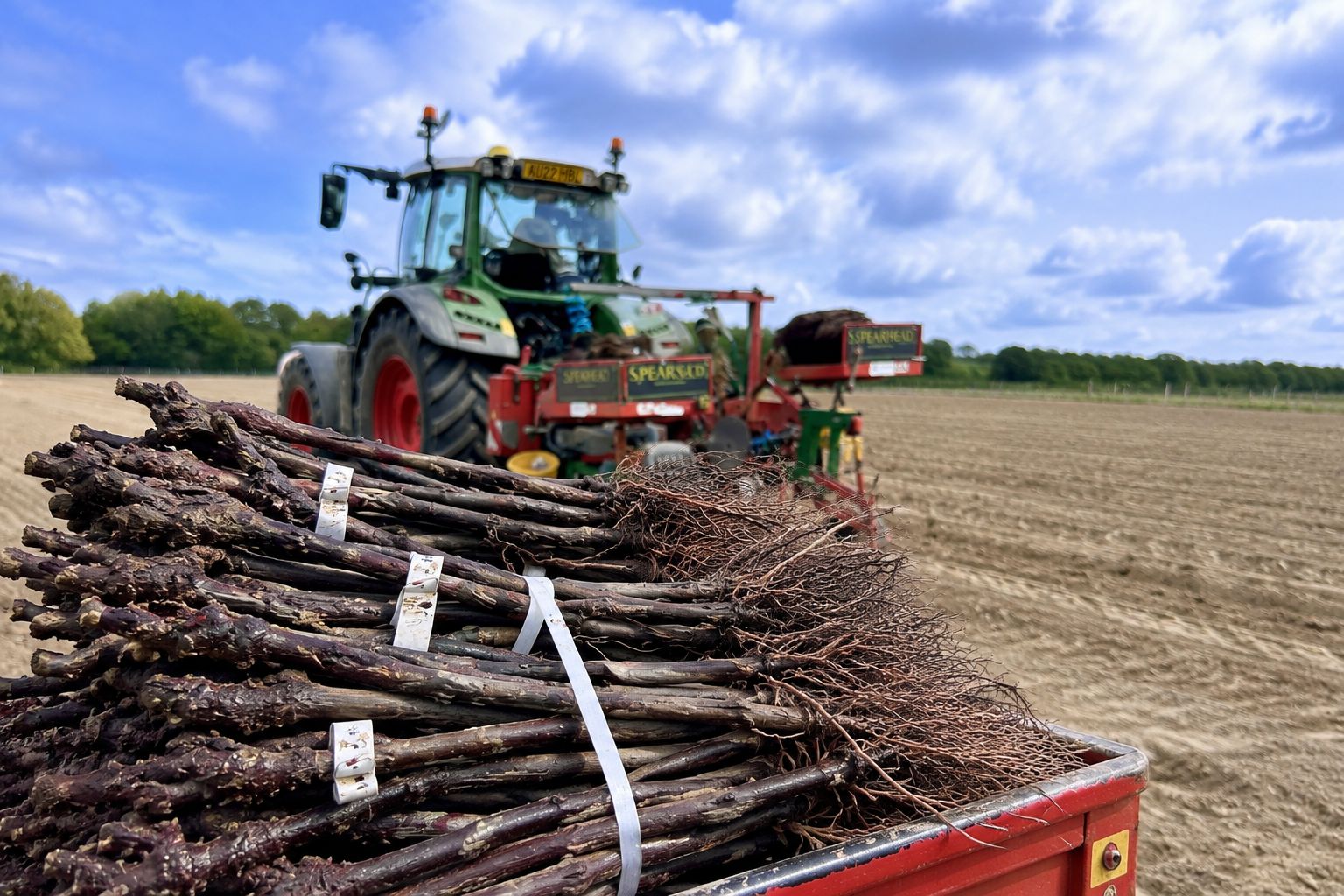
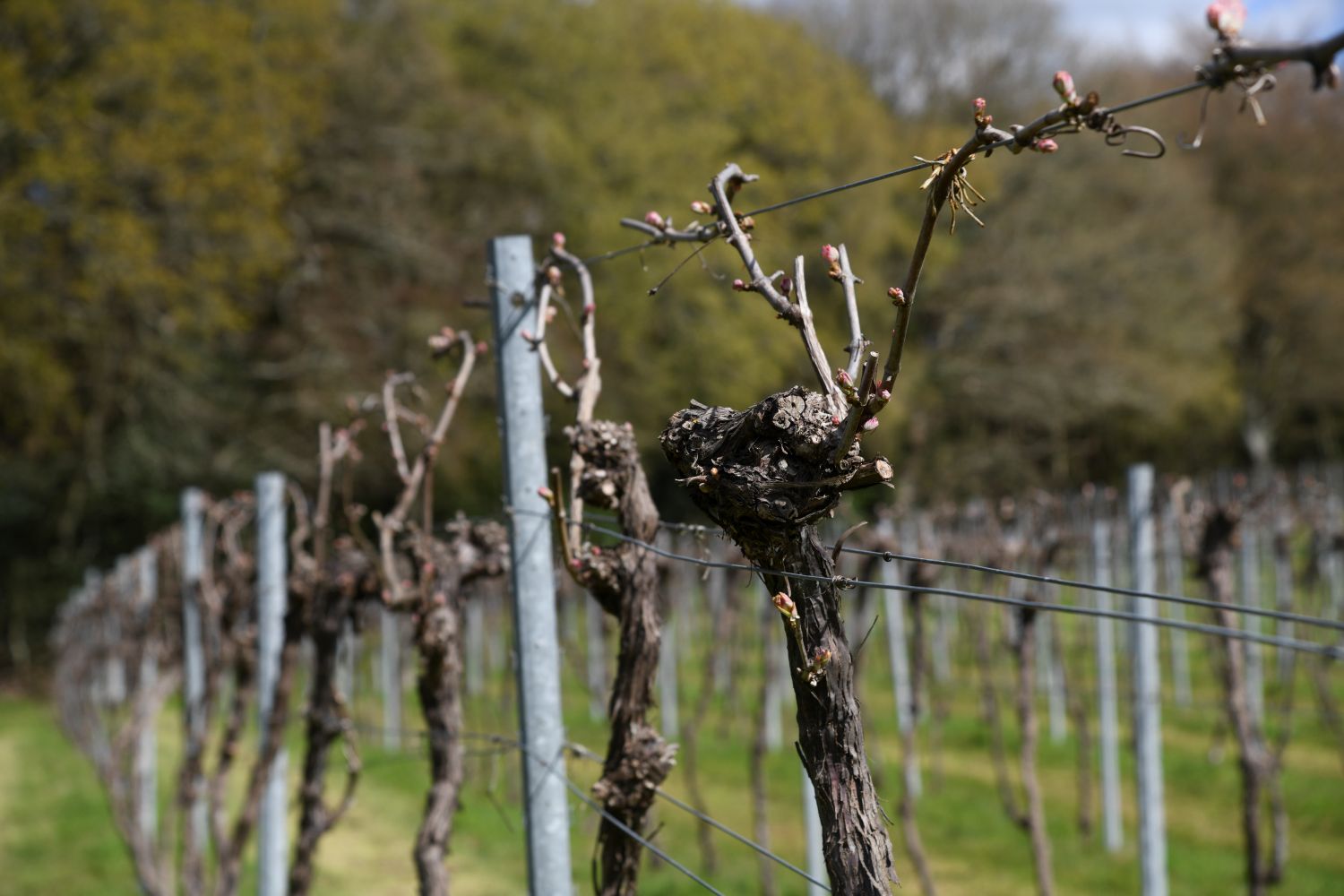
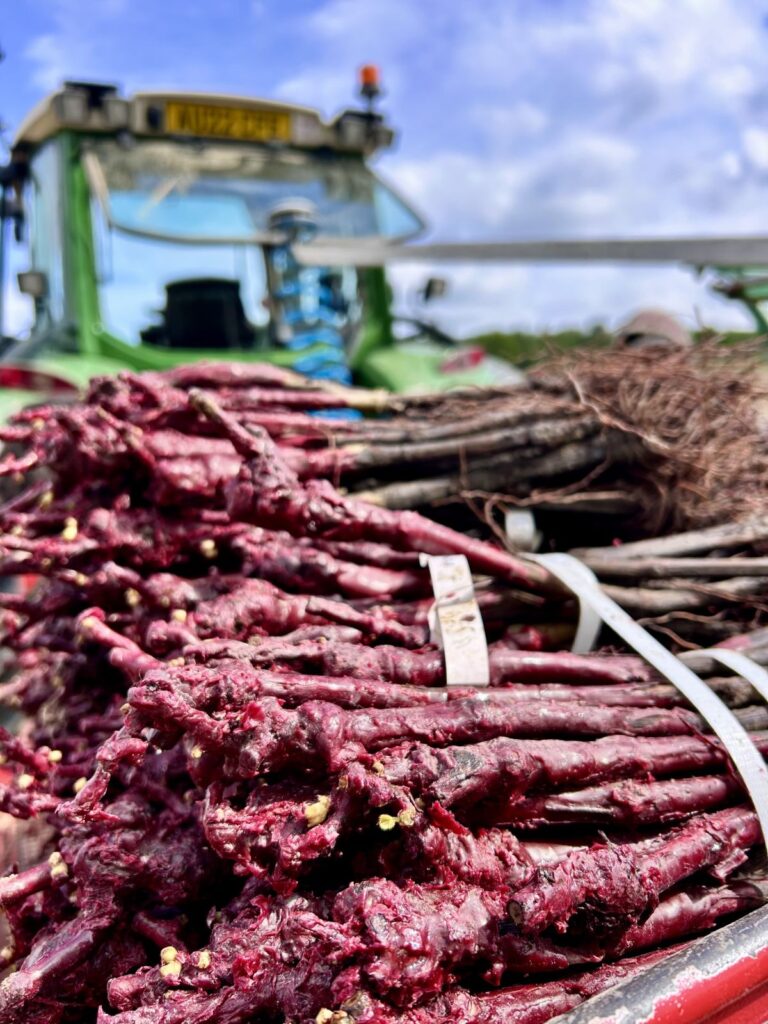
Each new vine is grown from a piece of an existing vine, usually a short woody cutting taken when the parent is dormant. That cutting is effectively a clone of the parent, carrying exactly the same variety and qualities.
A peer-reviewed study on grapevine propagation describes the process in detail and notes that cuttings have been the standard method for producing high-quality grapevine planting material for centuries. Almost every commercial vineyard in the world relies on it.
Where do New Wine Vines Come From?
For commercial winemaking, almost all new vines come from specialist vine nurseries rather than the vineyard itself. The standard nursery process, known as bench grafting, joins two cuttings together to make a single, stronger plant:
- A short cutting of the fruiting variety (the scion) is joined to a cutting of a separate root system (the rootstock).
- The join is made at a workbench in the nursery, which is where “bench grafting” gets its name.
- The freshly grafted vines are moved to a warm, humid room to callus, allowing the graft to heal and the two parts to knit together.
- The young grafted vines are then grown on in the nursery until they are dormant and ready to plant out, typically the following spring.
Viticulture vocab – “Scion” and “rootstock”: the scion is the upper, fruit-bearing part of the vine (the grape variety), and the rootstock is the lower root system it is grafted onto.
Why are Wine Vines Grafted?
The answer takes us back to the late 19th century. As Decanter explains in its primer on grafting, a tiny root-feeding insect called phylloxera devastated vineyards across Europe in the late 1800s, wiping out enormous swathes of the European wine industry.
Most traditional vine roots had no defence against it, but certain rootstocks from North American grape species naturally resisted the pest. Research on the phylloxera–rootstock relationship shows just how widespread grafted vines have become as a result.
Grafting onto resistant rootstocks is now standard practice, and today the vast majority of the world’s wine vines are produced this way. Grafting also lets a grower match the roots to the soil and climate of a specific site, resulting in greater resilience and more consistent fruit above ground.
How Long does it take for a New Vine to Produce Grapes?
This is the question we are asked most often after the seeds one, and the honest answer calls for patience.
A newly planted vineyard does not crop straight away. The first year or two is all about the roots, not the grapes:
- Year one: the vine focuses on building a strong root system and trunk. Any flowers or grape clusters are removed so the plant puts its energy into establishing itself.
- Year two: the vine grows more framework along the trellis. It may carry a little fruit, but not a true crop.
- Year three: most vines give their first proper harvest.
- Beyond: vines reach full maturity over several more years, and can then crop well for decades.
So the next time someone asks whether wine grapes are grown from seeds, the answer is no, and never really has been. They are grown from cuttings, grafted onto resilient roots in a nursery, and patiently nurtured for several years before producing the grapes that go into a bottle of wine.
See it in Practice
Curious to see this in action? In spring 2026, we planted 16,000 new vines at Bolney Wine Estate as part of our Roots to the Future replanting project. Read Part 3 of the series for a behind-the-scenes look at planting day, or book a vineyard tour and tasting to see the young vines settling into the Sussex soil for yourself.