Account






What Is the Difference Between Brut, Extra Dry & Demi-Sec?
Start exploring

Brut, Extra Dry and Demi-Sec are terms used to describe how sweet or dry a sparkling wine or Champagne is. You’ll spot them on bottles of English sparkling wine, Champagne, Prosecco, Cava, and most other fizz, printed somewhere on the front or back label.
The tricky part is that the words don’t always mean what they sound like. Extra Dry, for instance, is actually sweeter than Brut. Demi-Sec sounds like it should be half-dry, but in practice, it tastes very sweet.
Below, we break down the three sweetness levels you’ll see most often on a bottle of bubbles, so you can choose the right one with confidence next time you’re picking something up for dinner or browsing a restaurant list.

Why does Sparkling Wine have Sweetness Labels?
Sparkling wine gets its bubbles from a second fermentation. Near the end of that process, producers top the bottle up with a small mixture of wine and sugar called the dosage (pronounced “doh-sahzh”). The amount of sugar in that top-up decides how dry or sweet the finished wine tastes.
To keep things consistent, sweetness levels are set by EU wine labelling rules based on grams of residual sugar per litre. The UK retained these definitions after leaving the EU, and the industry body WineGB uses the same scale to classify British sparkling styles. That means a Brut from a Sussex vineyard follows the same rules as a Brut from Champagne or a Brut from Cava.
Wine vocab: “Residual sugar” means the amount of natural grape sugar left in the wine after fermentation, measured in grams per litre (g/L). The higher the residual sugar, the sweeter the wine.
Why sweetness isn’t just about sugar: Research published in the American Journal of Oenology and Viticulture shows that sugar reduces the perception of acidity in wine, and vice versa. In practice, this means a Brut at 10 g/L can taste bone-dry because the high acidity in sparkling wine balances the sugar, while a still wine at the same level often tastes off-dry.
What is Brut?
Brut is the driest of the three styles we’re focusing on here, and by far the most popular.
By EU rules (still in force in the UK), a Brut sparkling wine contains less than 12 grams of sugar per litre. That sounds like a lot, but in the glass it tastes crisp and refreshing rather than sweet. Sparkling wine has naturally high acidity, which balances the sugar and leaves you with a clean, citrusy finish.
Which sparkling wine is Brut? You’ll see Brut on the majority of Champagne, English sparkling wine, Cava, and a growing share of Prosecco bottles. If a sparkling wine has no sweetness term on the label, it’s most likely Brut.
What it tastes like: Brut is bright and refreshing. Expect citrus notes (lemon, lime, grapefruit zest), green apple, and white pear, often with a hint of brioche, toast, or biscuit from time spent ageing on yeast. The body is light to medium, the bubbles feel lively, and the acidity makes the mouth water and the palate feel clean. The finish is crisp and dry, ready for the next sip or bite.
Sweetness in context: A glass of Brut contains less than half a teaspoon of sugar. That’s roughly a tenth the sweetness of a glass of Coca-Cola (around 106 g/L of sugar) and well below the natural sugar in orange juice (around 80 to 100 g/L).
Food pairings for Brut:
- Oysters, sushi, sashimi
- Fish and chips
- Roast chicken or turkey
- Goat’s cheese and hard cheddars
- Smoked salmon and crème fraîche
- Crisp green salads with vinaigrette
When to drink Brut: Brut is the all-rounder. It works as an aperitif, with most savoury meals, and is the traditional choice for celebrations, weddings, and toasts. Its acidity keeps the palate fresh between courses, which is why sommeliers will usually pour it first at a tasting.
Did you know? If “Brut” still feels too sweet, look for Extra Brut (up to 6 g/L) or Brut Nature (up to 3 g/L, with no sugar added in the dosage at all). According to The Drinks Business’s Top 10 style trends in Champagne, dryness is now the dominant trend, with most cuvées sitting below 10 g/L as drinkers chase a purer, more vineyard-driven taste.
What is Extra Dry?
Here’s where things get a little odd. Extra Dry isn’t drier than Brut. It’s actually slightly sweeter.
The Extra Dry category sits at 12 to 17 grams of sugar per litre, just above Brut on the sweetness scale.
The name is a hangover from the 19th century, when Champagne houses used “Extra Dry” to set their less-sweet wines apart from the very sugary styles fashionable at the time. The story is well documented in Decanter’s piece on the shipwreck Champagne that revealed 19th-century Europe’s sweet tooth, and the Wikipedia history of Champagne traces the gradual shift from sweet to dry styles over the 1800s.
Interesting fact: Victorian Britain and Imperial Russia were the two biggest fans of sweet Champagne. Correspondence from Madame Clicquot’s agent in Saint Petersburg, cited in research on shipwrecked Champagne bottles recovered from the Baltic, confirms that Russian Champagne could contain 250 to 330 g/L of sugar, closer to a liqueur than what we’d recognise as wine today. Tastes shifted towards drier styles in the late 19th century, when British drinkers led the way.
Which sparkling wine is Extra Dry? You’ll most often see Extra Dry on Prosecco bottles.
What it tastes like: Extra Dry feels rounder, softer, and more fruit-forward than Brut. Expect ripe pear, peach, and apricot notes, along with floral touches like honeysuckle or elderflower. There’s a soft sweetness on the front of the palate that fades into a gentle finish. The acidity is still there but feels less assertive, making it easier to drink on its own without food.
Sweetness in context: A glass of Extra Dry contains around half a teaspoon of sugar. Less sweet than apple juice (around 100 g/L) and noticeably less sweet than a fizzy drink, but with enough sugar to round off the edges.
Food pairings for Extra Dry:
- Fresh fruit (strawberries, peaches, melon)
- Brunch dishes like eggs Benedict or smoked salmon bagels
- Mildly spiced Asian food (pad thai, korma, mild curries)
- Prosciutto and melon
- Soft cheeses like Brie or Camembert
- Fruity desserts that aren’t too sweet (lemon drizzle cake, fruit salad)
When to drink Extra Dry: Extra Dry shines at garden parties, brunches, picnics, baby showers, and afternoon get-togethers. Its softer, fruitier feel is more forgiving without food, which makes it a crowd-pleaser for casual drinking.

What is Demi-Sec?
Demi-Sec translates from French as “half-dry”, which is a touch misleading because it’s noticeably sweet to drink.
A Demi-Sec sparkling wine contains 32 to 50 grams of sugar per litre. That’s roughly three to four times the sweetness of a typical Brut.
What it tastes like: Demi-Sec is rich and indulgent. Expect ripe stone fruit (apricot, peach, mirabelle plum), honey, vanilla, and sometimes notes of dried fruit, caramel, or marzipan in older bottles. The body is fuller, the bubbles feel softer and creamier, and the sweetness lingers on the finish. A well-made Demi-Sec retains backbone acidity, so it never feels syrupy or cloying.
Sweetness in context: A glass of Demi-Sec contains roughly 1.5 teaspoons of sugar. That’s about a third the sweetness of Coca-Cola, or close to the natural lactose in a glass of whole milk. Sweet on its own, but balanced against acidity when paired with the right food.
Which sparkling wine is Demi-Sec? You’ll most often see Demi-Sec on Champagne and Crémant (French traditional-method sparkling wines from regions outside Champagne, such as the Loire, Alsace, and Burgundy). It also appears on some Prosecco and Asti styles. Demi-Sec is rarer in English sparkling wine, but a small number of UK producers do make it.
Food pairings for Demi-Sec:
- Fruit tarts, panna cotta, lemon posset
- Sticky toffee pudding and Christmas cake
- Almond pastries, macarons, and shortbread
- Foie gras and rich pâtés
- Blue cheeses like Stilton, Roquefort, or Gorgonzola
- Spicier dishes where the sweetness softens the heat
When to drink Demi-Sec: Demi-Sec is the dessert course in a bottle. Pour it after dinner with pudding, at afternoon tea, or alongside a cheeseboard. It’s also a lovely match for an indulgent slice of birthday or wedding cake, where Brut can feel a bit too austere.
Tip on serving temperature. Sweeter sparkling wines show best slightly cooler. Aim for 6 to 8°C for Demi-Sec, and 8 to 10°C for Brut. A bottle straight from the fridge will be on the colder end, so let it sit for five to ten minutes before pouring if you want the flavours to open up.
The Full Sweetness Scale
For reference, here’s the complete EU/UK sparkling wine sweetness scale, from driest to sweetest:
| Style | Residual sugar | Roughly as sweet as… |
|---|---|---|
| Brut Nature | 0 to 3 g/L | A squeeze of lemon in water |
| Extra Brut | 0 to 6 g/L | Plain Greek yoghurt |
| Brut | Under 12 g/L | A drop of sugar in your tea |
| Extra Dry / Extra Sec | 12 to 17 g/L | Half a teaspoon in your tea |
| Sec / Dry | 17 to 32 g/L | A glass of skimmed milk |
| Demi-Sec | 32 to 50 g/L | A glass of whole milk |
| Doux | 50+ g/L | Sweet dessert wine territory |
Which Sparkling Wine Style is Right for You?
Not sure which suits your palate? Use the table below as a starting point.
| If you usually enjoy… | You’ll probably love… |
|---|---|
| Crisp dry whites (Sauvignon Blanc, Chablis, Picpoul) | Brut |
| Lager, dry cider, or a classic gin and tonic | Brut |
| Off-dry whites (Pinot Grigio, lighter Rieslings) | Extra Dry |
| Fruity rosés or an Aperol Spritz | Extra Dry |
| Pudding wines (Sauternes, late-harvest Riesling) | Demi-Sec |
| Sweet ciders, fruit liqueurs, or dessert cocktails | Demi-Sec |
Quick tip: If you’re still unsure at the shop, a Brut from a smaller, quality producer is the safest first buy. It pairs with the widest range of food and won’t feel cloying if you decide to keep sipping after the meal.
How to Taste Brut, Extra Dry and Demi-Sec Side by Side at Home
The clearest way to learn the differences is to taste all three together. It’s straightforward to set up at home.
What you’ll need:
- One bottle of Brut English sparkling wine or Champagne
- One bottle of Extra Dry Prosecco (most Prosecco labelled simply “Prosecco” without a sweetness term is in fact Extra Dry, so check the back label)
- One bottle of Demi-Sec sparkling wine or Champagne
- Three of the same tulip-shaped glasses (see our piece on the best glasses for sparkling wine)
- A small plate of cheese, fresh fruit, and a sweet biscuit or piece of cake
How to taste:
- Chill all three bottles to roughly 8°C (about an hour and a half in the fridge).
- Pour a small measure of each, starting with the driest (Brut) and ending with the sweetest (Demi-Sec). Tasting in this order keeps the palate fresh.
- For each glass, first notice the aroma, then take a small sip and let the wine sit on your tongue for a moment.
- Make a quick note on the body, sweetness, acidity, and finish.
- Try each wine with a piece of cheese, a slice of fruit, and a bite of something sweet. Notice how the food changes the wine, and the wine changes the food.
You’ll quickly see which style suits your palate, which works best with which food, and why “Extra Dry” being sweeter than “Brut” is less confusing once you’ve actually tasted them next to each other.
A Few Etiquette Tips for Serving Sparkling Wine
A few small habits make a real difference to how sparkling wine tastes and presents.
- Open the bottle gently. Twist the bottle, not the cork, and aim for a soft sigh rather than a loud pop. See our piece on how to open a bottle of sparkling wine for the full method.
- Use the right glass. A tulip-shaped glass holds aroma better than a narrow flute or a wide coupe. Our article on the best glasses for sparkling wine covers the trade-offs.
- Pour in two stages. Pour a small amount, let the foam settle, then top up. This gives you a full glass without a wasteful overflow.
- Don’t over-chill. A bottle that’s too cold will mute the flavour. Aim for the temperatures above rather than burying it in ice.
- Store bottles on their side. This keeps the cork moist and the seal tight. Our article on how to store sparkling wine has more.
For help choosing the right bottle in the first place, see our article on how to choose sparkling wine.
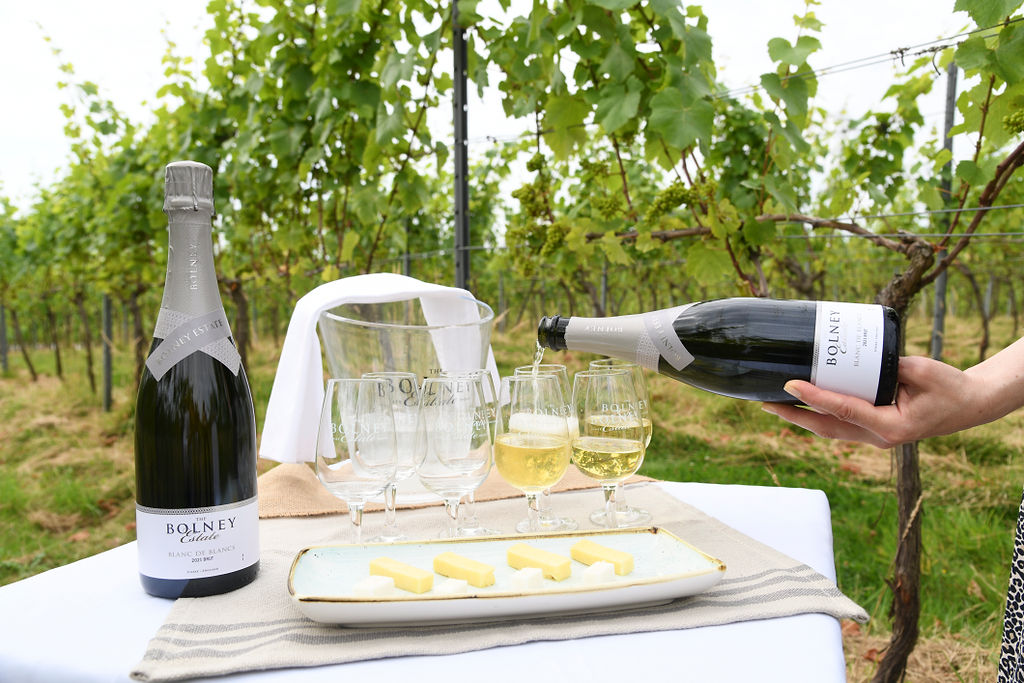
Discover Brut English Sparkling Wine at Bolney
Book a guided vineyard tour at Bolney Wine Estate in the heart of West Sussex. You’ll explore our working vineyard, see exactly how Brut English sparkling wine is made, and put your questions directly to our winemaking team. Curious about dosage levels, why we age on the lees for years, the grape varieties behind our Brut style, or how Sussex chalk soils shape the flavour? Our experts are on hand throughout the tour to answer any questions you have.
You’ll learn about Brut sparkling wines straight from the source, including:
- Bolney Bubbly, our easy-drinking Brut classic, is packed with citrus, apple, and a soft brioche note from time on the lees.
- Classic Cuvée, our traditional-method Brut made from the three classic Champagne grapes (Pinot Noir, Chardonnay, and Pinot Meunier), with hedgerow fruits, brioche, sweet apple, and stone-fruit character.
- Bolney Blanc de Blancs, our Chardonnay-only Brut, with bright lemon, fresh apple, and a creamy biscuit finish that has beaten Champagnes at international competitions.
Book a tour at Bolney Wine Estate →
Frequently Asked Questions
Is Brut the same as dry?
In everyday language, yes. Brut means the wine has less than 12 grams of sugar per litre, which counts as dry. If you want something even drier, look for Extra Brut or Brut Nature.
Which is sweetest: Brut, Extra Dry or Demi-Sec?
Demi-Sec is the sweetest of the three. Extra Dry sits in the middle, and Brut is the driest.
Is Prosecco usually Brut or Extra Dry?
Both are common. Extra Dry is the traditional Prosecco style, but Brut Prosecco has become more popular in recent years as UK drinkers have moved towards drier sparkling wines.
Which sparkling wine is best for a celebration or toast?
Brut is the classic choice. Its crispness and high acidity keep the palate fresh, so it pairs well with canapés, cake, and a long evening of sipping. Demi-Sec is sometimes served alongside the cake itself.
Does sweeter sparkling wine have more calories?
A little. Most of the calories in wine come from alcohol rather than sugar, so the difference is smaller than you might think. A glass of Demi-Sec will have only marginally more calories than a glass of Brut.
Can I drink Demi-Sec with a main course?
You can, but it works best with dessert, cheese, or rich, salty food. With a main course, most people prefer the crispness of a Brut.