Account






Does A Spoon In Sparkling Wine Work?
Start exploring

The teaspoon trick is believed by some to keep a half-empty bottle of bubbly fresh. It could be handy when you’re short of a proper stopper, but you don’t want your wine to go to waste. So, is the spoon method a valid way to keep your sparkling wine from going flat?
Short answer: No, a spoon in sparkling wine does not keep it fizzy
Despite being a popular kitchen myth, scientific evidence and experiments show it doesn’t work. In fact, testing by a chemistry professor and blind taste panels confirmed that bottles with a spoon went flat just as quickly as bottles without.
Wine educators at the WSET also note that the spoon trick is ineffective, and a proper sparkling wine stopper is the only reliable way to preserve fizz.
Where Does The Spoon Myth Come From?
If you haven’t heard of the spoon hack, here’s how it’s supposed to work. Let’s say you’ve opened a bottle of sparkling wine, but you don’t want to finish it. You don’t have a proper stopper to hand, so what should you do?
Some people suggest placing a silver teaspoon or a fork handle-down into the neck of the bottle, with the head resting on the opening. The idea is that the spoon somehow keeps the bubbles from escaping and stops the wine from going flat.
There are two main theories behind the myth.
1. The “air plug” idea
This is the most common explanation. The thinking goes like this:
- A spoon partially blocks the bottle’s neck
- This somehow traps colder air inside
- The cold air then prevents bubbles from escaping
The problem is that sparkling wine doesn’t lose its fizz because warm air is entering. It loses fizz because carbon dioxide dissolved in the wine escapes once the pressure drops. A spoon does not create a seal, and without a seal, the gas continues to escape freely from the bottle.
So, it’s pressure that matters, not air flow.
2. The “silver reacts with the gas” idea
Another version of the myth claims that:
- A silver spoon interacts chemically with carbon dioxide
- Or that silver somehow stabilises the bubbles
There’s no chemical basis for this. Carbon dioxide does not react with silver in a way that would affect fizz retention in wine. The spoon is just sitting in the neck of the bottle — it isn’t altering the pressure or stopping the gas escaping.
This part of the story likely developed because silver has historically been associated with purity and preservation (think of silverware, silver tea sets, even old folklore). That cultural association probably helped the myth stick.
Ancient Persia (5th to 4th Century BC)
Historical accounts link the use of silver vessels with ancient Persian royalty. The Greek historian Herodotus, writing in the fifth century BC, described how Persian kings such as Cyrus the Great would take water from the Choaspes River on campaign in silver flagons because it was the only water they drank. Later writers have interpreted this as evidence that silver was valued for its role in keeping water fresh.
Modern scientific research explains why silver was valued in this way. Silver ions released from the metal surface can inhibit microbial growth in water, slowing the spoilage process.
Ancient Greece and Rome (400 BC to 100 AD)
Ancient Greek and Roman writers documented the use of silver in storing water and treating wounds. Hippocrates, writing around 400 BC, described the use of silver preparations in wound care. Pliny the Elder discusses silver’s medicinal uses, including incorporation into plasters and remedies, showing that ancient Romans recognised practical applications of the metal in health and healing.
Modern medical reviews confirm that silver was widely used in antiquity because liquids stored in silver vessels spoiled less quickly. The Journal of Antimicrobial Chemotherapy explains how silver ions (Ag⁺) can disrupt bacterial cell membranes and kill organisms such as Staphylococcus aureus and Escherichia coli, helping explain why these early observations had some basis in reality.
The Middle Ages (1100 to 1500)
During the medieval period, silver goblets and vessels were associated with status, perceived hygiene, and protection against illness. Long before germ theory was understood, people believed certain materials helped keep food and drink safer.
Academic reviews of silver in medicine note its continued use throughout the medieval period and into early modern Europe for treating infection and preventing spoilage.
Age of Sail (16th to 18th Century)
From the 16th century onwards, it became common practice among European naval powers to use silver to help preserve drinking water on long sea voyages. Sailors from Spain, Portugal, the Netherlands and England sometimes stored water in silver containers or dropped silver coins into barrels. Practical observations showed water stayed fresher for longer, building silver’s reputation as a preserving metal — likely contributing to household myths like the silver spoon keeping sparkling wine fizzy.
Sparkling Wine Is About Physics, Not Bacteria
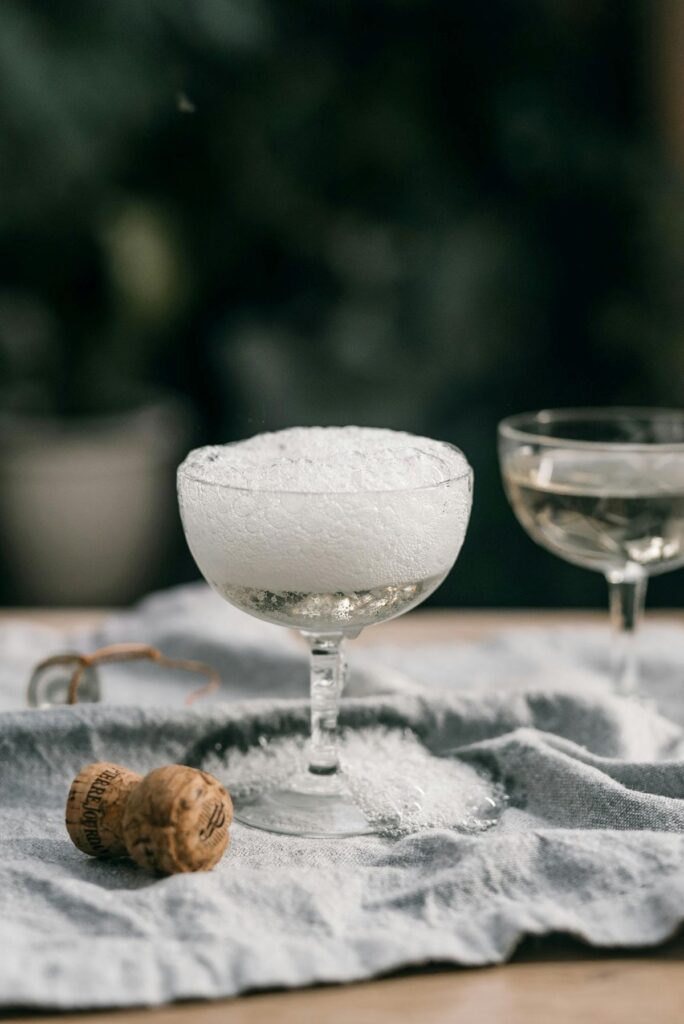
It is important to understand why the silver spoon trick does not preserve the fizz. Silver’s historical role was to prevent bacterial growth. When you open a bottle of sparkling wine, the pressure inside drops, and carbon dioxide escapes, making the wine go flat.
So, it is a matter of physics, not microbiology.
Unfortunately, a silver spoon in the neck of a bottle doesn’t:
- Maintain pressure
- Create an airtight seal
- Stop carbon dioxide from escaping
The historical belief in silver’s protective qualities may explain how the myth started, but it does not explain how to keep sparkling wine fizzy.
Quick Tip for Keeping Sparkling Wine Fresh
While the silver-spoon trick doesn’t work, using a proper sparkling wine stopper and storing the bottle in the fridge will slow the loss of bubbles.
For a full guide, see: How To Recork Sparkling Wine & Keep The Fizz Fresh.
Experience Sparkling Wine at Its Best
Visit Bolney Wine Estate in West Sussex for guided tours and tasting sessions. Explore the vineyard and winery, see how grapes are grown, and watch sparkling wine production. Sample a range of wines and pick up tips for enjoying them at home.
It’s a wonderful day out in the English countryside, perfect for wine enthusiasts or anyone looking to enjoy a relaxing visit.
Book a tour and tasting session today and enjoy a full Bolney Wine Estate experience.