Account






Planning A Wine Tasting In Sussex: Costs, Driving & What To Expect
Start exploring

Sussex is England’s leading wine county. It has the largest cluster of vineyards, around 140, helped by chalk soils and a mild climate that suit the grapes grown for sparkling wine, according to Sussex Modern.
A wine tasting here lets you try those wines where they are grown, and a visit is easy to plan once you know what to expect.
A guided tour and tasting usually costs £25 to £45 a head, or £55 to £70 with food added. Plan not to drive, since even a few tastes can nudge you over the limit. So, line up a driver, a taxi, or a train first. Most visits last a couple of hours, take things at a gentle pace, and are made for first-timers.
Jump to a section
- How much does wine tasting cost in Sussex?
- Can you drive after a wine tasting?
- Can you get drunk from a wine tasting?
- How to plan a winery tour, step by step
- Where in Sussex should you visit?
- When is the best time to visit?
- What to expect on the day
- Dining at the estate
- Planning for couples, families and groups
- Can you bring dogs to a vineyard?
- Frequently asked questions
- Sources

How Much Does Wine Tasting Cost in Sussex?
A basic wine tasting experience at a Sussex vineyard usually costs between £25 and £45 per head. This includes a guided winery tour and a wine flight either in the morning or afternoon. A quick tasting without a tour (called a Cellar Door tasting) tends to cost less, and experiences that add food or a longer tour cost more. Treat the figures as a guide; they vary depending on the estate, the season, and how many wines you try.
Jargon explained: cellar door
The cellar door is the vineyard’s own shop and tasting space, where you can taste and buy wine at the place it was made.
Here is a rough guide to the main formats and their typical per-person costs.
| What it usually includes | Typical price guide | |
|---|---|---|
| Cellar door tasting | A set of wines to taste, often three to six, with someone talking you through them | Around £15 to £25 |
| Guided tour and tasting | A walk through the vines and winery, then a seated tasting | Around £25 to £45 |
| Premium or food experience | A longer tour and tutored tasting with paired food, from a platter to several courses | Around £55 to £90 or more |
What changes the price?
A few things push a tasting up or down the range:
- Length and detail: A speedy tasting costs the least, while the longest guided tour with additional extras is the most.
- Number of wines: More wines, or rarer bottles, cost more.
- Food: Adding a platter or lunch is usually the most expensive add-on.
- Private versus shared: A private group tasting usually costs more per head than joining a shared session.
Here is how the tour and tasting experiences at Bolney Wine Estate compare, from a short cellar door tasting to a three-course lunch:
| Experience | Duration | What is included | Price |
|---|---|---|---|
| Cellar Door Tasting | 30 minutes | A guided tasting of the estate’s sparkling and still wines, with the story behind each one | From £20 pp |
| Wine Pairing Tour & Tasting | 90 minutes | A guided vineyard tour, then a tasting with each wine paired to a local cheese | £30 pp |
| Bolney Experience Tour & Tasting | 3 hours | A guided tour and tutored tasting with three food courses: a food-matching plate, a seasonal mezze board and petits fours | £60 pp |
| Grape to Table Tasting | 3 hours | A welcome glass of Classic Cuvée, a guided tasting, and a seasonal three-course meal paired with the wines, on Fridays | From £95 pp |
Prices are per person and correct at the time of writing. Check the estate’s website for current times and availability.
Top tip
Many estates put the tasting fee toward a bottle if you buy one, so it’s worth checking before or during your session.
Can You Drive After a Wine Tasting?
The honest answer is no. If you are there to taste, it is best to leave the keys with someone else.
In England, the drink-drive limit is 80mg of alcohol per 100ml of blood, which is 35 micrograms per 100ml of breath. There is no reliable way to tell how many wine-tasting servings will tip you over it, as the Metropolitan Police explains, because it comes down to your weight, age, sex, metabolism and what you have eaten.
Your body clears alcohol slowly, at roughly one unit an hour, and you cannot speed that up. Coffee, water, food or a cold shower may make you feel more alert, but they do not remove alcohol from your system.
The rules are getting stricter, too. In early 2026, the government opened a consultation on lowering the England and Wales limit to match Scotland’s, as widely reported. So the simplest rule, not drinking before you drive, is the one that will always keep you safe.
The good news is that getting to and from a Sussex vineyard without driving is easy to plan. Your main options:
| Travel options | Good for | Worth knowing |
|---|---|---|
| Designated driver | Couples and small groups | Many estates offer a soft drink or a take-home option for the driver |
| Taxi or private hire | Small groups without a car | Book ahead, as rural taxis can be limited |
| Minibus hire | Larger groups and celebrations | Splits the cost, and no one misses out on tasting |
| Train and short taxi | Solo visitors and couples | Check the nearest station and the last train home |
| Stay overnight | Making a weekend of it | Some estates and nearby inns offer rooms |
A designated driver can still join in. Most tastings set out a spittoon, so a driver can taste a wine and spit it out rather than ingest it. The only fully safe choice behind the wheel, though, is to skip alcohol altogether.
And if plans change on the day, some estates, Bolney among them, let you leave your car overnight for free and collect it the next day. There is no rush and nothing to worry about.
Can You Get Drunk From a Wine Tasting?
You can, but you really do not have to. The measures are small, no one is rushing you, and you are welcome to spit or tip away anything you would rather not finish. How much you feel is down to how much you swallow, not the tasting itself, so you stay in charge the whole way through.
Jargon explained: a unit of alcohol
One unit is 10ml of pure alcohol, which is roughly the amount an average adult can process in an hour, according to the NHS.
It helps to picture how the small measures add up. A standard 175ml glass of 12% wine is about two units. A tasting measure is much smaller, often around 25ml, so a single taste is a fraction of a unit.
Try six across an hour, though, and you have drunk close to a full glass. That builds up quicker than most people realise, so it pays to go slowly and use the spittoon.
To enjoy the wine and stay in control:
- Use the spittoon: Spitting is normal at tastings and lets you taste more without drinking more.
- Eat first: Food slows the rate at which alcohol is absorbed.
- Drink water: Alternate wine with water to pace yourself and stay hydrated.
- Go slowly: A tasting is about noticing flavours, not finishing every pour. Our guide on how to taste wine walks through the steps.

How to Plan a Winery Tour, Step by Step
Planning a winery tour is very simple, which is why it makes a fabulous half- or full-day outing. Pick your estate and experience, book ahead, sort your way home, check what is included, and dress for a working farm. Most tours last one to two hours and go ahead whatever the weather, so come ready for a little time outdoors.
Here’s how to plan your winery trip:
- Choose the experience: Decide between a full tour and tasting or a shorter tasting, and add food if you want to make a day of it.
- Book in advance: Tours often run on set days and fill up at weekends and through summer.
- Sort transport first: Agree your driver, taxi or minibus before you confirm, not after.
- Check the details: Note down the meeting time, how long it runs, how many wines you taste, and what food is included.
- Dress for a vineyard: Flat shoes, layers and a coat or an umbrella for rain, as you will be on uneven ground on a working farm.
- Leave a buffer: Allow time either side, and avoid booking anything tight straight afterwards.
Where in Sussex Should You Visit a Vineyard?
Most Sussex vineyards sit along the South Downs, which run through both West Sussex and East Sussex, so you have a wide choice wherever you begin. English wine is concentrated in the southeast, and the wider region holds over half of the UK’s 1,150-plus vineyards, as recorded in the WineGB figures summarised by ICAEW.
To put it into perspective:
- Number of UK vineyards: There were more than 1,150 vineyards in 2025, and still growing.
- South East England: Over half of them sit across East Sussex, West Sussex, Kent, Surrey and London, according to WineGB.
- Sussex: There are around 140 vineyards, the largest concentration of any English county.
Where to head in and around Sussex:
| Area | What you will find |
|---|---|
| West Sussex | Vineyards along the western South Downs, from near Chichester across to the mid-Sussex hills, mixing large sparkling estates with smaller family growers |
| East Sussex | Estates across the High Weald and the Downs around Lewes and out toward Rye, including some organic producers |
| Just beyond Sussex | Kent, the Surrey Hills and Hampshire all sit close by, each an easy add-on for a second visit |
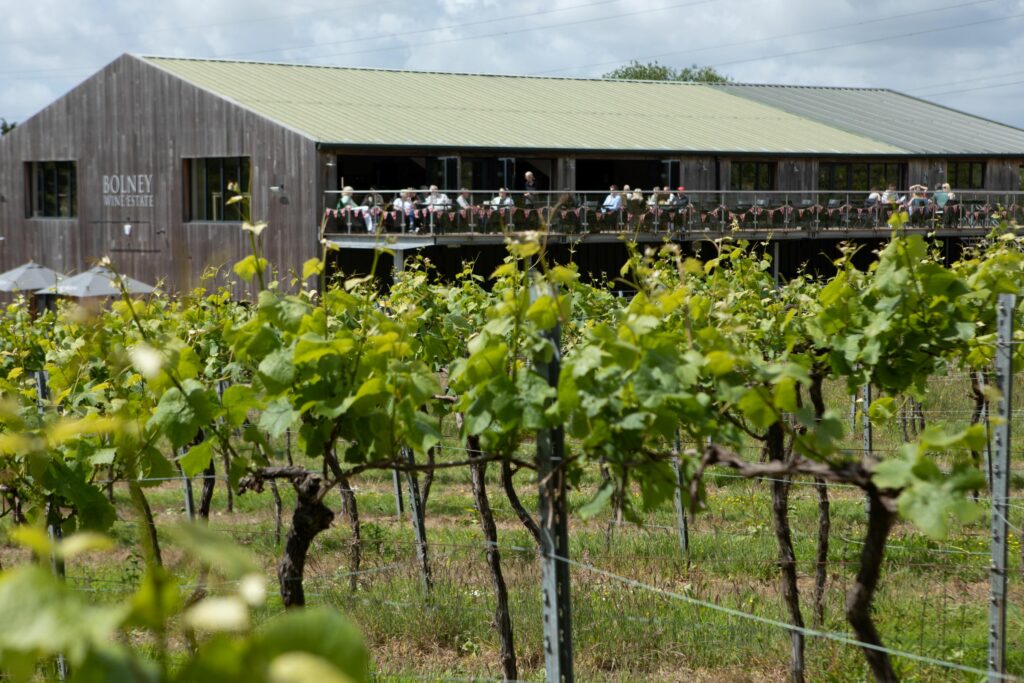
Why a Sussex vineyard is worth the trip
A Sussex vineyard makes a glorious day out, and not only for the wine:
- Easy to reach: Sussex sits close to London and Gatwick, with train links to towns near many estates, so a vineyard makes an easy day trip from London.
- A full day out: A tasting pairs well with a South Downs walk, a market town, the coast, or one of West Sussex’s wine bars, for a wonderful day in the English countryside.
- Beautiful countryside: The vines sit on the rolling chalk hills of the South Downs, a treat to see in any season.
- Home of English sparkling: Sussex is best known for sparkling wine, which many visitors enjoy comparing with Champagne and Prosecco.
- Protected wine region: Sussex also became the first English wine region to earn its own Protected Designation of Origin status in 2022, as reported by Decanter.
Most Sussex sparkling is made by the traditional method. If you are curious, see how English sparkling compares with Prosecco.
Jargon explained: traditional method
The traditional method is the way top sparkling wine gets its bubbles, through a second fermentation inside the bottle. Sussex is well known for sparkling wine made this way.
When Is the Best Time to Visit a Vineyard?
The best time to visit a Sussex vineyard is late spring to early autumn, when the vines are in leaf, and the weather is at its kindest. Autumn harvest, around September and October, is the liveliest time to see the work in full swing. For a quieter, easier-to-book visit, choose a weekday over a weekend.
What each season offers:
- Spring, April to June: Fresh green growth and quieter tours, though the weather is less settled.
- Summer, July to August: Vines full and green, the best weather, and the most events, so it is also the busiest. See our reasons to visit in summer.
- Autumn, September to October: Harvest time, the most exciting moment to watch the grapes come in.
- Winter, November to March: Bare vines and fewer tours, with a calm behind-the-scenes feel, so check opening times before you travel.
In terms of timing within the week, weekdays are usually quieter and easier to book, while weekends and summer dates sell out first. Tours often run daily at set times, for example late morning and early afternoon. For a fuller breakdown, see our guide on when to visit an English vineyard.
What to Expect on the Day
A typical Sussex vineyard visit runs one to two hours, or a little longer with food. You will usually walk through the vine rows, see where the wine is made, then settle in to taste a few with a guide who talks you through each one.
It is a relaxed few hours, and you need no wine knowledge at all to enjoy it. If it is your first time, our first wine tasting guide covers the basics.
The usual shape of a visit:
- Arrival: You meet your guide and the group at a set time.
- Vineyard walk: A stroll through the vineyard, learning how the grapes are grown.
- Winery: A look at where the grapes become wine.
- Seated tasting: A flight of wines to taste and compare, often sparkling, white and red, with tasting notes.
- Cellar door: A chance to buy any favourites before you leave.
Jargon explained: a flight
A flight is a small set of wines served one after another so you can compare them side by side. Our beginner’s wine terms guide explains the other words you will hear.
Dining at the Estate
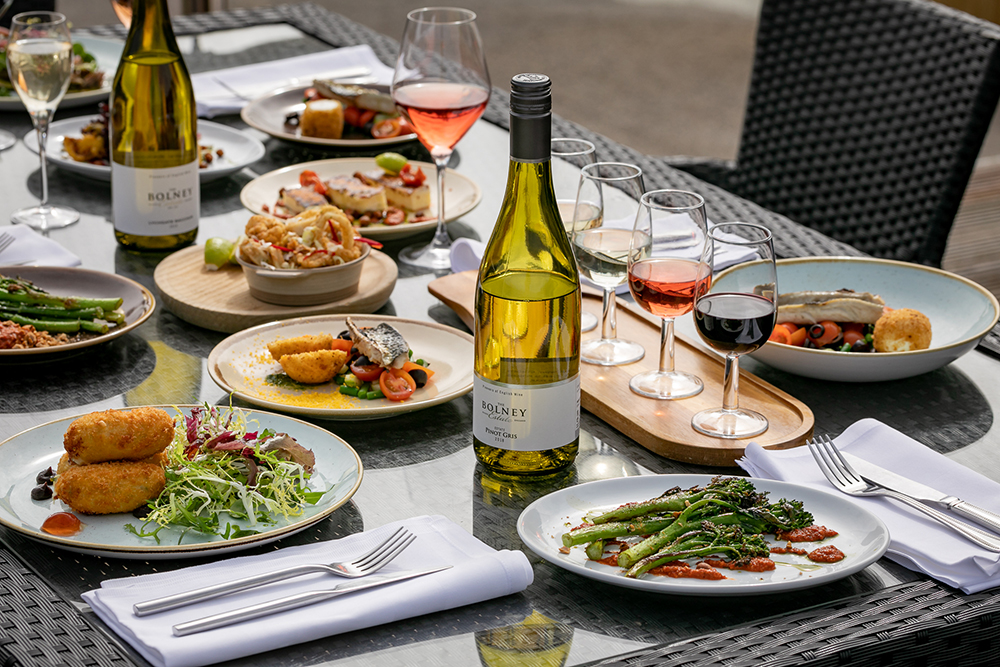
Food is one of the nicest parts of a vineyard day. Many Sussex estates serve something alongside the tasting, from a cheese platter to a full lunch or a menu matched to the wines. Adding food turns a tasting into an easy half-day and helps you pace yourself, so book it ahead, as vineyard kitchens are often small.
What to keep in mind:
- What is on offer: Platters, lunches, afternoon tea, and menus matched to the wines are all common.
- Why it helps: Eating slows how quickly you absorb alcohol, so you enjoy the taste of each wine better.
- Book early: Food often needs to be reserved separately from the tasting if it’s not included in your tasting.
- Flag dietary needs: Call ahead about allergies or preferences, as small kitchens plan in advance.
Planning for Couples, Families and Groups
A Sussex tasting works just as well for two as for twenty, though the plan shifts a little with who is coming along. Pick the experience that suits your group and, above all, sort everyone’s way home before you book.
For couples: a tour, tasting and lunch
Best for: date days, anniversaries, a relaxed treat
A tour, tasting and lunch makes a lovely half-day for two. If you would both like to taste without watching the clock, book a taxi or make a night of it nearby, so neither of you has to drive.
For families: check the policy first
Best for: mixed-age days out in the countryside
Family policies vary from estate to estate. Under-18s can usually come along and enjoy the setting, but they cannot taste, and some experiences are adults only. Check the age policy before you set off, and look for estates with open space where children can stretch their legs.
For groups: private tastings and minibuses
Best for: birthdays, hen and stag days, work socials
Groups are welcome at most estates, often with private tastings and food. For a work do, our guide to planning a corporate wine tasting event goes further. A few tips make any group booking run smoothly:
- Ask about minimum numbers: Private sessions often need a set group size.
- Expect a deposit: Larger bookings usually ask for one upfront.
- Hire a minibus: It solves transport in one go and keeps everyone together.
- Have one organiser: A single point of contact makes booking and timing easier.
Can You Bring Dogs to a Vineyard?
Plenty of Sussex vineyards are happy to see dogs (including Bolney Estate), though some are not, so check the estate’s dog policy before you set off. Where dogs are welcome, keep yours on a lead around the vines and clean up after them.
A vineyard is a working farm, so normal countryside rules apply. The Countryside Code advises keeping your dog on a lead around livestock and following any local signs, which is good practice around vines too.
Before you bring a dog:
- Call ahead: Confirm dogs are allowed and where they can go.
- Keep them on a lead: Near vines, other guests and any animals.
- Pack water and shade: Summer tours can be warm and exposed.
- Check indoor areas: Dogs are often welcome outside but not during indoor food service.
- Assistance dogs: These are welcome as standard, but it is still polite to mention it when booking.
Come and Taste for Yourself
The best way to see what a Sussex tasting is like is to come and enjoy one for yourself. Bolney Wine Estate has been growing wine in West Sussex since 1972. Our Bolney Experience Tour and Tasting runs daily and pairs a guided tour and tutored tasting with food across about three hours, at £60 per person.
Frequently Asked Questions
How much does a wine tasting cost in Sussex?
A guided tour and tasting in Sussex usually costs around £25 to £45 per person. A shorter cellar door tasting is often cheaper, while a longer premium experience with paired food is typically £55-£70. Prices vary by estate and season.
Can I drive home after a wine tasting?
If you are tasting wine, the safest choice is not to drive. There is no reliable way to know how many tastes will put you over the England limit of 80mg per 100ml of blood, so arrange a designated driver, a taxi or a minibus instead.
How long does a Sussex vineyard tour and tasting take?
Most Sussex vineyard tours and tastings take one to two hours. Adding lunch or a paired menu can turn it into a half-day out, so allow extra time if you are dining.
Do I need to book a wine tasting in advance?
Yes, in most cases. Tours often run on set days and can sell out at weekends and through summer, so booking ahead is the safest way to get the date and experience you want.
Can I bring my dog to a Sussex vineyard?
It depends on the estate, so always check first. Where dogs are welcome, keep them on a lead around the vines and other guests, bring water in warm weather, and expect them to stay outside during indoor food service.
Sources
- Metropolitan Police, Alcohol and drug driving: the England drink-drive limit and why alcohol cannot be cleared quickly.
- NHS, Alcohol units: what a unit is and how long the body takes to process one.
- Drinkaware, Drink driving and the legal alcohol limit: how the limit works and why it varies by person.
- Yahoo News UK: the 2026 proposal to lower the England and Wales drink-drive limit.
- ICAEW, Vineyards and wineries industry profile: UK vineyard numbers and the concentration in Kent and Sussex.
- Sussex Modern, The Sussex Wine Story: the number of vineyards in Sussex and the county’s chalk-soil growing conditions.
- WineGB, Wine regions: the South East holding over half of the UK’s vineyards.
- The Drinks Business: WineGB visitor figures for English and Welsh wineries.
- Decanter: Sussex gaining Protected Designation of Origin status in 2022.
- GOV.UK, The Countryside Code: guidance on keeping dogs on a lead around livestock.