Account





How To Plan A Corporate Wine Tasting Event (UK Guide)
Start exploring

A corporate wine tasting sets you up for a great event from the start. There’s a clear structure to follow, food pairs naturally with it, and it works just as well for a room of complete beginners as for a table of seasoned drinkers. Choose a vineyard as the setting, and it becomes something more too: an afternoon beside lush, leafy grapevines and open countryside, a welcome change of scene from the office.
This guide walks through the full process of planning a corporate wine tasting, or a wider corporate wine event, in the UK: the planning steps, the costs to expect, and the tasting basics themselves, so you can brief your team or client with confidence. It’s written for event planners and coordinators organising a tasting for a business group, from a small client dinner to a large staff away day.
Jump to a section
- What is a corporate wine tasting event?
- Why choose wine tasting for a corporate event
- Why English wine in Sussex?
- Types of corporate wine tasting events
- How to plan a corporate wine tasting event, step by step
- What to look for in a venue
- Budgeting for a corporate wine tasting event
- Adding VIP and premium extras
- Wine tasting basics and common terms explained
- Simple wine tasting etiquette for groups
- Responsible drinking at work events
- Sample half-day timeline
- Book a corporate wine tasting
- FAQs
- Sources
What Is a Corporate Wine Tasting Event?
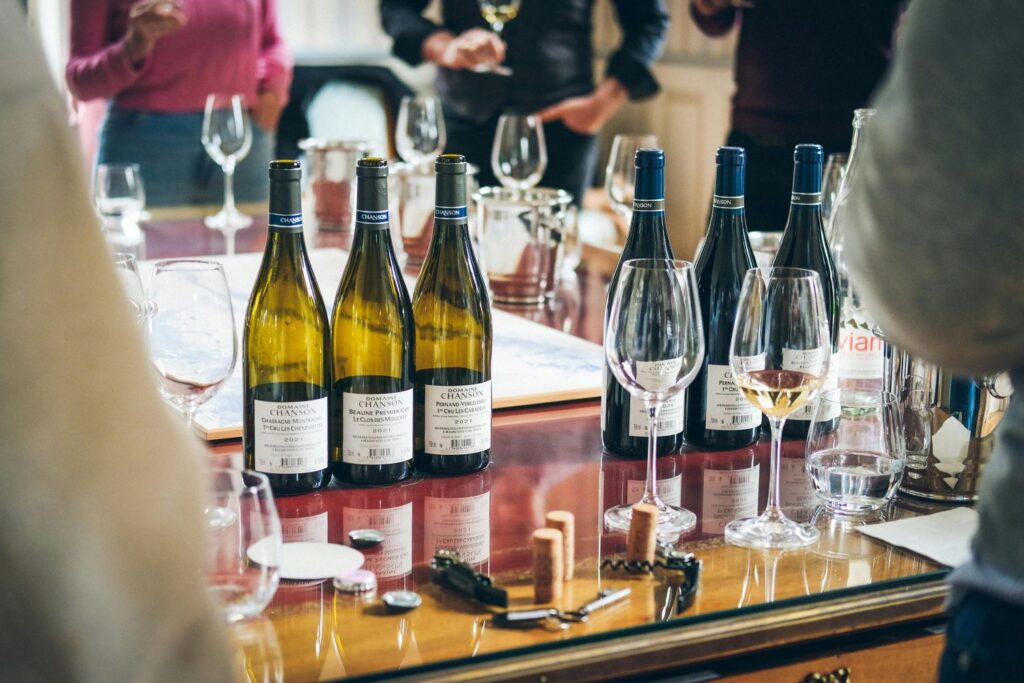
A corporate wine tasting is a business event centred on sampling a small selection of wines together, usually guided by a host or sommelier. It can stand alone as a client thank-you or team afternoon, or sit alongside a conference, offsite, or away day as the evening activity.
Most tastings involve four to six wines, small servings of around 25ml to 50ml each, and short explanations of each wine before it’s tasted. Food is nearly always included, ranging from simple nibbles to a full sit-down meal.
The format suits mixed groups well. Nobody needs any wine knowledge to take part, and there’s enough structure that even a quiet room warms up within the first two glasses.
Why Choose Wine Tasting for a Corporate Event
Shared activities that get people talking tend to do more for a team than a standard dinner or a generic activity day. Research from workplace platform BetterUp found that 43% of employees don’t feel connected to their colleagues, and that stronger workplace connections are linked to better goal attainment, wellbeing and retention (BetterUp, 2024).
A wine tasting activity gives a group:
- Something to focus on together that isn’t work
- An easy reason to talk to colleagues or clients they might not usually sit next to
- A chance to compare notes, guess flavours, and learn something new along the way
It also works well commercially. UK companies spent more on events again in 2025, with staff wellbeing and morale cited as leading reasons, and the UK events industry was valued at £68.7 billion in the latest annual industry report (ABPCO / UK Events Report, 2025). Wine tasting sits inside this as a low-risk, easy-to-plan option compared with more elaborate activity days.
For client-facing events, a wine tasting also provides a relaxed setting for conversation, without the formality of a standard dinner or the noise of a large reception.
Why English Wine in Sussex?
Beginners often assume good wine only comes from France, Italy or Spain. English wine, and Sussex wine in particular, has changed that view over the last decade.
Sussex sits on the same band of chalk soil that runs under Champagne in France. Chalk drains well and retains a small amount of water for vine roots, which is one reason this soil type is prized for growing grapes (Smithsonian Magazine, 2019).
Jargon buster: “terroir”
This French term describes the natural growing conditions of a place, including soil, climate, slope and weather. It’s used to explain why the same grape can taste different depending on where it’s grown.
Southern England’s climate has also warmed over recent decades, giving grapes a longer, steadier ripening season. In 2022, Sussex wine was awarded Protected Designation of Origin (PDO) status by the UK government, meaning wine labelled “Sussex” must be grown, made and bottled within the county and pass an independent tasting panel (Defra, 2022). Sussex now accounts for more than a quarter of all wine produced in England (Defra, 2022).
The wider industry has grown quickly too. England and Wales now have over 1,100 registered vineyards and 238 wineries, with the area under vine cultivation more than fivefold since 2005 (WineGB Industry Report, 2025). Much of this growth sits within an hour or so of London, including the South Downs National Park, home to more than 50 vineyards across Hampshire, East Sussex and West Sussex (South Downs National Park Authority). For teams planning a full-day outing rather than a half-day event, this guide to day trips from London shows how easy it is to reach the wider region.
For a group with no wine background, this local context is an easy talking point on the day, and it means a tasting near London can double as a short introduction to English wine.
Types of Corporate Wine Tasting Events
There’s no single format for a corporate tasting. The right one depends on the group size, the budget and how much time you have.
| Format | What happens | Best suited to |
|---|---|---|
| Guided tasting | A host talks the group through 4 to 6 wines, one at a time | Most groups, mixed wine knowledge |
| Vineyard tour and tasting | A walk through the vines followed by a seated tasting | Groups who want to see how wine is made |
| Blind tasting game | Guests guess the grape, country or price without seeing the label | Competitive groups, sales teams |
| Food and wine pairing | Each wine is served with a matched small plate or course | Client dinners, VIP groups |
| Private dining with a wine flight | A private room, a seated meal and wines chosen to match the menu | Senior clients, small VIP groups |
Many corporate events combine two of these, for example, a short vineyard tour followed by a seated tasting and lunch.
How to Plan a Corporate Wine Tasting Event, Step by Step
1. Set a budget
Decide your total budget and a rough per-head figure before you contact any venue. This quickly narrows your options and keeps your shortlist focused on venues that fit.
2. Confirm numbers and a date
Wine tasting works for groups of around 10 to 100 or more, though larger groups usually need a larger room and more staff to pour and explain the wines. Book your date early, particularly for a Friday or a date near Christmas, as these fill up fastest.
3. Choose a venue
Decide if you want a vineyard setting, a private room in a restaurant, or an in-office tasting with wines and a host brought to you. Each has a different feel and a different price point.
4. Plan the food
Even a short tasting session benefits from food, and not just for enjoyment. Plain bread or crackers reset the palate between wines, so guests can taste each one fully rather than carrying flavours from the last glass.
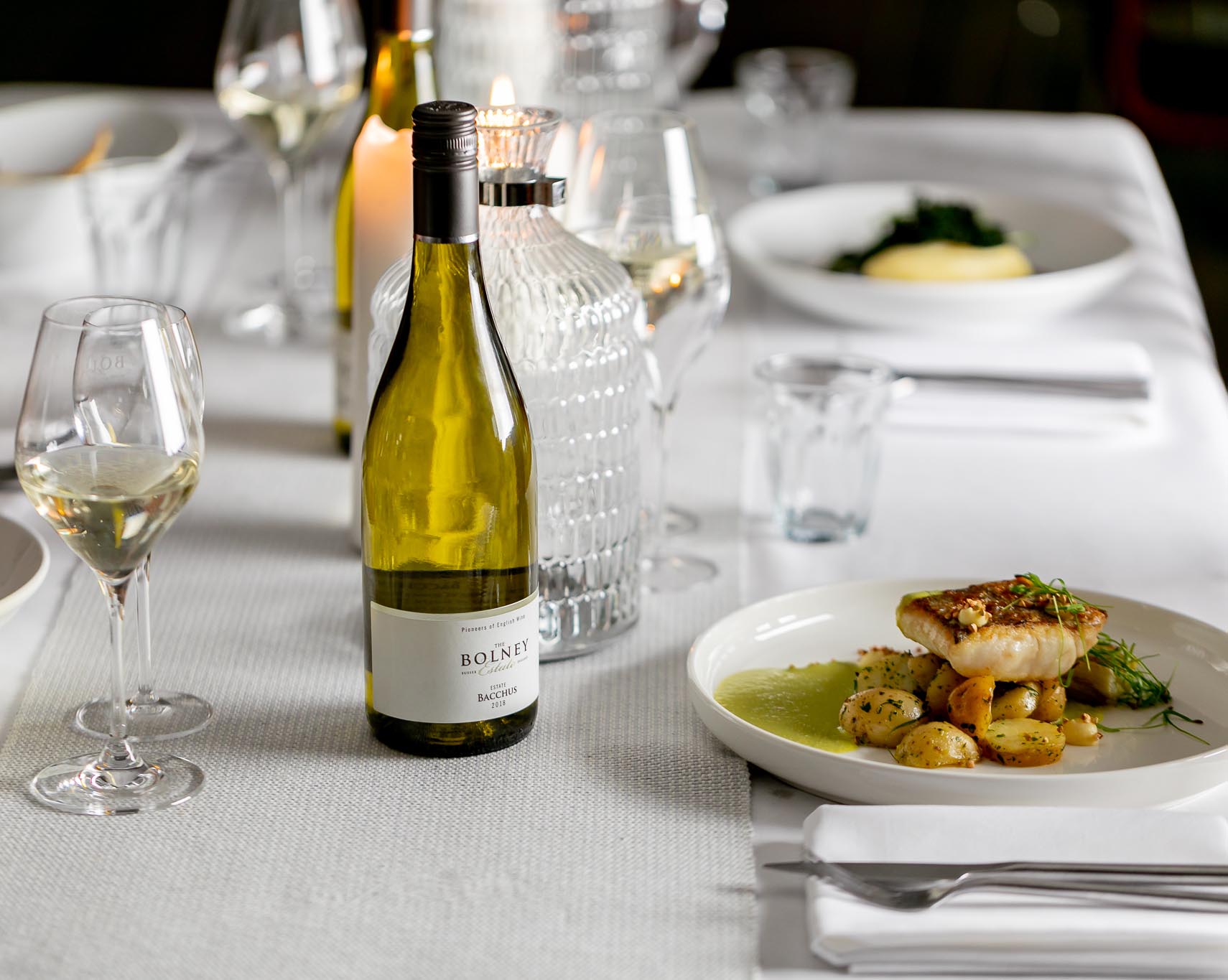
Food also slows the rate at which alcohol is absorbed, and the right pairing can bring out flavours in a wine that it wouldn’t show on its own. Bread, cheese, and charcuterie work well for a simple event, while a client dinner usually calls for a proper sit-down meal matched with wines.
5. Sort transport
If your venue is outside a city centre, work out how your group will travel there and back. Coach hire, train tickets, or a shared taxi account are the usual options for a group event where no one should be driving.
6. Confirm the format and running order
Agree on the running order with your host in advance, including how many wines there are, how long each one takes to introduce, and where any speeches or awards fit in if it’s part of a bigger event.
What to Look for in a Venue
A good corporate wine tasting venue should have:
- A private or semi-private space, so your group isn’t sharing with other visitors
- A host or sommelier who can explain wines in plain English, not just wine jargon
- Flexible timings, since business groups often need to start later in the day
- On-site food options, from casual nibbles to a full meal
- Easy access from a station or main road, particularly for groups travelling from London
- Accessible facilities and step-free access if needed
Many Sussex vineyards are easy to reach by train or by road. Bolney Wine Estate, for example, sits in Haywards Heath, with a direct rail service to London Victoria and London Bridge taking just over an hour. Brighton is closer still, around 20 minutes away, and Gatwick Airport is much the same. This makes a wine-tasting event a realistic half-day or full-day trip for corporate groups looking for options without an overnight stay.
Some venues also offer a dedicated corporate meetings and events space for groups who want to combine a meeting with the tasting itself. It’s worth asking to see photos or a walkthrough of the site before you book, so you know exactly what your group can expect.
Budgeting for a Corporate Wine Tasting Event
Costs vary widely by venue, guest numbers, and the level of catering included. As a general guide for UK corporate events:
| Item | Typical UK cost per head |
|---|---|
| Buffet-style catering | £10 to £20 |
| Charcuterie board lunch | £20 to £25 |
| Three-course seated meal | £30 to £100 |
| Venue hire | Varies by size and exclusivity |
These figures come from a wider UK corporate event budgeting guide and should be treated as a starting point rather than a fixed price, since a wine tasting package itself is usually quoted separately by the venue based on the wines and format chosen (Sortlist, 2025).
Ask two or three venues for a like-for-like quote covering wine, food and room hire together, then compare the total rather than each line item on its own.
Adding VIP and Premium Extras
For client entertaining or senior leadership groups, a few extras can turn a standard tasting into a proper occasion.
- Chef’s table after the tour: A small group seated at or near the kitchen, with the chef talking through each dish as it’s served. Works well straight after a vineyard tour and tasting.
- Private dining: A separate room for a seated meal, often with wines selected to pair with each course.
- Sommelier or winemaker-led tasting: A dedicated host who can answer detailed questions and adapt the session to the group’s interests.
- A vertical tasting: Pouring the same wine from several different years side by side. This is a step up for guests who already know a bit about wine and want to see how a wine changes with age.
- Reserve or library wines: Older or more limited bottles, kept back from the usual list and opened only for smaller, senior groups.
- A short blending session: Guests taste a few base wines, put together their own blend, and then take a labelled bottle home.
- Chauffeur or private transport: Removes any worry about driving and keeps the group together.
- Take-home bottles: A bottle of wine for each guest to take away is a warm way to close out the day.
A restaurant setting with its own kitchen, such as an on-site restaurant, or a more relaxed space like a wine bar or café, can each support a different style of VIP event depending on how formal you need it to be.
Wine Tasting Basics and Common Terms Explained
Most guests at a corporate event have little or no wine background, so it helps to know a few basic terms beforehand.
The most widely taught method for tasting wine, developed by the Wine & Spirit Education Trust, breaks the process into three simple steps: look at the wine’s colour, smell it to pick out its aromas, then taste it to check its flavour, acidity and finish (WSET, 2023). This step-by-step guide to tasting wine covers each of these stages in more detail.
| Term | What it means |
|---|---|
| Vintage | The year the grapes were harvested |
| Tannin | A drying, slightly bitter feeling in red wine, from grape skins |
| Body | How light or heavy a wine feels in the mouth |
| Dry | A wine with little to no sugar left after fermentation |
| Sommelier | A trained wine professional who serves and advises on wine |
| Decant | Pouring wine into a separate container to let it breathe |
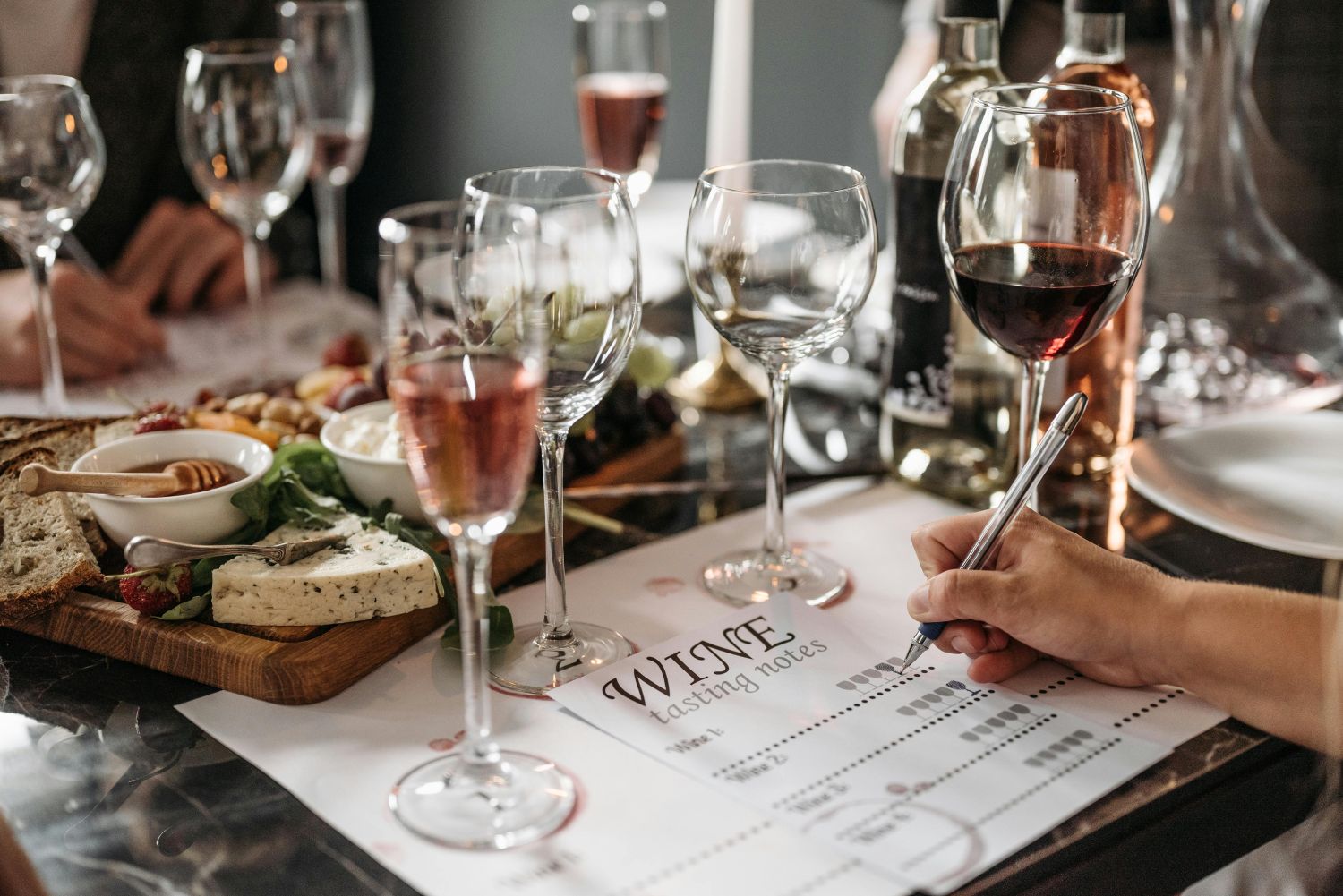
| Tasting notes | A short written description of a wine’s smell and flavour |
For a longer list of terms like these, this beginner’s guide to wine terminology is worth sharing with guests before the event.
Jargon buster: “PDO”
Protected Designation of Origin. A legal status showing a food or drink was grown, made and bottled in a specific place, following set quality rules. Sussex wine holds this status, alongside regions such as Champagne and Rioja.
Serving temperature also changes how a wine tastes. Sparkling wine is best served cold, around 6 to 8°C, white wine slightly warmer at around 7 to 12°C, and red wine cooler than room temperature, around 13 to 18°C (Wine Folly). A good host will usually handle this for you, but it’s worth checking with your venue in advance if your event is held somewhere warm.
For a beginner-friendly walkthrough of what happens at a tasting session, this first wine tasting guide covers it step by step.
Simple Wine Tasting Etiquette for Groups
Here are a few small pointers to keep a tasting running smoothly for a group that hasn’t done this before:
- Hold the glass by the stem, not the bowl, so your hand doesn’t warm the wine
- Swirl gently before smelling, as this releases more aroma
- It’s fine to spit wine into a bucket rather than swallow it, especially across several wines
- Wait for the host’s introduction before tasting each wine
- Strong perfume or aftershave can affect other guests’ sense of smell, so it’s worth avoiding beforehand
- Water and bread between wines help reset your palate
None of this needs to be memorised. A good host will guide the group through it naturally as the session goes along.
Responsible Drinking at Work Events
A corporate event should be enjoyable without anyone feeling pressured to drink more than they’re comfortable with.
UK Chief Medical Officers recommend not regularly drinking more than 14 units a week, spread across three or more days. Fourteen units are roughly equivalent to six medium (175ml) glasses of average-strength wine (Drinkaware, 2016). A standard tasting of 4 to 6 small pours sits well within this, particularly since guests are encouraged to spit rather than swallow if they choose.
Some handy tips to help any organiser run a considerate event:
- Always offer water and food alongside the wine
- Provide a non-alcoholic option for guests who don’t drink
- Make spitting buckets visible and normal, not awkward
- Arrange safe transport home for anyone who has been drinking
- Never make tasting every wine compulsory
Sample Half-Day Timeline
A typical half-day corporate tasting for a group of 20 to 40 people might look like this:
| Time | Activity |
|---|---|
| 12:30pm | Arrival and welcome drink |
| 1:00pm | Introduction and first wine |
| 1:15pm to 2:30pm | Guided tasting, 4 to 6 wines |
| 2:30pm | Seated lunch or food pairing |
| 3:30pm | Free time or optional vineyard walk |
| 4:00pm | Group departs |
For an evening event, the same structure simply shifts later, often starting around 6pm and finishing with a private dinner.
Book a Corporate Wine Tasting
If you’re organising a corporate wine tasting or tour for a business group, Bolney Wine Estate in Haywards Heath hosts corporate events with options for private dining and VIP extras, around an hour from London by road or rail. Contact the corporate events team at [email protected] to check dates and get a quote.
FAQs
How long does a corporate wine tasting usually last?
Most sessions run for 90 minutes to two hours. Add extra time if lunch or dinner is included.
How many people can attend?
Group tastings typically accommodate 10 to 100 or more people, depending on the venue’s room size.
Do guests need any prior wine knowledge?
No. A guided tasting is written to work for complete beginners, and a good host will explain everything as they go.
Can non-drinkers or drivers still join in?
Yes. Spitting rather than swallowing is standard practice, and most venues can offer a non-alcoholic alternative alongside the tasting.
How far in advance should we book?
Around 6 to 8 weeks is a safe minimum for a standard group, and 3 months or more for a large event, a Friday date, or anything in December.
What’s included in a typical corporate wine tasting package?
This varies by venue but usually includes wines, a host, glassware, and some form of food, from simple nibbles to a full meal.
Sources
- Wine & Spirit Education Trust, How to taste wine
- BetterUp, Team bonding research
- ABPCO, UK Events Report 2025
- Smithsonian Magazine, English sparkling wine and climate change
- Defra, Sussex wine PDO status
- WineGB, Industry Report 2025
- South Downs National Park Authority, Vineyards and wineries
- National Rail, Trains from Haywards Heath to London
- Sortlist, UK corporate event budgeting guide
- Wine Folly, Ideal serving temperature for wine
- Drinkaware, UK low risk drinking guidelines