Account






Is Wine Vegan?
Start exploring

Not all wine is vegan. Wine begins as grape juice, but many producers use animal-based ingredients during one step of winemaking called fining. The good news for vegan and vegetarian drinkers is that plenty of wine is made with no animal products at all, and it is getting easier to find.
So can vegans drink wine? Yes. You just need to know what to look for. Below is a clear, beginner-friendly guide to why some wine is not vegan, how vegan and vegetarian wine differ, and how to spot a bottle that suits you.
Jump to a section
- Is wine vegan?
- Why isn’t all wine vegan?
- What’s the difference between vegan and vegetarian wine?
- Is red, white or rosé wine vegan?
- Is sparkling wine vegan?
- Are fortified wines like port and vermouth vegan?
- How can you tell if a wine is vegan?
- Are animal products used in the vineyard too?
- Are more wines becoming vegan?
- Sources
Is Wine Vegan?
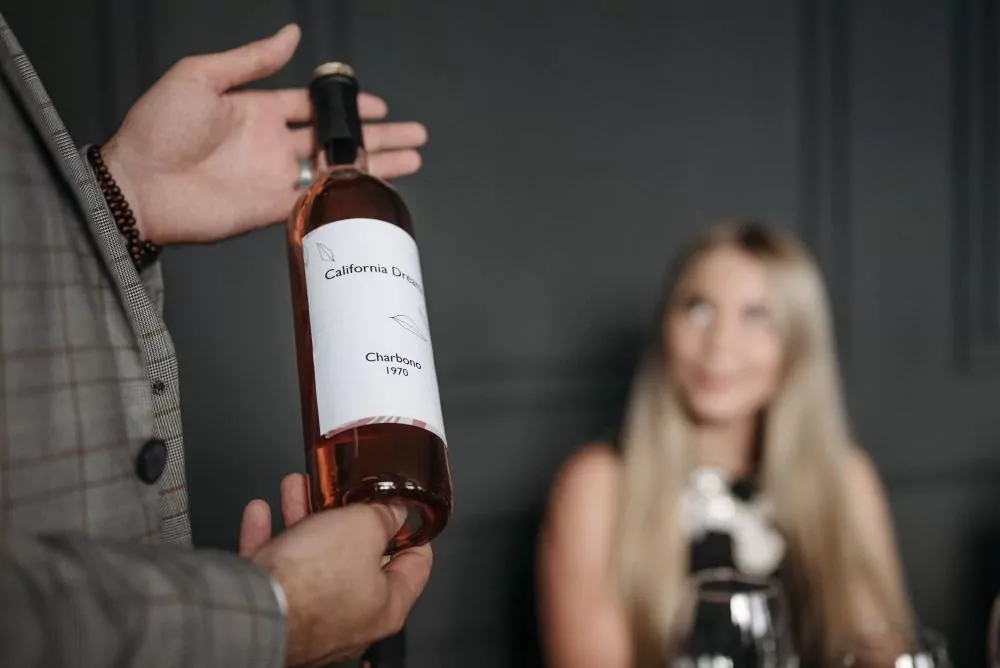
Some wine is vegan, and some is not. The grapes are never the issue. As Wine Folly notes, it is the winemaking process that determines whether a wine is vegan. A clarifying step called fining involves a handful of traditional ingredients that come from animals. A wine that uses those ingredients is not vegan, even though they are filtered out before bottling.
Here are the key points at a glance:
- The grapes aren’t the problem: Wine is plant-based to start with. Fining is where animal ingredients can enter.
- Common animal fining agents: Egg whites, milk protein (casein), gelatin, and isinglass, which comes from fish.
- Vegan wine uses alternatives: Plant or mineral fining agents such as bentonite clay, pea protein, or activated charcoal.
- Labels don’t always say: Look for the word “vegan”, a vegan trademark, or “unfined” on the bottle.
Why Isn’t All Wine Vegan?
Some wine is not vegan because of fining, a step that clears the natural cloudiness from young wine. To do it, many winemakers reach for animal-based fining agents.
Jargon explained: fining
Fining is a step that removes tiny particles from young wine so it looks bright and clear. A fining agent is added, the particles cling to it, and the whole lot is filtered out before bottling.
Fresh wine is naturally hazy. It is full of harmless bits like proteins, tannins and spent yeast. Winemakers fine mainly to clear that haze, and sometimes to soften a harsh edge or correct a small fault, according to the American Institute of Physics’ Inside Science.
A fining agent works like a magnet. It attracts the floating particles, they clump together, and the clumps sink and are filtered away. Britannica describes fining as an ancient winemaking practice, and notes that bentonite, a type of clay, is the most common fining agent used today.
The problem for vegans is that four of the oldest, most trusted fining agents come from animals, as the UK’s Vegan Society explains:
Jargon explained: isinglass
Isinglass is a form of gelatin made from the swim bladders of fish. It is used to clear wine and beer, and it makes a wine unsuitable for vegans and vegetarians.
- Egg whites (albumen): Often used to soften firm tannins in red wine.
- Casein: A protein from milk, used to brighten and clean up white wine.
- Gelatin: A protein from the skin and bones of animals, used to reduce bitterness and tannin.
- Isinglass: Collagen from fish bladders, used to polish and clarify.
So why is a fined wine still not vegan, even after the agent is filtered out? Because what counts for vegans is how the wine was made, not just what is left afterwards. The fining agent is removed, and barely a trace remains, but an animal product was still used to make the wine. A soup made with meat stock works the same way. Even after the meat is strained out, the soup is not vegan.

What’s the Difference Between Vegan and Vegetarian Wine?
Both differences come down to fining, the clarifying stage described above. Vegetarian wine can be fined with egg whites or milk protein, because those come from animals without the animal being killed.
Vegan wine goes further and uses no animal products at any stage, so at the fining stage it also rules out gelatin and isinglass, which do involve animal slaughter. Wine Enthusiast rates egg-white and casein fining as vegetarian but not vegan, and gelatin and isinglass as neither.
The table below shows how the common fining agents line up:
| Comes from | Vegetarian? | Vegan? | |
|---|---|---|---|
| Egg whites (albumen) | Chicken eggs | Yes | No |
| Casein | Milk | Yes | No |
| Gelatin | Animal skin and bones | No | No |
| Isinglass | Fish bladders | No | No |
| Bentonite clay | Mineral | Yes | Yes |
| Pea or potato protein | Plants | Yes | Yes |
| Activated charcoal | Carbon | Yes | Yes |
In short, a vegetarian has more wines open to them than a strict vegan, because egg and milk fining are off the table for vegans but fine for vegetarians. Both groups can enjoy any wine fined with clay, plant protein or charcoal, or any wine that skips fining altogether.
Is Red, White or Rosé Wine Vegan?
Red, white and rosé wine can all be vegan, and all three can also be non-vegan. Colour does not decide it. What matters is the fining agent the producer chose, so a vegan bottle and a non-vegan bottle can sit side by side in the same colour.
Is red wine vegan?
Red wine is vegan only if it avoids animal fining agents. Reds carry more tannin, so some producers, including many classic Bordeaux estates, use egg whites to soften that grip, as Wine Enthusiast describes. Egg-fined red is vegetarian but not vegan. Plenty of other reds use bentonite or no fining at all, and those are vegan.
Is white wine vegan?
White wine is vegan when it skips animal fining agents. Casein, the milk protein, is a traditional choice for lifting the brightness of a white, which makes those wines non-vegan. Many modern whites are fined with bentonite instead, so a large share of white wine is vegan-friendly.
Is rosé wine vegan?
Rosé wine is often vegan. A common agent used to give rosé its pale, elegant colour is PVPP, a synthetic material that contains no animal products, per Wine Enthusiast. As always, the label or producer is the only way to be sure.
Is Sparkling Wine Vegan?
Sparkling wine, including Champagne and prosecco, can be vegan or not, on the same terms as still wine. It is vegan when the base wine is fined without animal products, and plenty of sparkling wine is. Several well-known Champagne houses, including Dom Pérignon, Veuve Clicquot, Piper-Heidsieck, and Taittinger, have confirmed their wines are vegan, according to Wine Spectator.
Bentonite clay, which is a mineral rather than an animal product, does much of the clarifying in traditional-method sparkling wine. A study in the journal Molecules describes bentonite being used both to remove haze-forming proteins from the base wine and as a riddling aid during production. Some houses skip fining altogether and let the wine settle naturally over time.
Jargon explained: riddling and disgorgement
In traditional-method sparkling wine, spent yeast is gradually worked down into the bottle neck (riddling), then removed (disgorgement). Neither step adds an animal product, so the base-wine fining is the thing to check.
Are Fortified Wines Like Port and Vermouth Vegan?
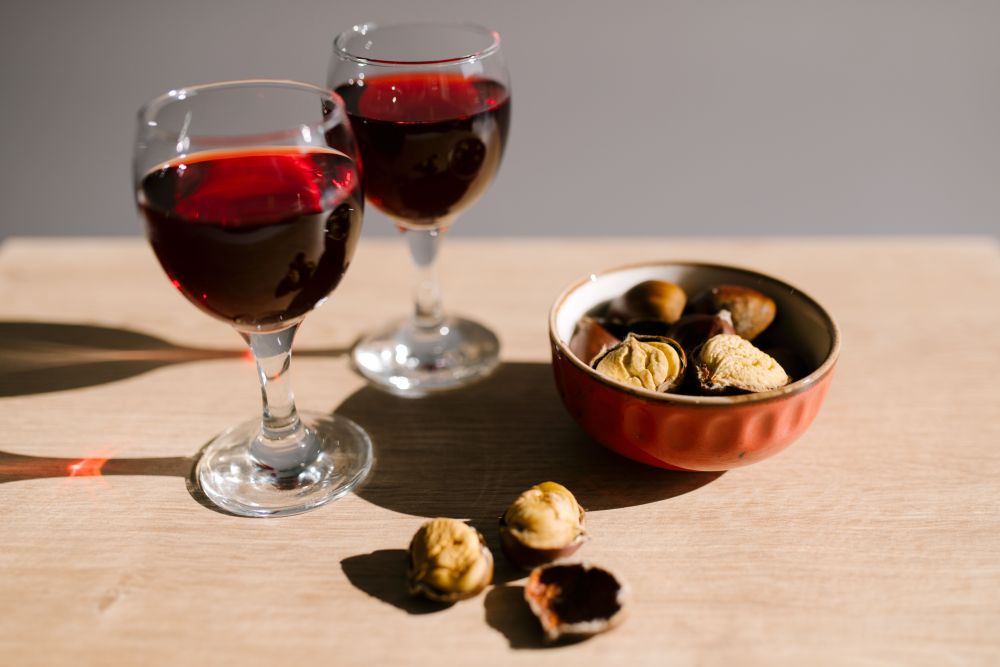
Fortified wines such as port, sherry, vermouth, Madeira and Marsala follow the same rule as still wine. They can be vegan or not, depending on how the base wine was fined. Port and vermouth each come with one extra point to watch.
Jargon explained: fortified wine
Fortified wine is wine with a spirit added, usually a grape spirit like brandy, to make it stronger and longer-lasting. Port, sherry, vermouth, Madeira and Marsala are all fortified wines.
Is port vegan?
Port is vegan only if its base wine avoids animal fining agents. Traditional port is often clarified with gelatin, sometimes alongside bentonite, which makes many ports non-vegan. Bottle-matured styles such as vintage port are frequently bottled with no fining at all, and those tend to be vegan-friendly. A 2017 study on Reserve Ruby Port tested plant and mineral fining agents, including pea protein and bentonite, and found they can stand in for animal gelatine. The grape spirit used to fortify port is usually vegan, so the base wine is the deciding factor.
Is vermouth vegan?
Vermouth is vegan when its base wine is fined without animal products, and no animal-derived extras are added. Vermouth is an aromatised wine, flavoured with botanicals and sweetened, so it can carry ingredients that plain wine does not.
Two to look out for are honey, used to sweeten some recipes, and carmine, a red colouring also listed as cochineal or E120. Carmine is made from insects, so it is not vegan or vegetarian, according to the European Food Safety Authority. Most red vermouth takes its colour from caramel, but a few use carmine, so a glance at the ingredients list is worth it.
How Can You Tell If a Wine Is Vegan?
The quickest way to tell if a wine is vegan is to look for the word “vegan” or a vegan trademark on the label. If neither is there, a few other clues help, because producers are not required to list fining agents.
Jargon explained: unfined and unfiltered
An “unfined” or “unfiltered” wine has skipped the clarifying steps and settled on its own over time. It can look a little cloudy, and with no animal fining agent used it is usually vegan.
Five things to check on the shelf:
- A vegan logo or trademark: The clearest signal. The Vegan Society Trademark is the most widely recognised in the UK, with thousands of registered drinks.
- “Unfined” or “unfiltered”: These wines have skipped fining, so they are usually vegan.
- An allergen line: A bottle that reads “Contains: milk” or “Contains: egg” was fined with an animal product, and it is not vegan.
- A vegan wine database: Free tools such as Barnivore let you search brands before you buy.
- Ask: A good wine shop, estate or producer will tell you which fining agents they use.
There is a labelling gap worth knowing about. In the UK, wine does not need a full ingredients list, but it must flag certain allergens. The Food Standards Agency requires a statement like “Contains: milk and egg” if milk or egg residues are detectable in the finished wine. So a “Contains: egg” note is a reliable red flag for vegans.
One catch: isinglass used as a fining agent is exempt from the fish allergen rule, again per the Food Standards Agency. A fish-fined wine may carry no warning at all, which is exactly why the “vegan” or “unfined” labels are so useful.
Are Animal Products Used in the Vineyard Too?
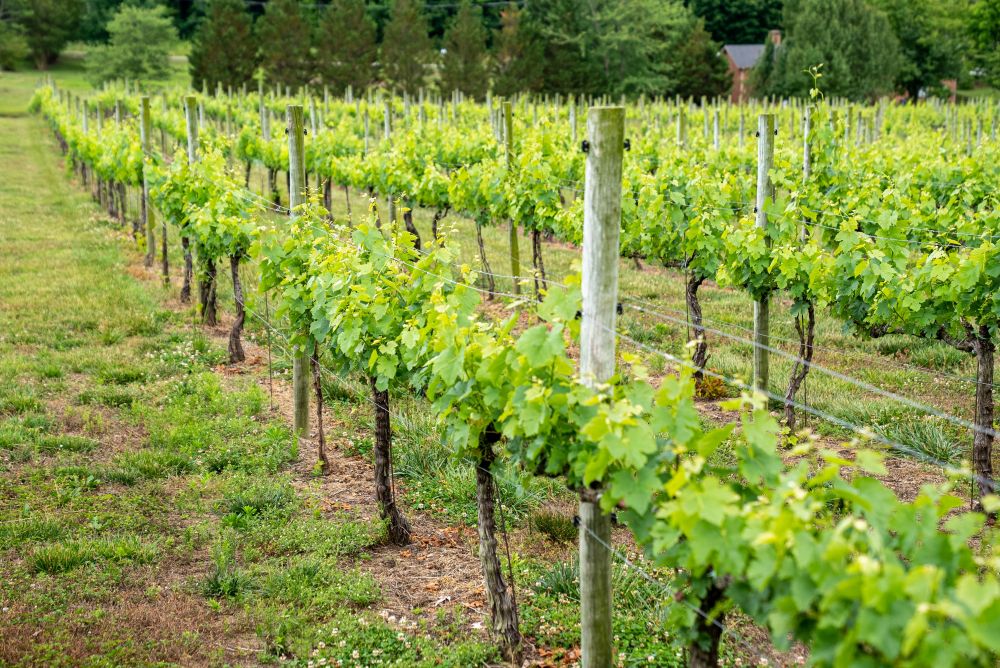
Yes, sometimes. For most people, a wine counts as vegan based on fining, the cellar stage covered above. Strict vegans go one step further and look at how the grapes were grown, because traditional grape growing can put animal products into the soil.
Animal-derived inputs a vineyard might use include:
- Manure: Animal waste, often bought in from livestock farms, used to feed the soil.
- Bone meal: Ground animal bone, a slaughterhouse by-product, added as a slow-release source of phosphorus.
- Blood meal: Dried animal blood, used as a fast source of nitrogen.
- Fish meal and fish emulsion: Made from fish and fish bones, used for nitrogen and phosphorus.
- Feather meal: Ground poultry feathers, another slow-release nitrogen source.
Worth knowing: what these fertilisers are
Bone meal, blood meal, fish meal and feather meal are all made from animal or slaughterhouse by-products. They feed the soil, but they make a vineyard’s growing method non-vegan for a strict vegan, even if no animal product ever touches the wine itself.
Traditional grape growing typically involves animal products in the soil, such as manure and sometimes bones and blood, and some vineyards also use animals to plough or to control pests, according to Wine Enthusiast.
The plant-based alternative is sometimes called veganic growing. Rather than animal inputs, growers feed the soil with cover crops, compost and plant-based enhancers like alfalfa pellets. A small number of estates have gone fully plant-based, avoiding animal products in both the vineyard and the cellar.
One thing to keep in mind: a “vegan” label usually refers to the cellar, meaning no animal fining agents, rather than to the soil. If the growing method matters to you as well, look for wording like “veganic” or “plant-based farming”, or ask the producer directly.
Are More Wines Becoming Vegan?
Yes. More wine is vegan today than a decade ago, because winemakers increasingly reach for plant and mineral fining agents, or leave the wine to clarify on its own. Bentonite clay does much of the work that egg and casein once did, and pea and potato proteins are now commercially available alternatives to gelatin and casein.
The shift is partly about demand. UK drinkers are paying more attention to how their wine is made, and sustainability has moved from a niche selling point to a basic expectation, according to trade publication The Drinks Business. The UK wine market was valued at around 26.3 billion US dollars in 2024, with shoppers increasingly seeking authenticity and environmental credentials.
For vegans, this news is encouraging. You no longer have to hunt for a vegan bottle of wine. Many everyday and premium wines are already made without animal products, and the label is doing more of the work to tell you so.
Taste for Yourself at Bolney
If you would like to see how English wine is made and taste it at the source, come and visit us in West Sussex. A guided tasting is a relaxed, welcoming way to learn what you enjoy and why.
Frequently Asked Questions
Can vegans drink wine?
Yes. Vegans can drink any wine made without animal fining agents. Look for a “vegan” label, a vegan trademark, or an “unfined” or “unfiltered” wine, and plenty of options are widely available.
Is red wine vegan?
Some red wine is vegan and some is not. Reds are more likely to be fined with egg whites to soften tannins, which makes those bottles vegetarian but not vegan. Many reds use bentonite or no fining, and those are vegan.
Is organic wine the same as vegan wine?
No. Organic refers to how the grapes are grown, without synthetic pesticides or fertilisers. It says nothing about fining, so an organic wine can still be fined with egg, milk or fish. Check for a separate vegan label.
Does vegan wine taste different?
Not in any way most people can detect. Plant and mineral fining agents do the same clarifying job as animal ones, and the finished wine tastes like the grape, region and style it came from, not like the fining agent.
Do vegan wines cost more?
Not usually. Plant and mineral fining agents are widely used, and many everyday wines are already vegan, so price tracks the grape, region and quality rather than the fining choice. A vegan label does not make a wine more expensive by itself.
Sources
- UK Food Standards Agency, allergen labelling technical guidance. Wine must declare milk and egg if detectable, and isinglass fining is exempt from the fish allergen rule.
- Wine Enthusiast, “Is Wine Vegetarian, Vegan or Neither?”. Vegetarian and vegan verdicts on each fining agent, and egg-white fining of red wine.
- Wine Enthusiast, “Manure Without Animals? Vegan Winemaking Levels Up”. Animal products used in the vineyard (manure, bones, blood) and plant-based alternatives like alfalfa pellets.
- The Vegan Society. Animal fining agents used in wine, plant-based alternatives, and the Vegan Trademark.
- Wine & Spirit Education Trust, “What is vegan wine and how to find it”. Why most wine uses animal fining agents, bentonite as a popular alternative, and how to identify vegan wine.
- Wine Folly, “Can Vegans Drink Wine?”. Which fining agents are used for red, white, rosé and sparkling wine, and how to find vegan bottles.
- Encyclopaedia Britannica, “Fining (wine making)”. Fining as an ancient clarifying practice, with bentonite the most common agent today.
- American Institute of Physics, Inside Science. Why winemakers fine wine, to clarify and to correct.
- The Drinks Business. UK wine market value and the shift towards sustainability and quality.
- Jorge, Cosme, Nunes and Vilela (2017), “Reserve Ruby Port wine: alternatives to gelatine protein fining agents”. Plant and mineral fining agents tested as alternatives to animal gelatine in port.
- European Food Safety Authority (2015), re-evaluation of cochineal, carminic acid, carmines (E 120). Confirms carmine is a red food colouring derived from cochineal insects.
- Wine Spectator. Named Champagne houses that have confirmed vegan wines, and natural settling as an alternative to fining.
- Molecules (peer-reviewed study), “Effects of the Use of Bentonite at Different Stages of the Production of Traditional Sparkling Wines”. Bentonite is used to remove haze proteins and as a riddling aid in sparkling wine.

The Best Vegan Wines For Veganuary
It’s no secret that the vegan movement is gaining momentum year on year, and with new products launching daily and restaurants boasting plant-powered menus, it’s an exciting time to take the pledge yourself and give it a go! Read our handy guide to find out more about vegan wines and discover which of the Bolney range make the perfect vegan friendly tipples.