Account






What Is Schönburger? The English Grape Behind Orange Wine
Start exploring

Schönburger is a pink-skinned wine grape bred in Germany and now grown across southern England, where it has become one of the more distinctive grapes behind English orange wine. Its thick skin and naturally low acidity give winemakers more colour and tannin to draw from than many white grapes, making it a strong candidate for the skin-contact method used to make orange wine.
This guide covers what Schönburger is, how it tastes, where it grows, and why English winemakers are turning to it for orange wine. If you want the fuller picture of what orange wine is before diving into this grape specifically, read our guide What Is Orange Wine? first.
Jump to a section
What Is Schönburger?
Schönburger is a pink-skinned grape variety bred in Germany. The wein.plus Wine Lexicon, which draws on the reference book Wine Grapes by Master of Wine Jancis Robinson, Julia Harding and grape geneticist José Vouillamoz (Penguin, 2012), describes it as a crossing of Pinot Noir with a hybrid bred by the Italian grower Alberto Pirovano, itself a cross of Chasselas Rosé and Muscat Hamburg.
Jargon explained: crossing
A crossing is a new grape variety created by breeders combining two existing varieties, usually to bring together traits like disease resistance, cold hardiness, or a particular flavour.
Hochschule Geisenheim University, the German research institute where the grape was bred, confirms that vine breeder Heinrich Birk made the cross in 1939. The variety received plant variety protection in 1979 and was formally added to the German variety register in 1980.
Its name comes from Burg Schönburg, a castle above the Rhine near Oberwesel in Germany’s Mittelrhein region. The German grape variety database Traubenshow notes that the breeders originally wanted to call it Rosa Muskat, but the German variety authority, the Bundessortenamt, turned down the name before it was renamed after the castle.
Despite the pink berries, Schönburger is classed as a white wine grape. Traubenshow describes it as an early-ripening vine, reaching maturity around the same time as Chasselas, with strong resistance to powdery mildew, downy mildew and botrytis bunch rot, qualities that suit England’s cooler, wetter climate well.
What Does Schönburger Taste Like?
Schönburger produces spicy, low-acid white wines with a subtle muscat note, a character it inherits from its Muscat Hamburg parentage. wein.plus compares the aroma to Gewürztraminer and classifies the variety as a “bouquet” grape, one where the aromatic character comes through especially strongly in the glass.
Typical tasting notes
- Aroma: Floral, spiced, lightly musky
- Palate: Soft, gently spiced, fruit-forward
- Acidity: Naturally low compared with grapes like Bacchus or Riesling
- Body: Light to medium
Schönburger can be made sweet or dry. Its naturally low acidity means it needs little residual sugar to feel balanced, and English winemakers use it across a range of styles, from dry still white to traditional method sparkling wine.
How Does Schönburger Compare To Other English Grapes?
Schönburger sits closest in character to Pinot Gris, another pink, grey-skinned grape that also lends itself to skin-contact winemaking. Here is how the three grapes compare:
| Aspect | Schönburger | Pinot Gris | Bacchus |
|---|---|---|---|
| Skin colour | Pink | Greyish-pink | Green-gold |
| Typical style | Off-dry to dry, still or sparkling | Dry, still | Dry, aromatic still |
| Acidity | Low | Medium | Medium to high |
| Used for orange wine? | Yes, increasingly | Yes, historically in Friuli’s “ramato” style | Rarely |
Where Does Schönburger Grow?
Schönburger originated in Germany and remains a minor variety worldwide. Wein.plus puts today’s plantings at around 16 hectares in Germany, with smaller plots in England (9 hectares), Canada (14 hectares), and additional small holdings in Australia, Brazil and South Africa. A global total of around 35 hectares was recorded in 2016, based on viticultural statistics compiled by economist Kym Anderson, whose Which Winegrape Varieties are Grown Where? project tracks bearing area by grape variety and country worldwide.
England is the grape’s strongest second home outside Germany. It is a reliable, early-ripening variety, which matters in a climate where a long growing season is never guaranteed, and its resistance to mildew and rot gives it a natural advantage in the damp English autumn. It is used in both still white wine and English sparkling wine, where it is sometimes blended alongside the traditional Champagne varieties.
Why Is Schönburger Used For Orange Wine?
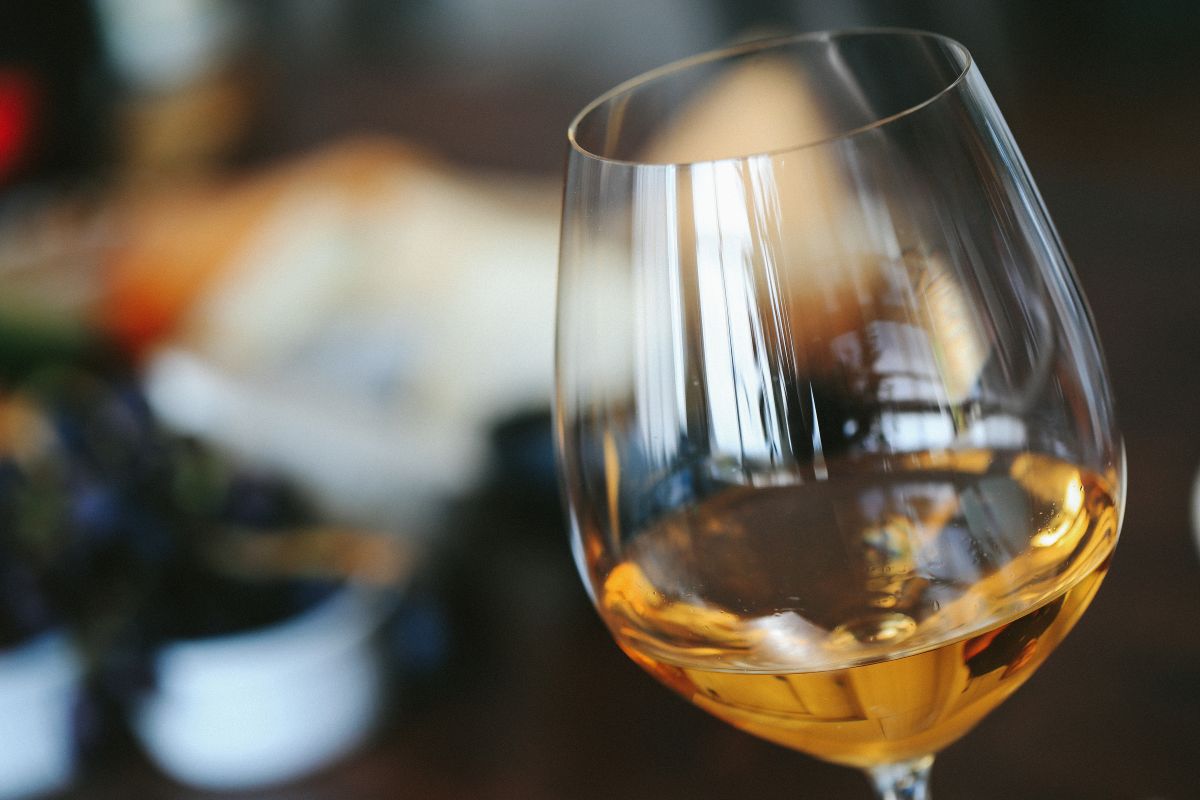
Schönburger’s pink skin naturally holds more colour pigment and tannin than a green-skinned grape, giving winemakers more to extract when they leave the skins in contact with the juice. That head start is a big part of why it works well for the skin-contact method used to make orange wine.
Jargon explained: tannin
Tannin is a naturally occurring compound found in grape skins, seeds and stems. It creates a dry, gripping sensation in the mouth, the same feeling you get from strong black tea, and is usually associated with red wine.
A 2007 study published in the Journal of Food Engineering tested this directly. The researchers found that the longer white grape skins sit in the juice before fermentation, the more colour and tannin the wine draws out. In short: more time on the skins means a deeper colour and a fuller, grippier wine.
Wine Enthusiast explains that this skin-contact process gives orange wine its bolder colour and more textured, tannic mouthfeel than a conventionally made white wine, where the skins are removed almost immediately after pressing. This is the same underlying idea behind “ramato” style Pinot Gris from Italy’s Friuli region, where the grape’s pink-tinged skin is used in exactly the same way.
How Is Schönburger Made Into Orange Wine?
The process follows the same skin contact method used for any orange wine. Schönburger grapes are crushed with their skins left on, then left to macerate before pressing. The International Organisation of Vine and Wine (OIV) formally defined this wine category in a 2020 resolution: a wine only qualifies as “white wine with maceration” once the skins have been in contact with the juice for a minimum of one month, a process that can give the wine its characteristic orange-amber colour and tannic taste. Some producers choose a shorter, gentler maceration for a lighter style. For the full explanation of how skin contact winemaking works, see our guide What Is Orange Wine?
English orange wine is still a small, experimental category, but it is growing. English Wine Guide reports that as English vineyards mature, more winemakers are testing styles beyond the country’s well-known sparkling wines, with skin-contact whites among the newer experiments. Schönburger, with its pink skin and thick, low-acid berries, is one of the varieties best suited to that experimentation.
How To Serve And Pair Schönburger
Serve Schönburger, whether as a standard white or an orange wine, lightly chilled, around 10 to 13°C. That’s a touch warmer than fridge-cold, so if the bottle has been in the fridge, take it out around 15 to 20 minutes before pouring.
A slightly warmer serve helps the wine’s floral aromatics and any tannin from skin contact show properly, rather than being muted by the cold. A standard white wine glass works well, and if the wine has spent time on its skins, letting it sit in the glass for a few minutes before the first sip allows the aromas to open up further.
The added tannin and texture from skin contact make Schönburger orange wine a better match for heartier, more savoury food than a typical light white.
- Roast or grilled chicken: The wine’s body and gentle tannin stand up to the richness
- Spiced dishes: Its floral, off-dry character pairs well with warm spice rather than clashing with it
- Firm, earthy cheeses: The tannin cuts through the fat in a similar way to a light red
- Oily or smoked fish: The texture holds up better than a delicate, high-acid white would
Try It For Yourself
The best way to understand a grape like Schönburger is to taste it. Join us at Bolney Wine Estate in West Sussex for a wine tasting and see how English grapes, including skin contact styles, come together.
Frequently Asked Questions
Is Schönburger the same grape as Scheurebe?
No. The two names sound similar, and both are German-bred white wine grapes, but they have different parentage and different characters. Scheurebe is a Riesling cross known for high acidity and blackcurrant notes, while Schönburger is a Pinot Noir cross known for low acidity and floral, spiced aromas.
Is all Schönburger wine orange wine?
No. Most Schönburger is made as a standard still white or blended into English sparkling wine, with the skins removed right after pressing, as usual. Orange wine is a specific choice some winemakers make, leaving the skins in contact with the juice longer.
Where and when was Schönburger bred?
Vine breeder Heinrich Birk bred it in Germany at the Geisenheim research institute in the Rheingau. The cross was made in 1939, though the variety was not granted official protection until 1979.
Is Schönburger a red or white grape?
It is classed as a white wine grape, even though its berries are pink. The colour comes from the skin, but because the juice inside is pale and the skins are usually removed quickly, the finished wine is normally white. It only takes on more colour when winemakers deliberately leave the skins in contact for an orange wine style.
Is orange wine a good starting point for a wine beginner?
Yes, especially a lighter, shorter-maceration example like Schönburger. It sits somewhere between a white and a light red in texture, making it a useful, approachable way to try the skin-contact style for the first time.
Sources
- Hochschule Geisenheim University
- Traubenshow (German grape variety database)
- wein.plus Wine Lexicon
- Kym Anderson, Which Winegrape Varieties are Grown Where? (University of Adelaide Press)
- International Organisation of Vine and Wine, Resolution OIV-ECO 647-2020 (2020)
- Gómez-Míguez et al., Journal of Food Engineering (2007)
- Wine Enthusiast (2024): Skin-Contact White Wines for Beginners
- English Wine Guide (2025): English Orange Wine