Account






What Are The Best Glasses for Sparkling Wine? A Beginner’s Guide
Start exploring

Choosing the right sparkling wine glass can have a noticeable impact on how your wine looks, smells, and tastes. This guide is perfect for people interested in wine, hosting dinner parties, or setting up a home wine bar.
From understanding the different types of glasses and the occasions they suit, to learning how to store, clean, and use them confidently, we cover everything you need to know. We’ll also touch on types of sparkling wines and how glassware can enhance their delicate aromas and fine bubbles.
What Glass Should I Use for Sparkling Wine?
Flutes are the most common glass for sparkling wine, which you may have already used for celebrations and toasts. But did you know there are other glass shapes designed specifically to enhance the aromas and flavours of sparkling wines? Let’s take a look.
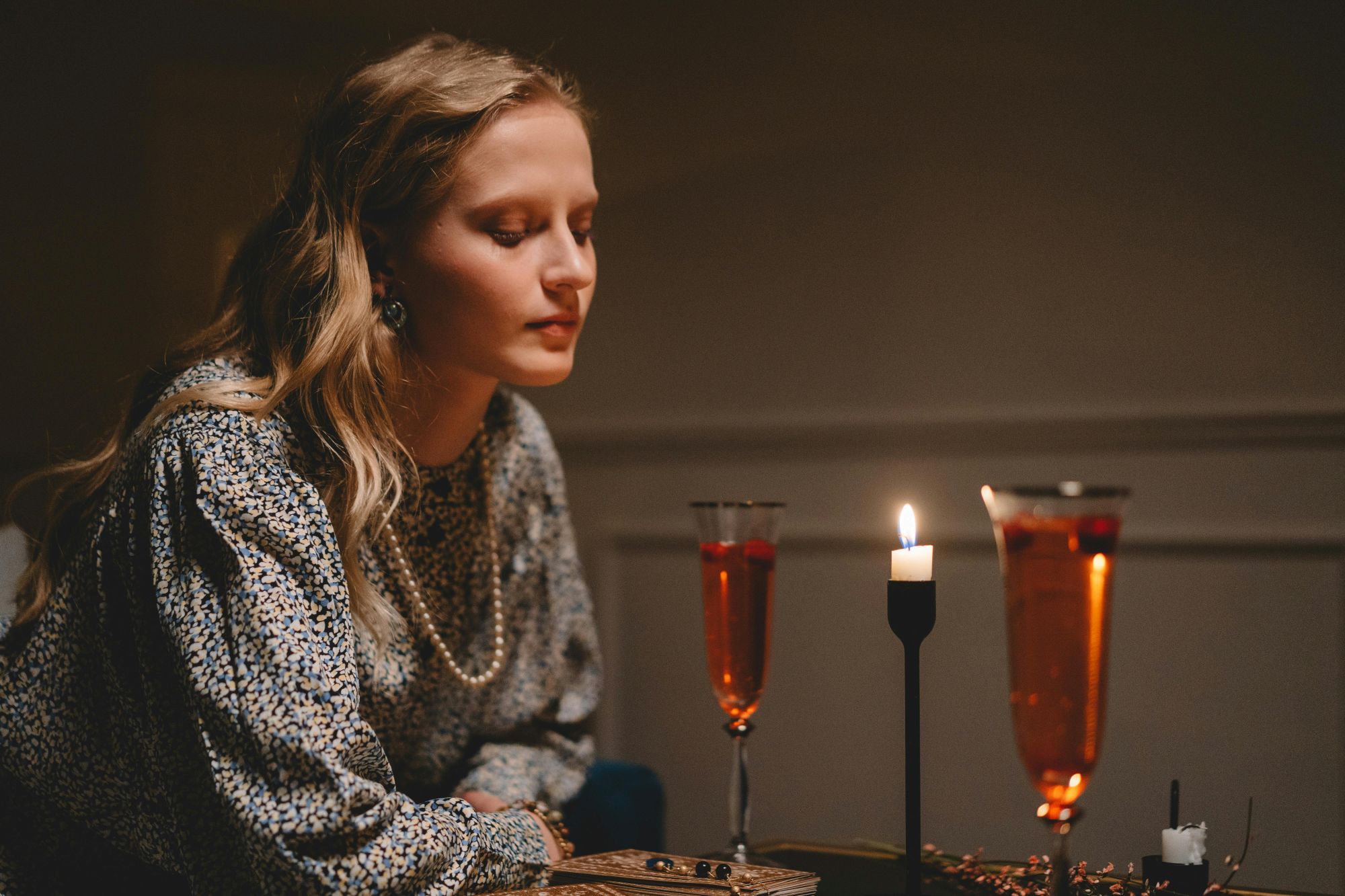
Flute
Flutes are the tall, narrow glasses most people immediately picture when thinking of sparkling wine. There are regular, slim flutes, and also trumpet flutes, which have a cone-like shape.
History: Flute‑like glasses date back to the Gallo‑Roman period, when they were crafted for drinking wines and other fermented beverages. These early designs prioritised visual appeal and ease of handling, long before sparkling wine as we know it existed.
By the early 19th century, the shape had evolved to suit effervescent wines, helping to preserve bubbles while looking elegant on the table. Then, in the 1800s, the shape had become increasingly popular for celebratory drinks because it helped keep the fizz lively while remaining elegant to hold.
How they work: The narrow bowl slows down the loss of carbon dioxide — that’s the gas that makes the tiny bubbles in sparkling wine. A slower escape means the bubbles last longer in the glass, making the wine feel spritzier and more refreshing. Because the opening is narrow, aromas (the scents you notice when you smell your wine) are gently guided upwards toward your nose rather than escaping sideways.
Things to consider: While flutes are excellent for preserving effervescence, the narrow bowl can limit how easily you can swirl and smell the wine. Compounds that create complex smells — such as citrus zest, toastiness from fermentation, or floral notes — need more space to collect above the wine. That’s why some wine professionals prefer other glass shapes when aromatic complexity is a priority. The narrow shape also makes them quite easy to knock over accidentally.
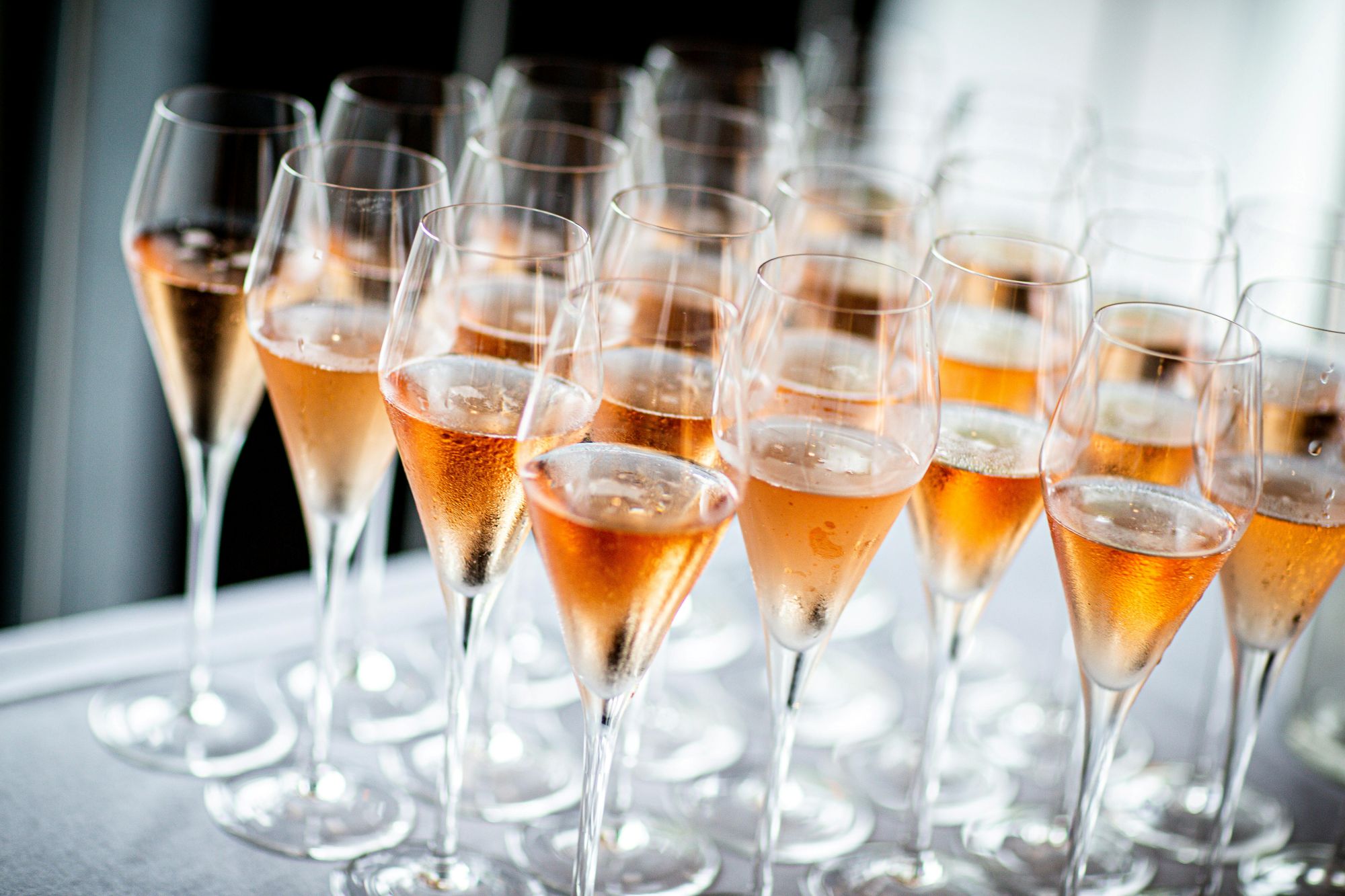
Tulip
Tulip wine glasses feature a slightly wider bowl that tapers at the top, resembling a tulip flower. The shape allows aromas to develop more fully while still preserving bubbles. In fact, you don’t need to buy special tulip-shaped sparkling wine glasses, as wine experts also recommend using regular white wine glasses.
History: The tulip design evolved in the 20th century. Sommeliers and wine experts specifically designed it for tasting and evaluating premium sparkling wines, especially those with complexity beyond simple fruitiness.
How they work: The broader bowl of the tulip glass gives the wine more room to breathe, allowing subtle scents to be gently guided toward your nose by the tapered rim.
Things to consider: Tulip glasses preserve bubbles better than coupes, but the slightly wider bowl means that fizz can still fade faster than in a narrow flute. For very delicate sparkling wines, you may notice the effervescence softening if the wine sits in the glass for too long.
Interesting fact: Wine experts often describe the tulip shape as the “gold standard” for serving and tasting sparkling wine. It’s not too wide that bubbles disappear quickly, and not too narrow that aromas are trapped.
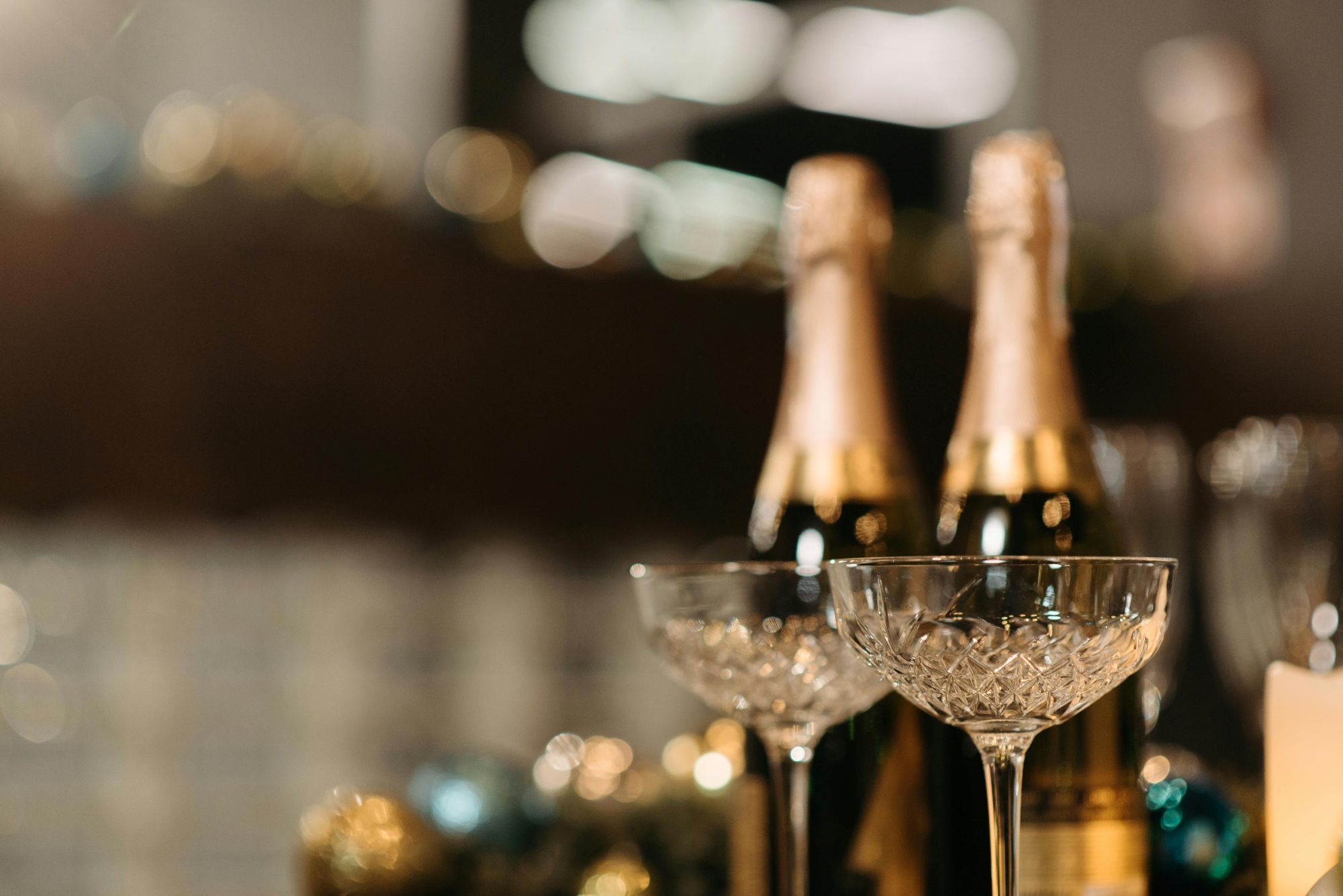
Coupe
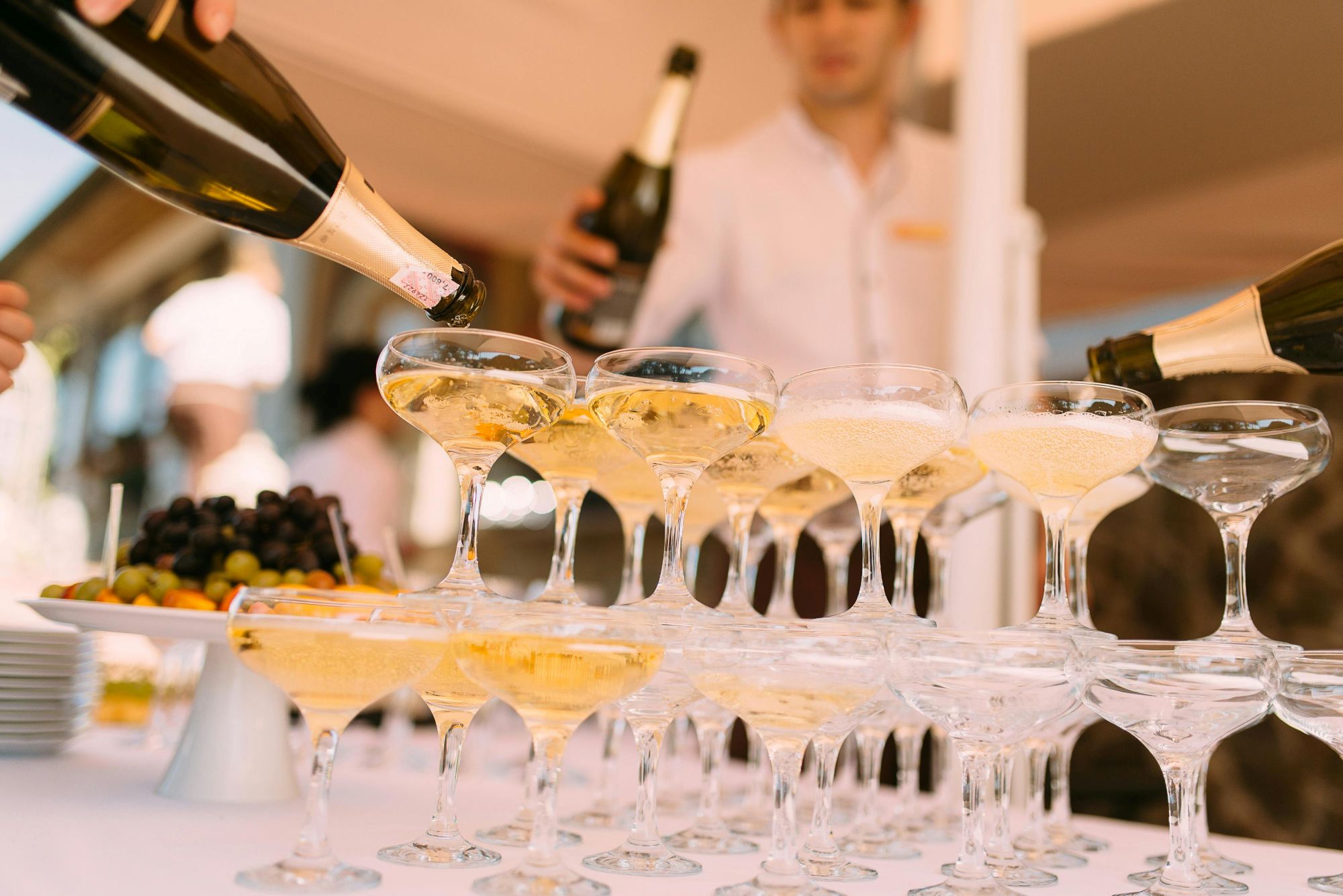
Coupes, sometimes called Champagne Saucers, are wide, shallow wine glasses with a historic and vintage appeal. Today, the coupe is instantly recognisable from its frequent appearances in period dramas and films, such as The Great Gatsby, where it is used to serve sparkling cocktails in elegant, lavish party scenes.
History: The earliest forms were developed in the mid‑17th century, when Venetian glassmakers working in England created a broad‑bowl shape originally called a tazza (Italian for “cup”). These early designs predate modern sparkling wine and were part of the broader evolution of glassware in Europe, long before flutes became the dominant style for bubbles.
Over the 18th and 19th centuries, coupes became popular across Europe and were widely used for sparkling wine and Champagne. They maintained their place as the quintessential celebratory glass through the roaring glamour of the early 20th century, often associated with vintage luxury and theatrical presentations such as champagne towers. It wasn’t until World War II that coupe glasses fell out of fashion.
How they work: The wide, shallow bowl of a coupe allows the bubbles in sparkling wine to rise and escape quickly, creating a lively, fizzy impression right away. The design of coupe glasses makes them ideal for pouring multiple glasses at once, such as in a champagne tower at weddings or special events.
Things to consider: Coupes are visually striking, but the wide, shallow bowl lets bubbles escape quickly and aromas spread into the air, reducing the wine’s sparkle and scent. They can also splash when pouring, making them less practical for serious tasting.
Should I Use a Different Glass for Different Sparkling Wines?
You don’t need a cupboard full of sparkling wine glasses, but having a few well-chosen types can enhance your enjoyment, suit different occasions, and impress guests. The shape of a glass affects how bubbles rise, how aromas reach your nose, and how flavours develop on the palate. Selecting the right style can make a real difference when tasting wine.

Flute
Best for: Light, young sparkling wines are stunning in flutes, where the constant stream of bubbles is part of the experience. Some young styles of Prosecco, Cava, and Champagne are best served in a flute glass.
Aroma notes noticeable in this glass: Citrus, green apple, light floral hints, and subtle stone fruits.
Ideal occasions: Casual toasts, intimate gatherings, or small celebrations where the wine’s sparkle is part of the enjoyment.
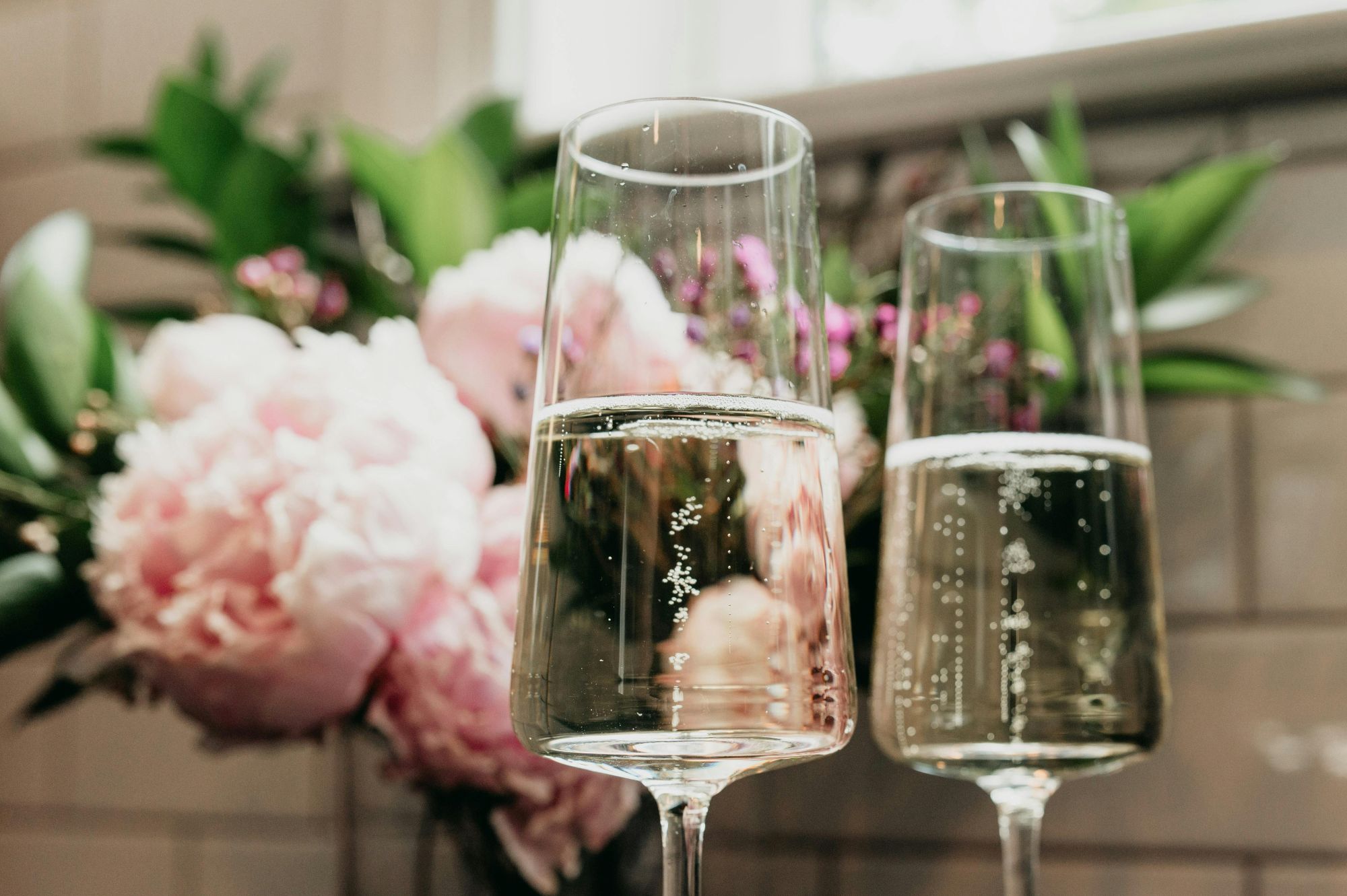
Tulip Glasses
Best for: Complex, aged, or traditional-method sparkling wines that benefit from additional aromatic development, such as Vintage Champagne, Blanc de Blancs, Blanc de Noirs, and premium English sparkling wines like Bolney Bubbly and Cuvée Noir.
Aroma notes noticeable in this glass: Brioche, toasted nuts, honeyed blossom, red and yellow fruits, subtle spice, and richer floral nuances. The broader bowl allows these aromas to develop fully before reaching the nose while maintaining bubbles. Some sommeliers even use standard white wine glasses for very mature sparkling wines to explore deeper layers of scent.
Ideal occasions: Dinner parties, tastings, or settings where guests can savour the wine’s full aromatic complexity and structure.
Coupes
Best for: Sparkling wines where dramatic presentation or social sharing matters more than aroma precision, including some proseccos, sweet sparkling wines, or sparkling cocktails.
Aroma notes noticeable in this glass: Lighter, more fleeting scents of fresh fruit and floral notes, which disperse quickly.
Ideal occasions: Large parties, themed events, or situations where theatrical presentation and easy pouring are priorities.
What Is the Benefit of Using Special Glasses for Sparkling Wine?
Using a glass designed for sparkling wine enhances both the presentation and enjoyment of the wine. It also brings out the flavours, aromas, and bubbles in a way standard glasses cannot.
Preserves Effervescence
Sparkling wines rely on their bubbles for texture, flavour perception, and visual appeal. Narrow bowls, like those of flutes, slow the escape of carbon dioxide, keeping the fizz lively for longer. This means the wine maintains its creamy mousse and crisp, tingling sensation from the first sip to the last.
Enhances Aromas
Glasses with carefully designed bowls, such as tulip shapes, concentrate and direct aromas toward your nose. This allows you to fully appreciate the wine’s bouquet, from delicate floral notes and citrus in younger wines to richer, toasted brioche and honeyed aromas in aged traditional-method sparkling wines. The right glass can reveal subtleties that might otherwise be missed.
Supports Temperature Control
Stemware helps prevent the heat of your hand from warming the wine. Holding the stem rather than the bowl ensures the sparkling wine stays at its ideal serving temperature — cool enough to maintain freshness but not so cold that flavours are muted. This is particularly important for fine English sparklers like Bolney Bubbly, which develop more complex aromas when served correctly.
Elegant Presentation
Beyond technical benefits, well-chosen stemware adds sophistication and ceremony to the occasion. Especially when hosting a dinner party or raising a celebratory toast, sparkling wine in the right glass looks refined, encourages slower sipping, and adds a special touch to the event.
Improves Taste Perception
The shape of the glass can subtly influence how flavours are perceived on the palate. Narrow glasses focus the bubbles and acidity to the tip of the tongue, highlighting freshness and liveliness. Broader bowls, on the other hand, allow more contact with the tongue, opening up the wine’s body and richness.
How Many Sparkling Wine Glasses Should You Have at Home?
The number of sparkling wine glasses you need depends on how often you entertain, the types of sparkling wines you enjoy, and the size of your gatherings. For most home settings or a home wine bar, a small, thoughtful collection is usually enough.
Tulip or Flute Glasses (6–8): These are the most common glasses for celebrations and toasts. Six to eight glasses are sufficient for small dinner parties or family meals. For larger parties, consider having 12–16 glasses so everyone can be served at the same time without running short.
Extra Tulip or White Wine Glasses (2–4): These are useful for at-home sparkling wine tastings. Having a few extra glasses allows you to pour and compare multiple wines side by side, helping you notice subtle differences in aromas, flavours, and bubble texture. This is especially handy with more complex wines such as vintage Champagne or English sparkling wines.
Coupes (2–4 for casual use, more for towers): Coupes are more about presentation than tasting precision. Keep two to four for casual entertaining or cocktail-style drinks. If you want to create a champagne tower for a special occasion, here’s a rough guide:
- 3-tier tower: 6–10 coupes
- 4-tier tower: 15–20 coupes
- 5-tier tower: 30–35 coupes
Most home hosts stick to 3–4 tiers, which looks impressive but is manageable for pouring and cleanup.
With a setup like this, you’ll have enough glasses for everyday enjoyment, wine tasting sessions, intimate family dinners, and larger celebrations. And all without overcrowding your cupboards or buying glassware you rarely use.
Etiquette for Serving Sparkling Wine at Dinner Parties
Now that you have your sparkling wine glassware, here are some helpful tips for how to serve your guests:
Chill the wine properly
Sparkling wine should be served well-chilled, typically between 6–10°C depending on style. Too cold can mute the flavours, too warm can make the bubbles feel flat. Store bottles in the fridge for a few hours before serving, or use an ice bucket filled with ice and water for about 20–30 minutes. Avoid putting the bottle directly in the freezer, as it can affect both flavour and bubbles. Planning ahead ensures the wine is at the perfect temperature when guests are ready to enjoy it.
Hold glasses by the stem
Always handle sparkling wine glasses by the stem rather than the bowl. This keeps fingerprints off the glass, preserves the wine’s cool temperature, and prevents the natural warmth of your hand from altering the bubbles.
Pour gently
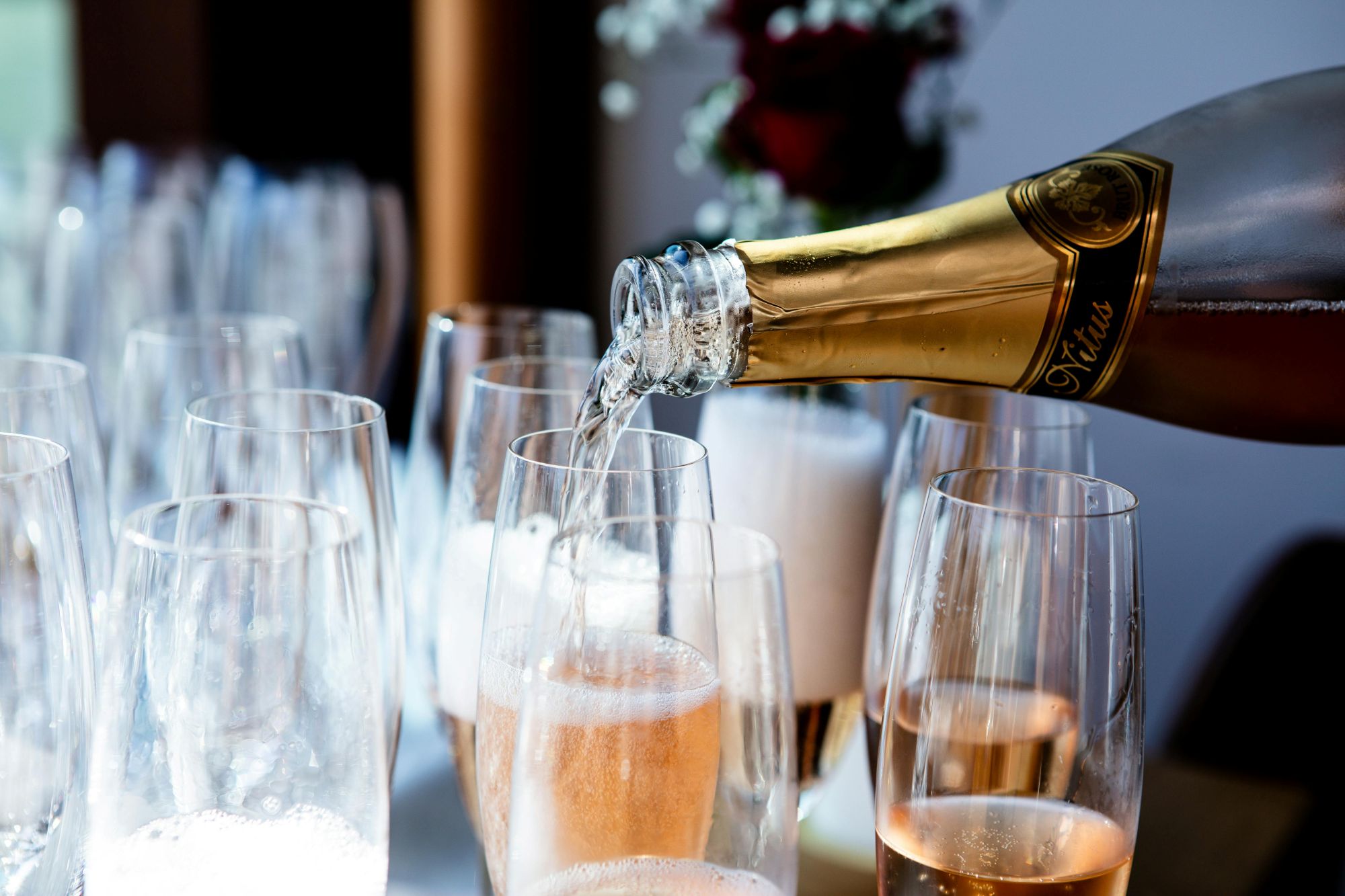
Tilt the glass slightly and pour slowly down the side. This helps retain carbonation, prevents overflow, and allows the aromas to develop naturally. Avoid splashing or filling the glass to the brim. You want to leave some space for the bubbles to rise and aromas to concentrate.
Match the glass to the wine
Tulip glasses are ideal for premium sparkling wines, such as English traditional method bottles, because the slightly wider bowl helps release complex aromas. Flutes are perfect for lighter, fruitier wines or for celebratory toasts, as they showcase the rising bubble stream clearly. Coupes can be used for cocktail-style drinks or dramatic presentations, like a small champagne tower.
Serve in rounds or at the right moment
Sparkling wine works wonderfully as an aperitif to start a dinner, but it can also accompany lighter courses such as seafood or chicken. Consider your menu and pacing. Offering the wine in rounds ensures all guests get a fresh pour at the ideal temperature.
Presentation matters
Beautiful, clean glassware and careful pouring show attention to detail. Guests notice the effort, and it makes the drinking experience more pleasurable. Even simple touches, like polishing glasses beforehand and presenting them with care, make a big difference in how your sparkling wine is enjoyed.
Cleaning, Storage and Polishing Sparkling Wine Glasses
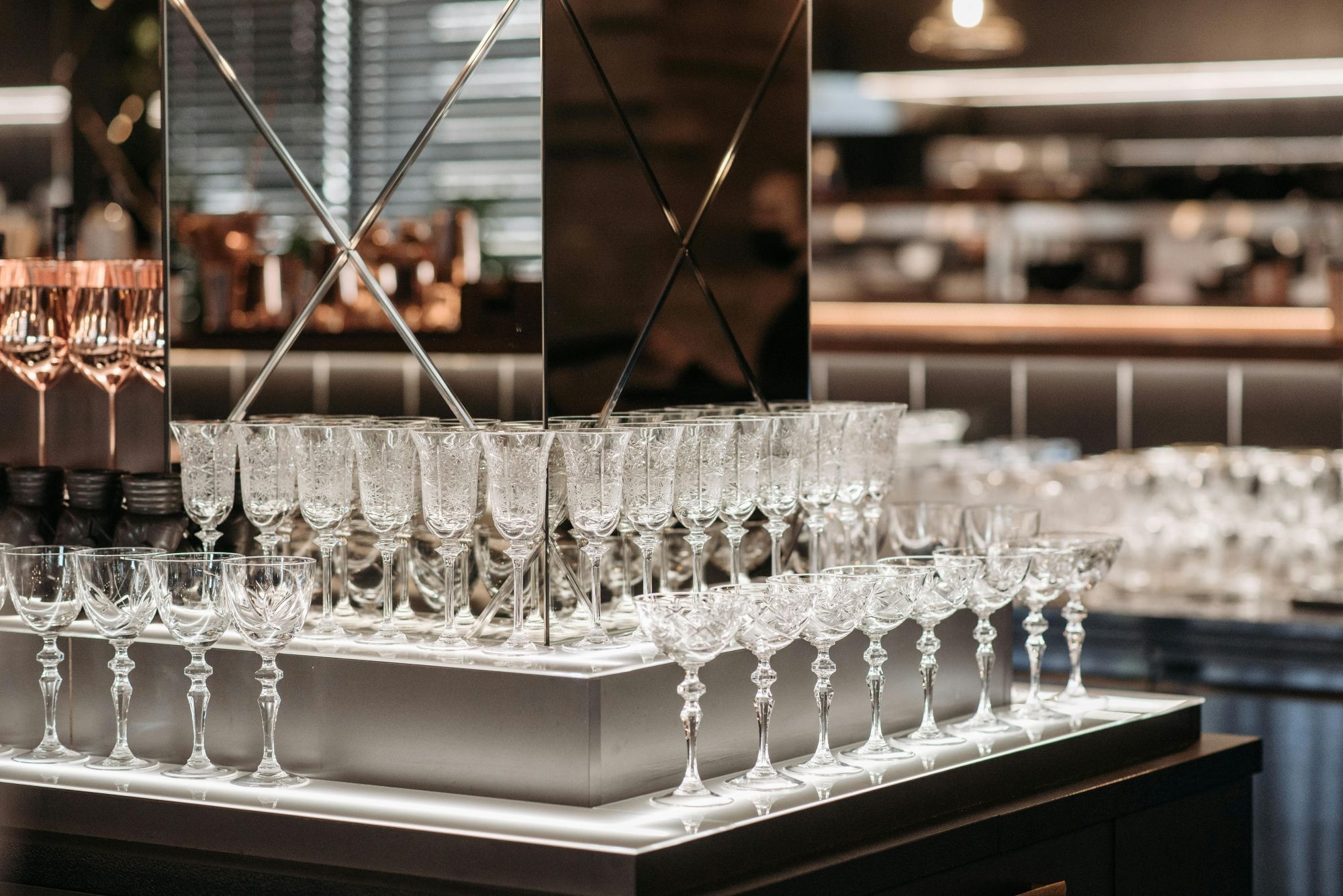
You may have seen waiters in restaurants or bars carefully polishing glassware before service. While you don’t need to go to quite that extreme at home, taking a little extra care with your sparkling wine glasses can make a noticeable difference in both presentation and enjoyment.
Cleaning
Handle your sparkling wine glasses gently to avoid chips and keep them looking clean and clear. Wash by hand using warm water and a mild detergent, especially for delicate crystal. Use a soft sponge rather than anything abrasive. If you prefer a dishwasher, choose a gentle cycle and use a stemware rack so glasses don’t knock together.
After washing, it’s recommended to let them air dry. Give them a quick polish with a lint-free cotton or linen tea towel to make sure they’re spotless and ready to show off the wine’s bubbles and aromas.
Storing Upright vs. Upside Down
Upright storage is generally safest for delicate stemware, as it reduces stress on the rims and lowers the risk of chips. Upside-down storage can help keep dust out, particularly if you use cabinet space with limited protection, but only if the glasses are fully dry to prevent moisture buildup or mould.
Space and Protection
Store glasses with enough room to avoid contact with each other. Padded racks, silicone mats, or felt liners provide cushioning and reduce clinking or accidental damage. If possible, dedicate a separate section of your cabinet or a small wine glass drawer to keep stemware secure.
Extra Tips
- Avoid stacking glasses on top of one another, as this increases the risk of chips and cracks.
- Keep glasses away from high-traffic areas and from above kitchen appliances, where vibration could cause tipping.
- For infrequent use, consider protective sleeves or boxes for long-term storage.
Proper cleaning and storage not only keep your sparkling wine glasses looking pristine but also ensure they perform at their best, preserving aromas, bubbles, and overall drinking experience.

Enjoy Sparkling Wine at Bolney Wine Estate
The right glass makes all the difference when enjoying sparkling wine. From showcasing aromas and keeping bubbles lively to maintaining the ideal temperature, using the right glass is part of the enjoyment.
Visit Bolney Wine Estate to try English sparkling wines, enjoy a guided tasting, and see first-hand how glassware can make a difference. We’d love to pour you a glass!