Account






Why Choose an English Vineyard for Your Next Team Event?
Start exploring

If you’re organising a team away day or corporate event outside London, a vineyard is worth adding to the shortlist. It offers something a hotel meeting room or city venue cannot: real outdoor space, a change of scenery backed by research on focus and mood, and enough flexibility to combine a working session with something more relaxed afterwards, from a shared meal to a walk around the vineyard.
Jump to a section
- What Makes a Vineyard Different From a Typical Meeting Venue?
- Does Being Around Nature Actually Improve Focus at Work?
- What Are the Wider Benefits of Taking a Team Off-Site?
- Why an English Vineyard Specifically?
- What Types of Team Events Can You Host at a Vineyard?
- What Should You Look for When Choosing a Vineyard Venue?
- Sources
What Makes a Vineyard Different From a Typical Meeting Venue?
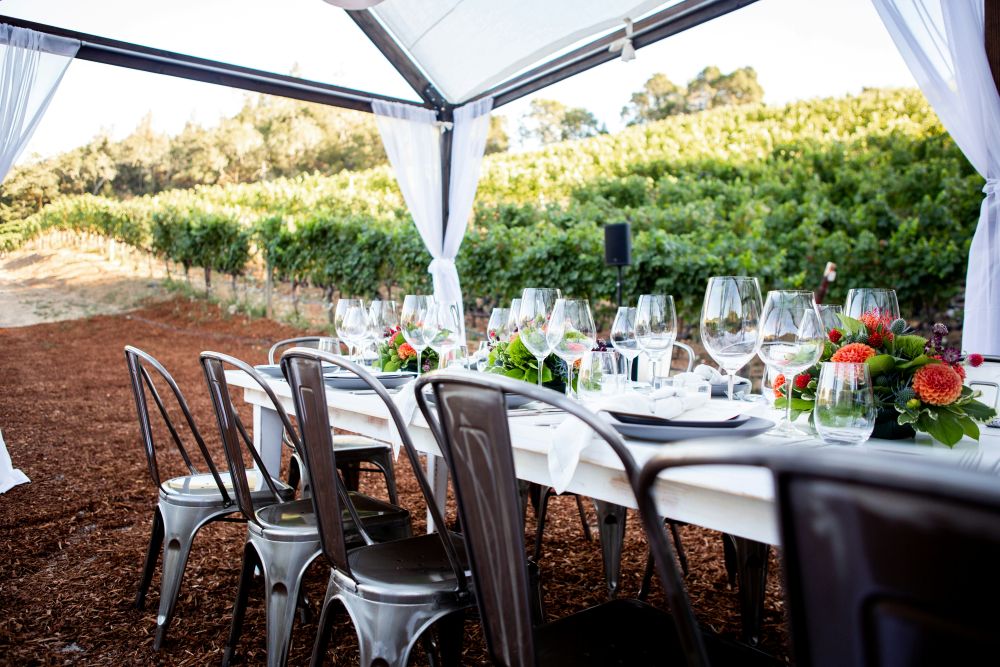
A vineyard combines a working space with open countryside on the doorstep. Instead of a meeting room leading into a corridor or car park, your team walks out into open vineyard rows and green grassy fields. That small shift in surroundings resets the mood of a working day, and creates a natural break point between the formal part of an event and something more relaxed afterwards, like a short walk or a private dinner.
Most working vineyards also operate as venues all year round, not only through the summer or peak tourist season. Indoor meeting rooms and restaurants don’t depend on the growing season, so a vineyard can work as well for a spring strategy day or a winter team dinner as it does for a summer visit.
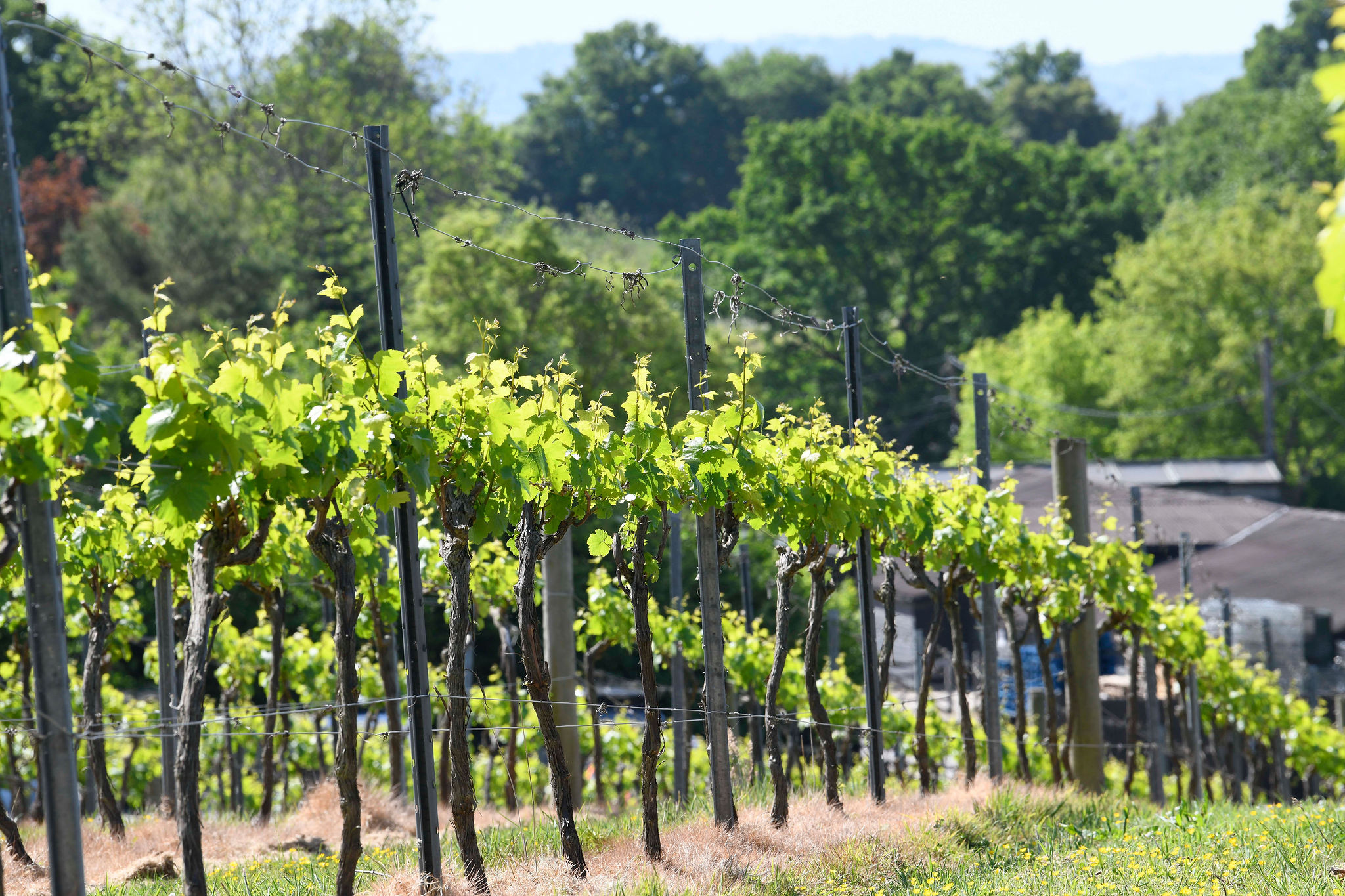
The vineyard also looks different depending on the time of year. Pruning happens over winter, new shoots and flowers appear in spring, the grapes ripen through summer, and harvest takes over in autumn. A vineyard tour looks different depending on when a group visits, so it isn’t only worthwhile in one season.
Does Being Around Nature Actually Improve Focus at Work?
Several research papers provide real evidence for this. A 2008 study from the University of Michigan found that people who walked through a natural setting, or even viewed pictures of nature, performed better afterwards on tasks measuring attention and working memory than people who spent the same time in an urban setting (Berman, Jonides & Kaplan, 2008).
Jargon explained: attention restoration theory
This is the idea that natural environments gently hold our attention rather than demanding it, which gives the part of the brain used for focused thinking a chance to recover. Busy, urban environments tend to do the opposite.
For a team event, a morning session followed by lunch outdoors or a walk around the vineyard is more than a pleasant break. It may help your team concentrate for the rest of the day.
What Are the Wider Benefits of Taking a Team Off-Site?
Environment is one of several factors linked to how well a team performs together. A meta-analysis of 60 team-building studies, covering close to 600 teams, found a moderate positive effect on team outcomes overall, with the strongest gains showing up in how team members felt about each other and worked together, rather than in task performance alone (Klein et al., 2009, Small Group Research).
The CIPD, the professional body for HR and people development in the UK, tracks engagement and workplace performance as connected outcomes, and taking a team out of its usual routine is a recognised way of supporting both (CIPD, Employee Engagement resources).
An off-site event tends to help with:
- Fewer interruptions: No desk drop-bys or back-to-back meetings pulling people away.
- Better informal conversation: A shared meal or walk gives colleagues time to talk with people they might not usually cross paths with.
- A clear change of pace: Leaving the office behind marks a strategy day or celebration as distinct from an average week.
Why an English Vineyard Specifically?
English wine has grown quickly as an industry, which means more working vineyards sit within reach of a UK city than most people realise. The Food Standards Agency, which registers and inspects UK vineyards, recorded 1,158 vineyards in 2025, up 4.3% on the year before, with the industry now valued at around £14 billion and supporting more than 10,000 jobs (Food Standards Agency, 2026). Within that, Kent and West Sussex are the two most planted counties in the country (WineGB Industry Report, 2025).
That growth means a countryside vineyard is often closer to London than people expect, without needing a long drive or an overnight stay to justify the trip. It also means more flexibility in when to visit, rather than being tied to a single season.
What Types of Team Events Can You Host at a Vineyard?
A vineyard can host anything from a working strategy day to a full evening celebration, with grounds and catering that flex to different formats.
- Wine tasting session: a guided tasting is an easy way to close a working day, and needs no wine knowledge to enjoy. If it helps beforehand, our wine terms primer covers the basics, and our guide to planning a corporate wine tasting covers the logistics
- Wine blending workshop: some vineyards run hands-on sessions where a small group blends different grape varieties, a different kind of team activity from a standard tasting
- Chef’s wine pairing meal: where a vineyard has its own restaurant, a set menu paired with estate wines can turn an evening event into something well beyond a standard sit-down dinner. Our beginner’s guide to food and wine pairing explains how the pairing itself works
- Vineyard tour: a walk around the vineyard with an explanation of how the grapes are grown gives your team something active to do between sessions
- Summer picnic in the vineyard: a relaxed outdoor lunch with English wine and non-alcoholic options, well suited to a team social in the warmer months
- Wine bottle painting: a hands-on, low-pressure activity where guests decorate their own bottle to take home, works well for a relaxed team social
- Outdoor team building: vineyard grounds are usually large enough for outdoor group activities that would not fit into a city venue
- Festive team dinner: a private dining space with a seasonal menu works well for a small end-of-year meal, without needing a dedicated party package
- Quiet, focused sessions: the same grounds work just as well for a working day with no wine element at all, if that is what the day calls for
A vineyard can also be a useful source of thank-you gifts if you want guests to leave with something to mark the day. Our corporate gift guide covers a few options.
What Should You Look for When Choosing a Vineyard Venue?
Not every vineyard is set up to host events, so it is worth checking a few things before booking.
- Transport and parking: Realistic train or bus links for the group, plus space for coach parking if people are travelling together.
- Indoor and outdoor space: A meeting room as well as somewhere to go outside.
- Private dining: A separate dining area if you want catering kept apart from the working space
- Breakout space: A second area, such as a balcony or lounge with a view over the vineyard, for smaller conversations or a change of scene between sessions.
- AV equipment: Screens, projectors and flipcharts included as standard, so nothing needs to be hired separately.
- Room layout options: Boardroom seating for a working session, standing space for drinks, or seated dining for a celebration.
- A dedicated events coordinator: One point of contact who can answer questions and manage the day, rather than several.
- Corporate day rates: Full- or half-day delegate rates that include tea, coffee, pastries, and lunch, so catering doesn’t need arranging separately.
- Weather backup: A solid indoor plan, since UK weather is not something to build a whole day around.
Most vineyards that host events publish room sizes, layouts and rates on their own site, so it is worth checking those details directly with any venue under consideration.
Considering Bolney for Your Next Event
Bolney Wine Estate in West Sussex hosts meetings, private dining and team events year-round, not just during the summer season.
See meeting rooms and rates or explore private dining and venue hire
Frequently Asked Questions
Do I need to know about wine to host an event at a vineyard?
No. A vineyard meeting room works the same way as any other meeting room. You can add a wine tasting or vineyard walk as an optional extra, but it is not required.
Are there options for people who don’t want to drink alcohol?
Yes. Wine tastings normally include spittoons, so guests can taste without swallowing, and non-alcoholic options are usually available alongside the wine list. This is worth flagging when booking, particularly for a group that includes drivers or anyone who prefers not to drink.
Are vineyard venues weather-dependent?
Outdoor elements like a vineyard walk are, but a good vineyard venue will have indoor meeting and dining space, so the core event can proceed regardless of the weather.
Is a vineyard venue only suitable for large events?
No. Many vineyards have smaller meeting rooms alongside larger spaces, so they can work well for a team of ten just as easily as a much bigger group.
How far in advance should a vineyard venue be booked?
There is no fixed rule, but popular dates, particularly in spring and around the festive season, tend to book up early. Enquiring as soon as you have a date in mind gives the best chance of availability.