Account





 Back
Back

English Rosé Vs Provence Rosé: Comparing Types Of Blush Wine
Start exploring

Rosé is often underestimated and seen as just a pink wine for summer. But in reality, it is a quietly diverse category in the wine world. Rosé can vary significantly in flavour, dryness, fruitiness, and texture depending on where it’s made and how it’s produced.
Two of the most widely recognised styles are:
-
Provence rosé, from southern France
-
English rosé, made in vineyards across England
They are not the only rosé styles in the world, but they provide a clear and useful way to understand how climate, grapes, and winemaking shape what you taste.
If you’ve found yourself wondering “what are the different types of rosé wine?” or “how does English rosé differ from Provence rosé?”, this guide will walk you through both styles and explain what makes each unique.
What Is Rosé Wine, And How Is It Made?
Before comparing Provence and English rosé, it helps to understand what rosé actually is.
Rosé is wine made from red grapes, not a blend of red and white wine (a common misconception).
The pink colour comes from the grape skins. When red grapes are crushed, the juice is clear. The colour appears when the juice sits in contact with the skins — a process called maceration. Rosé wine can be still or sparkling.
There are three primary production methods for still rosé wine:
-
Direct pressing (or “vin gris”): Grapes are pressed immediately, which usually produces very pale, delicate rosé.
-
Short maceration: The juice sits with the skins for a few hours before pressing, which can give the wine more colour and flavour.
-
Saignée (“bleeding”): A portion of juice is removed from red wine production to make rosé with a deeper hue and more structure.
The shorter skin contact compared with red wine preserves freshness and emphasises fruit and acidity rather than intense tannin or deep colour.
Less skin contact means:
-
Lighter colour
-
Lighter tannins (that drying sensation in red wine)
-
Fresher, more delicate flavours
Winemakers can adjust this contact time depending on the style they want to create. That’s why some rosés are very pale and subtle, while others are deeper in colour and fruitier.
Now let’s look at how Provence and English rosé differ.
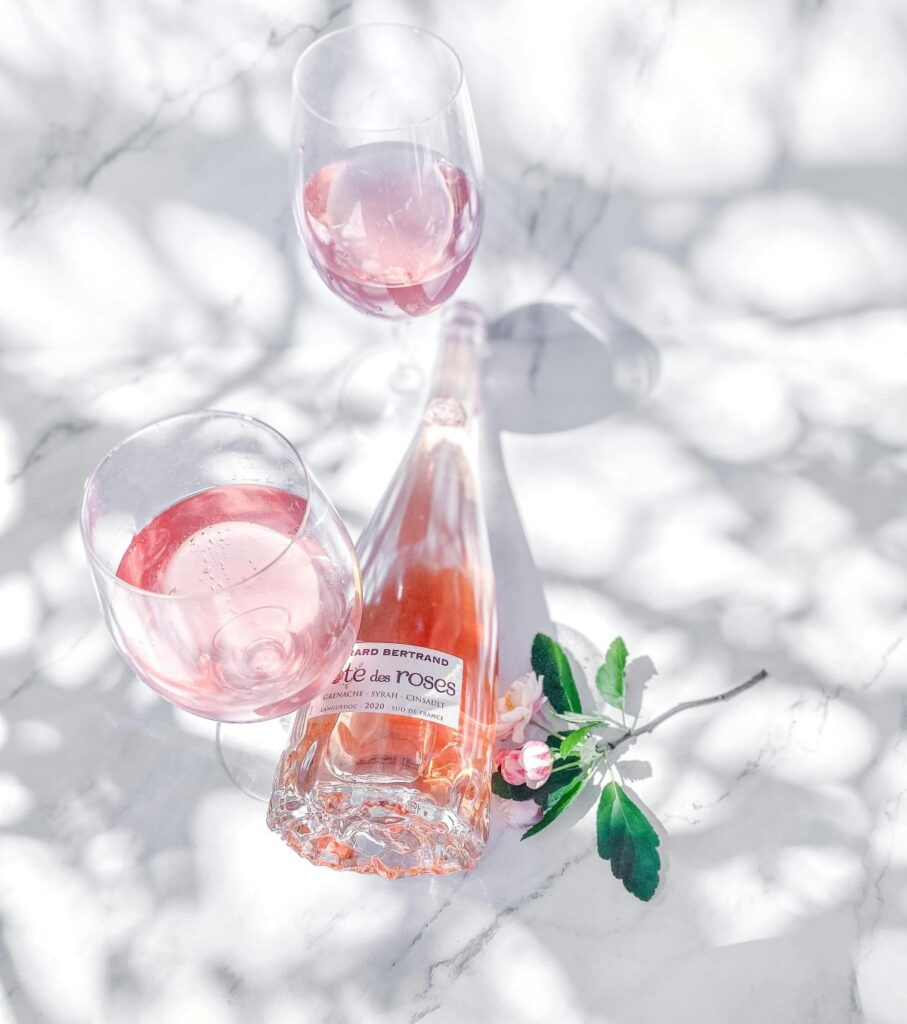
What Is Provence Rosé?
Provence, in the south of France, has become the global reference point for modern dry, still, rosé wine. Provençal wines are typically dry, pale, and elegant, with balanced acidity and a food-friendly character.
Grape Varieties
Not all rosé wines are made from the same grape varieties. Provence rosé is commonly made from blends of Grenache, Cinsault and Syrah grapes, sometimes with Mourvèdre or Rolle (Vermentino). Grenache brings soft red fruit, Cinsault adds delicacy, and Syrah contributes subtle structure.
Typical Characteristics
-
Colour: Typically pale salmon or light pink.
-
Dryness: Generally very dry with minimal residual sugar.
-
Acidity and freshness: Moderate acidity gives Provence rosé a smooth yet refreshing character, without sharpness.
-
Flavour profile: Aromas and flavours tend to be delicate and subtle, with notes of strawberry, melon, citrus peel, and sometimes a hint of Mediterranean herbs.
-
Body and alcohol: Typically light-bodied with moderate alcohol, creating an elegant, easy-drinking style.
How Is It Made?
Provence rosé is often made by direct pressing, where grapes are pressed gently, and the juice is fermented immediately without much skin contact. The result is a very pale colour with delicate flavours.
Pairing With Food
Some wines complement some foods more than others, a practice called wine pairing.
Provençal wine pairs beautifully with grilled seafood, Mediterranean salads, light pasta dishes, olives, and dishes featuring tomato, basil or fresh herbs.
The dryness and subtle fruit flavours of the French rosé style bring out the freshness of the seafood, balance the acidity of tomato-based dishes, and complement the herbal notes in salads and pastas without overpowering them.
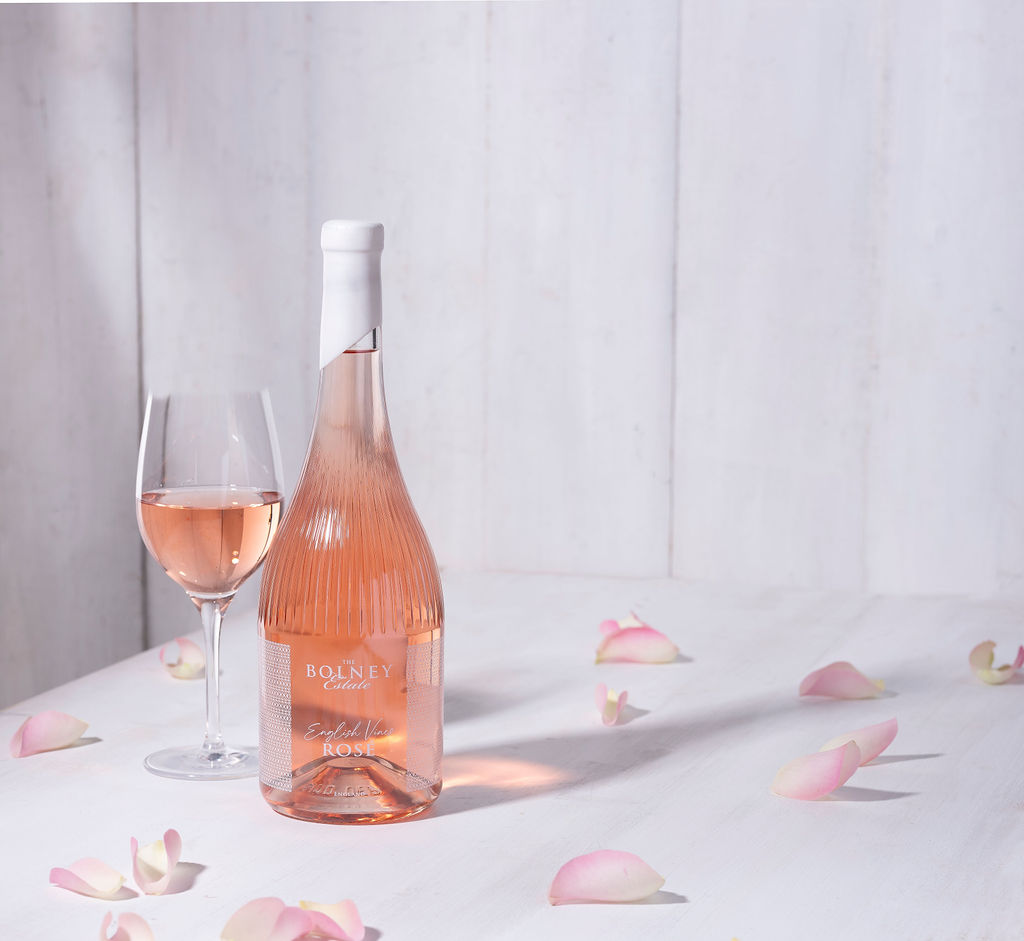
What Is English Rosé?
English rosé comes from a cooler climate than Provence in France, and that affects how it tastes. In cooler regions, grapes take longer to ripen, which helps them hold on to their natural acidity. The result is a still rosé wine that feels fresher, lighter, and more crisp on the palate.
Grape Varieties
Often made from Pinot Noir, English rosé is made from these grapes, which thrive in the country’s northerly vineyards. Some producers also use Pinot Meunier, Pinot Précoce or blends similar to those used in English sparkling wine.
Typical Characteristics
-
Colour: Usually pale to mid‑pink, depending on grape use and skin contact.
-
Dryness: Most English rosés are dry, meaning they contain very little residual sugar.
-
Acidity and freshness: Cooler-climate grapes retain more acidity, giving English rosé a refreshing, lively mouthfeel.
-
Flavour profile: Aromas and flavours often lean toward fresh red berries, such as strawberry, raspberry and redcurrant.
-
Body and alcohol: Light to medium body with typically moderate alcohol, reflecting slower ripening.
How Is It Made?
English rosé is often made using short maceration, where the juice sits with the grape skins for a few hours before fermentation. The process allows the wine to pick up more colour, flavour, and structure than the very pale Provençal style.
Pairing With Food
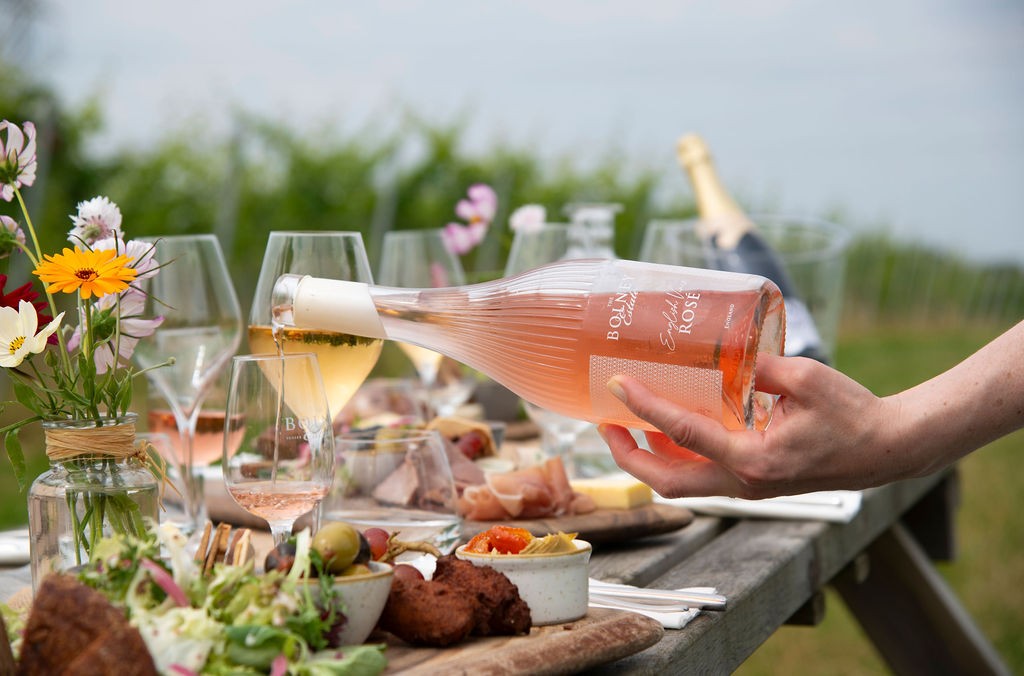
Grilled fish, roast chicken, soft cheeses, charcuterie, and summer vegetables pair particularly well with English rosé. The brighter acidity also makes it a good match for lightly creamy dishes.
How They Compare: Provence Vs English Rosé
Here’s how the two styles line up when you sip side by side:
| Feature | Provence Rosé | English Rosé |
|---|---|---|
| Dryness |
|
|
| Acidity (Freshness) |
|
|
| Fruit Flavours |
|
|
| Body & Texture |
|
|
| Serving & Food Pairing |
|
|
Are These the Only Styles of Rosé?
Not at all. Rosé is produced across many wine regions worldwide, and styles span a broad spectrum. For instance:
-
Spanish rosado: Often deeper in colour and fruit‑forward.
-
Rosato from Italy: Varies widely depending on region and grape.
-
Tavel rosé (France): Richer, darker and more structured.
These examples are a reminder that rosé isn’t a single flavour! It’s a wine style with many expressions, shaped by terroir and winemaking, creating rosés that range from blush-pink to dry, with varying fruitiness, acidity, and mouthfeel.
Which Should You Try?
There’s no single “best” rosé — but your preference might tip you toward one style:
-
Choose Provence rosé if you enjoy a very dry, delicate and elegant wine with subtle fruit and soft texture.
-
Choose English rosé if you prefer brighter acidity, clear red fruit flavour, and a refreshing finish.
Comparing these styles side by side — perhaps over a shared meal — is a delightful way to appreciate how climate and grape choices shape what you taste.
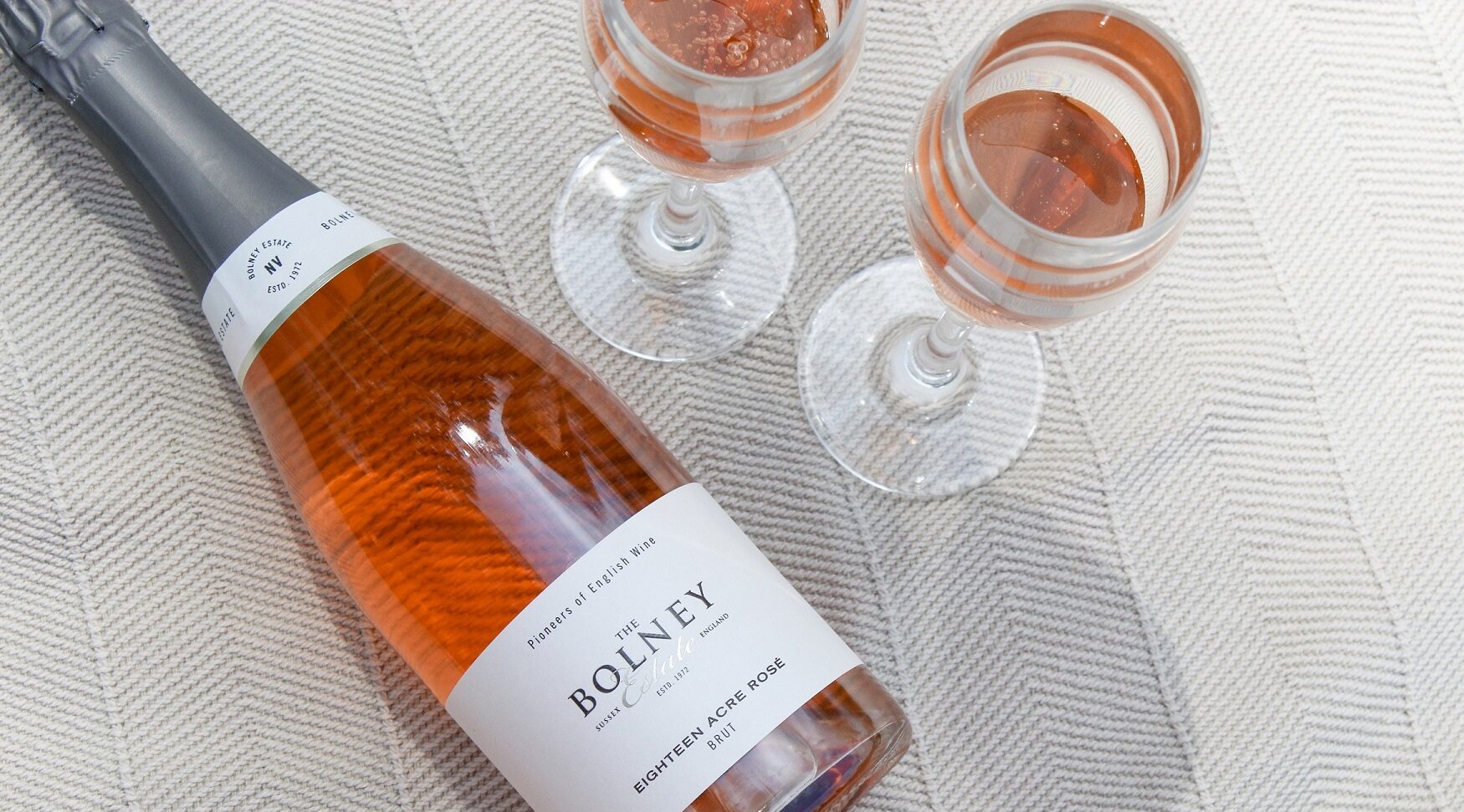
And if you’re curious about how English rosé is made firsthand, a vineyard tour and tasting session at Bolney Wine Estate offers an immersive way to see the rosé winemaking process.
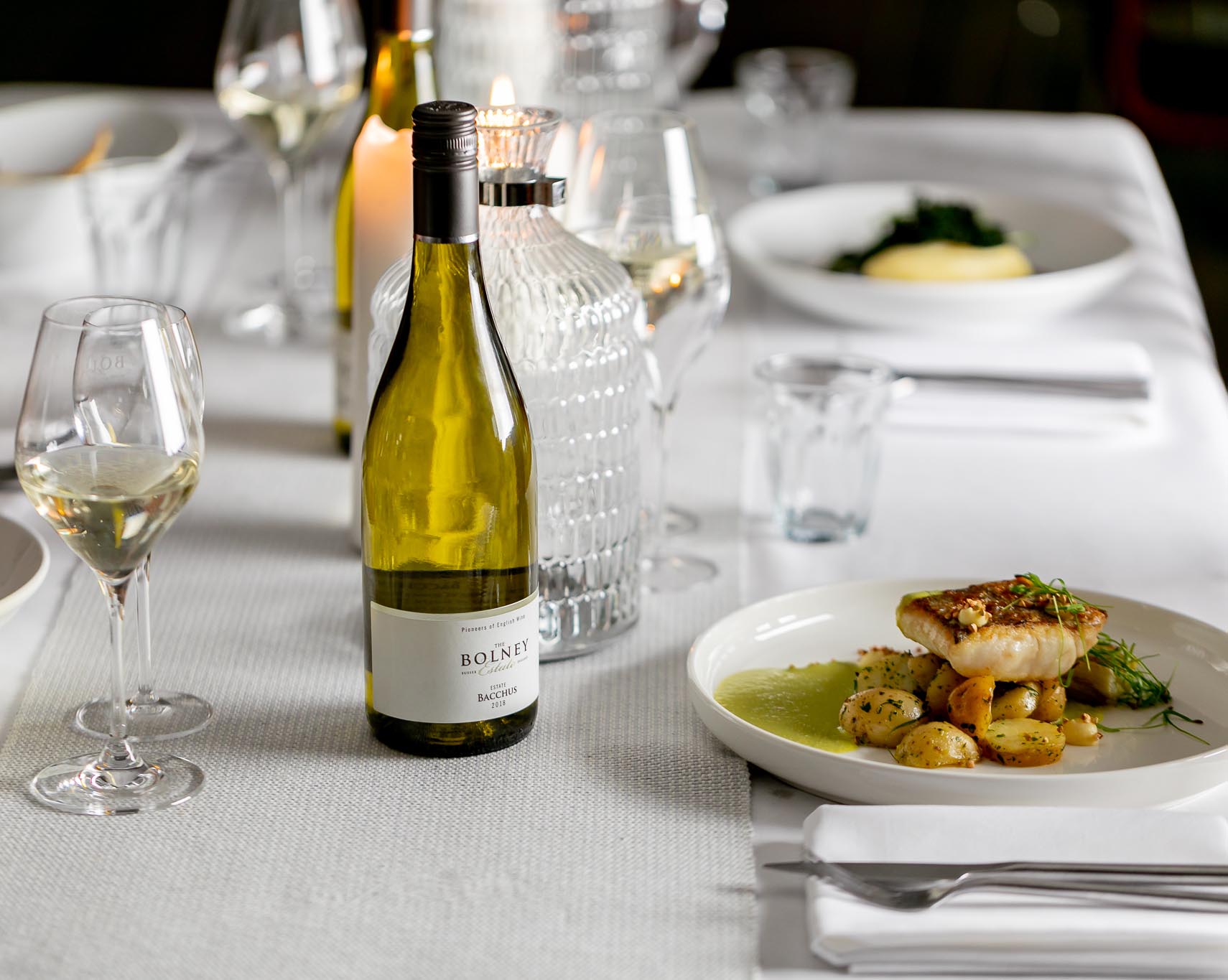
A Beginner’s Guide To Food & Wine Pairing
If you’re curious about what you eat and drink, then you might find yourself wondering what to drink with your favourite meals. We’ve created this article which includes our favourite tips and recommendations to create a helpful guide for anyone wanting to pair good wine and food.