Account






What Is Terroir In Wine?
Start exploring

Terroir describes how a wine’s growing environment shapes its final character. It covers the soil, the climate, the shape of the land and the choices growers make while tending the vines. Two wines made from the same grape can taste different because the grapes came from different places.
The word comes from the French terre, meaning land. Wine drinkers use it to explain why a Chardonnay grown on chalk in Champagne can taste different from a Chardonnay grown on volcanic soil elsewhere, even when both wines are made similarly.
Jump to a section
What Does Terroir Mean?
Terroir means the complete set of natural conditions surrounding a vineyard. The Wine & Spirit Education Trust defines it as the natural environment where grapes are grown, covering climate, soil and topography. The International Organisation of Vine and Wine goes further in its official 2010 definition, describing terroir as the collective knowledge that builds up from working a particular area of land over time, alongside its soil, topography, climate and biodiversity.
Terroir is not only about the ground beneath the vines. It also includes generations of local knowledge, such as which grape suits a slope or when to pick the fruit. A vineyard in Burgundy and a vineyard in Sussex can share a similar chalk base, yet different rainfall and different growing traditions still give their wines a distinct character.
What Are the Four Elements of Terroir?
Terroir is usually broken down into four parts. Each plays a role in shaping how a grape grows and how the finished wine tastes.
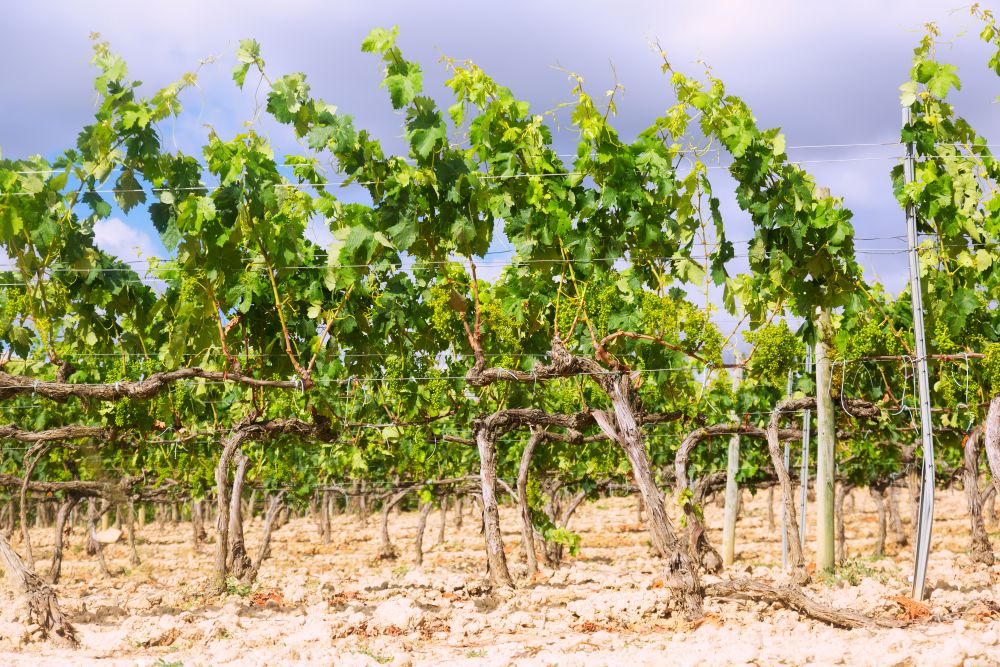
- Soil: Its type and drainage change how much water and nutrients reach the vine roots. Chalk and gravel drain fast, while clay holds water for longer.
- Climate: A region’s overall temperature and rainfall decide which grapes can ripen fully and how much sugar and acid they build up.
- Topography: A vineyard’s height, slope, and direction control sunlight, drainage, and frost risk. A south-facing slope catches more sun than a flat, low-lying field.
- Human tradition: Pruning, picking, and winemaking methods passed down in a region shape the finished wine too, even though they come from people rather than nature.
Can You Taste Terroir in a Wine?
Yes, to an extent, though it takes some practice to notice. Trained tasters often pick out minerally, high-acid notes in wines grown on chalk, or riper, fuller fruit in wines from warmer sites.
Scientists have also found a physical link between the ground and what you can taste in a glass of wine. A 2022 study in Communications Biology analysed soil samples from 200 vineyards across four continents and found that the microbes in vineyard soil contribute to a wine’s regional character.
The effect is real, but it is not the whole story. Winemaking choices, such as how long a wine ages in oak or how ripe the grapes were when picked, can hide or highlight terroir just as much as the soil itself.
Is There a Best Terroir for Wine?
No single terroir suits every wine. The right terroir depends on the style being made. Cool, chalky sites tend to produce lighter, high-acid wines suited to sparkling wine, while warmer, well-drained sites suit fuller-bodied reds.
| Aspect | Cool Climate | Warm Climate |
|---|---|---|
| Typical grapes | Chardonnay, Pinot Noir | Grenache, Syrah |
| Acidity | High | Lower |
| Common styles | Sparkling wine, light whites | Full-bodied reds |
Grape growers spend years matching a variety to a site’s terroir before planting a single vine.
Does England Have Its Own Terroir?
Yes. The South Downs and North Downs in southern England sit on the same chalk seam that runs beneath the English Channel and resurfaces in Champagne. Wine writers and publications have pointed to this shared chalk geology as one reason English sparkling wine has built a reputation close to Champagne’s style.
England’s cool, often wet climate
This keeps acidity high in the grapes, a trait prized in sparkling wine. Weather shapes a region’s terroir over the long term. It also decides how each individual vintage turns out.
Jargon explained: vintage
A vintage is the year a wine’s grapes were picked. The weather in that single year adds another layer on top of a vineyard’s terroir.
A University of Oxford study found that warmer summers and wetter winters were linked to higher quality vintages in Bordeaux, showing how closely day-to-day weather and long-term terroir are connected. It is one reason a cool-climate region’s terroir can shift in character as the climate itself changes.
For more on how England’s climate shapes a specific style, see What Is Sparkling Wine? A Sommelier’s Definitive Guide. If you are new to wine altogether, The Beginner’s Guide to Wine is a good place to start.
Taste Terroir for Yourself
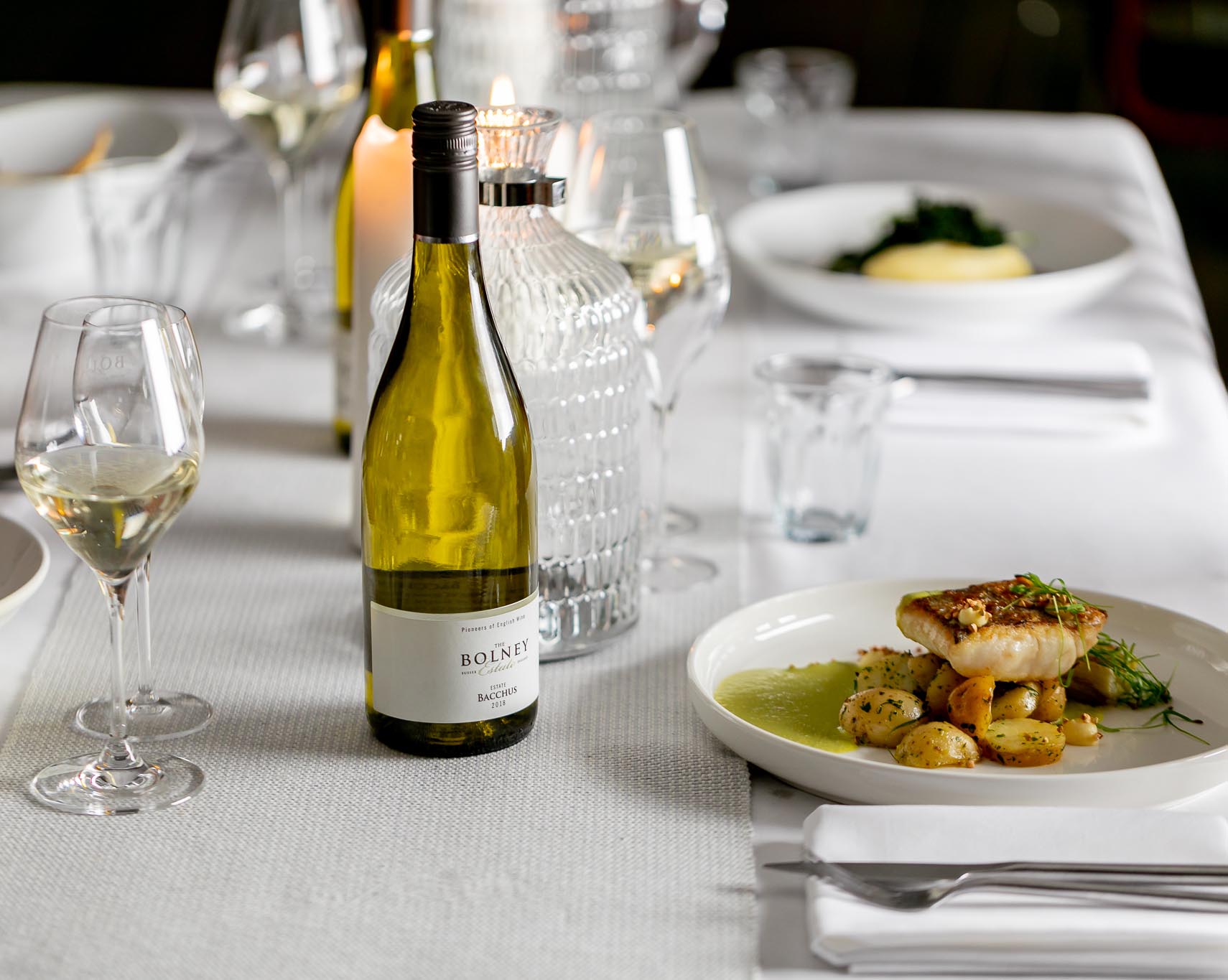
Reading about chalk and climate is one thing. Tasting the difference in the glass is another. Bolney Wine Estate sits on the South Downs, where you can walk the vineyard and taste what English terroir gives its wines.
Frequently Asked Questions
Is terroir the same as soil?
No. Soil is only one part of terroir. Climate, topography and human tradition all play a part too.
Can beginners learn to taste terroir?
Yes, with practice. Tasting wines made from the same grape but grown in different regions side by side is one of the easiest ways to start noticing the differences.
Does terroir apply to English wine?
Yes. England’s terroir includes chalk soils shared with Champagne and a cool, often wet climate that suits high-acid grapes.
Is terroir just a marketing term?
Not entirely. The International Organisation of Vine and Wine has an official definition, and growing research links soil and climate to measurable differences in grapes and wine.
What is the difference between terroir and vintage?
Terroir is the fixed character of a place: its soil, climate and shape of the land. Vintage is the weather in a particular growing year, which can push a wine above or below that place’s usual character.
Sources
- Wine & Spirit Education Trust — plain definition of terroir
- International Organisation of Vine and Wine (OIV) — official 2010 resolution defining vitivinicultural terroir
- Communications Biology (Nature) — global study on vineyard soil microbiomes and terroir
- University of Oxford — research on weather and wine vintage quality
- Wine Enthusiast — on England’s chalk soils and cool-climate winemaking
- World of Fine Wine — on the geology behind English sparkling wine