Account






UK Harvest Traditions: Corn Dollies, Harvest Moons & Grapes
Start exploring

UK harvest traditions celebrate the moment the year’s crops are safely gathered in. They run from Lammas loaves in August to Harvest Festival services in autumn, and many of them are hundreds of years old.
England’s grape harvest belongs to the same story. Vines have grown here since Roman times, and every autumn vineyards bring in their fruit in the same season that farmers once brought in the corn. Here is how the old customs began, and how they still echo through the modern grape harvest.
The key dates in the harvest calendar:
The UK harvest calendar
- Lammas: 1 August
- Harvest Moon: The full moon closest to the autumn equinox, usually in September
- Michaelmas: 29 September
- Harvest Festival: Late September to October in most churches and schools
- Grape harvest: Mostly mid-September to early October in England
Jump to a section
What Are the Oldest Harvest Traditions in the UK?
The oldest UK harvest traditions follow the farming year rather than a fixed calendar. Lammas, the Harvest Moon and Michaelmas each marked a stage in bringing the crops home, from the first loaf to the last goose supper.
Lammas: The First Loaf of the Harvest
Lammas falls on 1 August and marks the start of the harvest season. The name comes from an Anglo-Saxon word meaning “loaf-mass”, according to Britannica. In early English churches, they blessed loaves baked from the first new grain at a service.
Lammas was also one of the four quarter days that divided the year in the British Isles, alongside Candlemas, May Day and All Saints’ Day.
The Harvest Moon
The Harvest Moon is the full moon closest to the autumn equinox. BBC Sky at Night Magazine explains that around this time the moon can rise as little as 10 minutes later each night, compared with about 50 minutes on average.
For farmers without electric light, that meant several bright evenings in a row to keep working in the fields. In 2026, the Harvest Moon rose on 26 September.
Michaelmas and the Goose Fairs
Michaelmas, on 29 September, was traditionally marked with a roast goose fattened on the stubble left after harvest. The countryside charity CPRE notes that goose fairs grew up in the same season. Nottingham’s Goose Fair has run for more than 700 years.
How Did Farm Workers Celebrate the End of the Harvest?
Farm workers marked the end of the harvest with shouting, straw figures and a large shared meal called the harvest home. Customs changed from county to county, but the last sheaf of corn was almost always the centre of attention.
Harvest traditions: What is a sheaf?
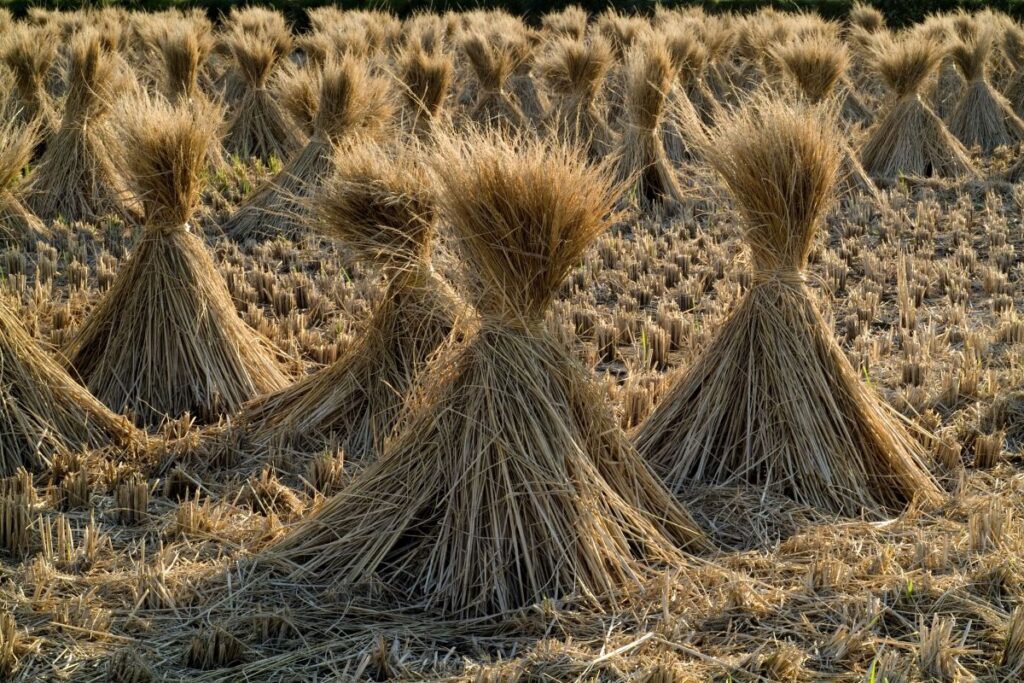
A sheaf is a bundle of cut corn stalks tied together. Before machines, reapers cut the crop by hand and stood the sheaves up in the field to dry.
The best-known end-of-harvest customs include:
- Crying the neck: In Devon and Cornwall, reapers raised the last stalks above their heads and called out “the neck” three times, as recorded by the Pitt Rivers Museum at the University of Oxford.
- Corn dollies: The last sheaf was woven into a straw figure and kept until spring. Folk belief held that it sheltered the spirit of the corn until the fields were ploughed again.
- Hollaying largesse: In East Anglia, reapers called out to passing strangers for coins towards the harvest supper.
- Harvest home: Farmers held a supper to thank the workers who brought in the crops, often with bread shaped like a wheatsheaf.
How old are corn dollies?
The Pitt Rivers Museum dates the earliest written mention of these harvest figures to around 1598. Older names included kern babies, ivy girls and mell dolls. The term “corn dolly” appeared only in the 1940s, when craft makers revived the tradition after machines ended communal reaping.
Are There Harvest Traditions in Sussex?
Yes. Sussex farm workers celebrated the last day of harvest much like the rest of rural England, and some of those customs were remembered well into the 20th century. The best-recorded examples come from Sussex’s farming families and folk singers.
The Hollerin’ Pot in Rottingdean
The Copper family of Rottingdean, in East Sussex, worked as farm labourers and shepherds until the 1930s. Albion Magazine describes how their harvest ended with the “Hollerin’ Pot” on the last day, when a hay wagon decorated with corn dollies came in from the fields.
The Coppers are one of England’s best-known folk singing families. Parish records trace them in the area back to at least 1593, and their songs of ploughing, sheep-shearing and good ale were sung at gatherings such as harvest suppers.
Wassailing the Orchards
Sussex also has a strong tradition of blessing its fruit trees. The Weald and Downland Living Museum in West Sussex describes wassailing in January as a ceremony to bless apple orchards and hope for a good crop the following autumn.
Where Did Harvest Festival Come From?
The modern Harvest Festival church service began in 1843 in Morwenstow, a small parish in north Cornwall. The local vicar, Reverend Robert Hawker, invited his parishioners to give thanks for the harvest and to share its first fruits with people in need.
A Canterbury Christ Church University history blog explains that Hawker also revived the old Lammas custom of using bread made from the new corn at communion. His idea spread quickly through Victorian England.
What Does the Bible Say About Harvest?
The idea of giving thanks at harvest runs much deeper than 1843. Across evangelical and non-denominational churches, Harvest Festival is often linked to the Old Testament, especially the book of Deuteronomy.
Two passages stand out:
- The first fruits: Deuteronomy 26 describes people placing the first of their harvest in a basket as a thank-you offering, then celebrating together and sharing with outsiders in the community.
- The Feast of Tabernacles: Deuteronomy 16 sets a seven-day feast once the produce of the threshing floor and the winepress was gathered, with everyone invited, including widows, orphans and foreigners.
Christian Today explains that the Feast of Tabernacles fell between late September and mid-October and marked the end of the harvest year, especially the grape and olive harvests. It is the same season as the English grape harvest today.
What Happens at Harvest Festival Today?
Harvest Festival today focuses on giving. Churches and schools hold services in late September or October, and families bring tins and dry food to share with local charities.
Much of it goes to food banks, and the need is real. Trussell reports that its food banks gave out more than 2.6 million emergency food parcels in 2025, with around 1.63 million going to families with children.
Give to a food bank this harvest
Find your nearest food bank and see which items it needs most using Trussell’s food donation page.
Has England Always Had a Grape Harvest?
England has had a grape harvest on and off for almost 2,000 years. Vines grew in Roman Britain, thrived under the Normans and medieval monks, faded for several centuries, and returned in the 1950s.
Jargon explained: Viticulture
Viticulture is the growing of grapes, usually for making wine. It covers everything from planting and pruning the vines to picking the fruit.
| Period | What happened | Evidence or cause |
|---|---|---|
| Roman Britain | Vines grown widely at some sites | Pollen and soil traces at Wollaston, Northamptonshire |
| 1086 | Vineyards recorded at around 45 places in south-east England | The Domesday Book |
| Medieval period | Monasteries tend vines, partly for wine used in church services | Noted by the Wine Guild of the United Kingdom |
| 1150s to 1500s | English vineyards slowly dwindle | Cheaper Bordeaux wine, the Black Death and the closure of the monasteries |
| 1950s onwards | Commercial vineyards return and grow | More than 1,000 UK vineyards today |
Did the Romans Grow Grapes in Britain?
Yes. A study published in the journal Antiquity in 2001 found grape pollen and soil evidence of vine growing at a Roman site in Wollaston, Northamptonshire. The researchers concluded that vines were grown there on a large scale.
Why Did England’s Medieval Vineyards Fade?
The Hull Domesday Project notes that the vineyards listed in 1086 belonged to Norman lords and the great abbeys. Over the following centuries, they declined for several reasons, not just the weather.
Climate scientists writing for RealClimate point to Eleanor of Aquitaine’s marriage to the future Henry II in 1152, which opened easy trade with Bordeaux. The Black Death, the dissolution of the monasteries, and a growing taste for beer also played a part.
How Does the Grape Harvest Carry These Traditions On?
The modern English grape harvest follows the same rhythm as the old corn harvest. Grapes are picked in early autumn, often by hand, by teams racing the weather to bring the fruit in at its best.
Jargon explained: Vintage
A vintage is the year the grapes were harvested. When a bottle shows a year on the label, that tells you which harvest the wine came from.
When Is the Grape Harvest in England?
The English grape harvest usually runs from mid-September into October. Timing shifts with the weather each year, and warmer weather is changing English wine by pushing picking earlier.
In 2025, The Drinks Business reported that a few growers began picking in late August and most had finished by the first week of October. That was around three weeks earlier than 2024. The trade body WineGB described it as the earliest and ripest harvest on record, producing more than 16.5 million bottles.
Why Are Grapes Still Picked by Hand?
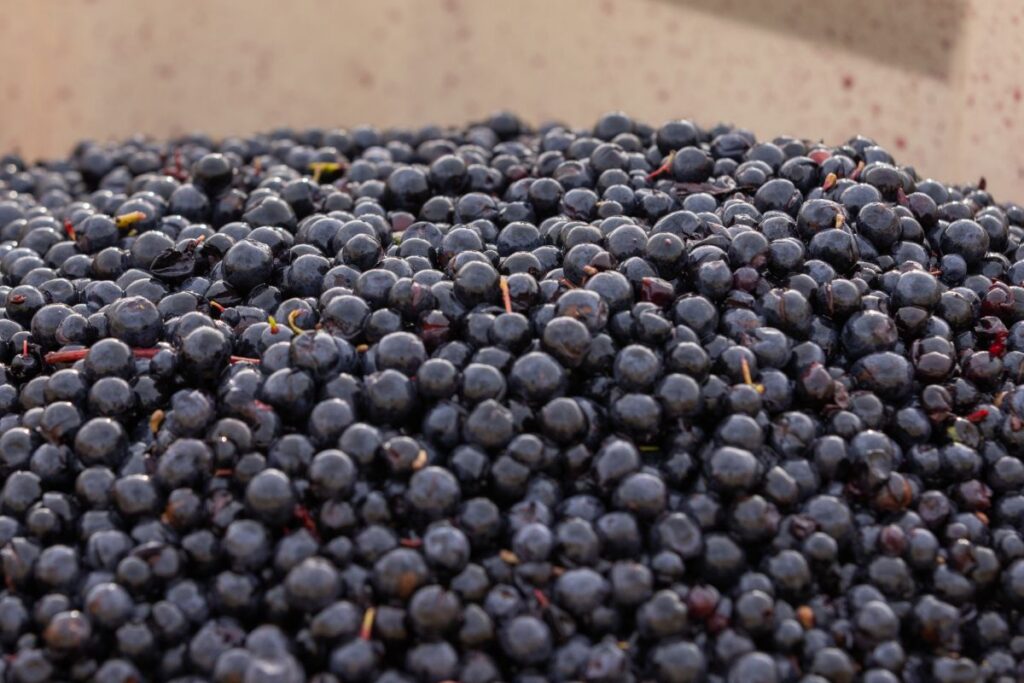
Many English vineyards still pick by hand, much as reapers once cut corn. Decanter explains that hand-picking lets pickers choose the best bunches and avoid bruising the fruit. Winemakers taste grapes across the vineyard in the weeks before to decide when to start picking.
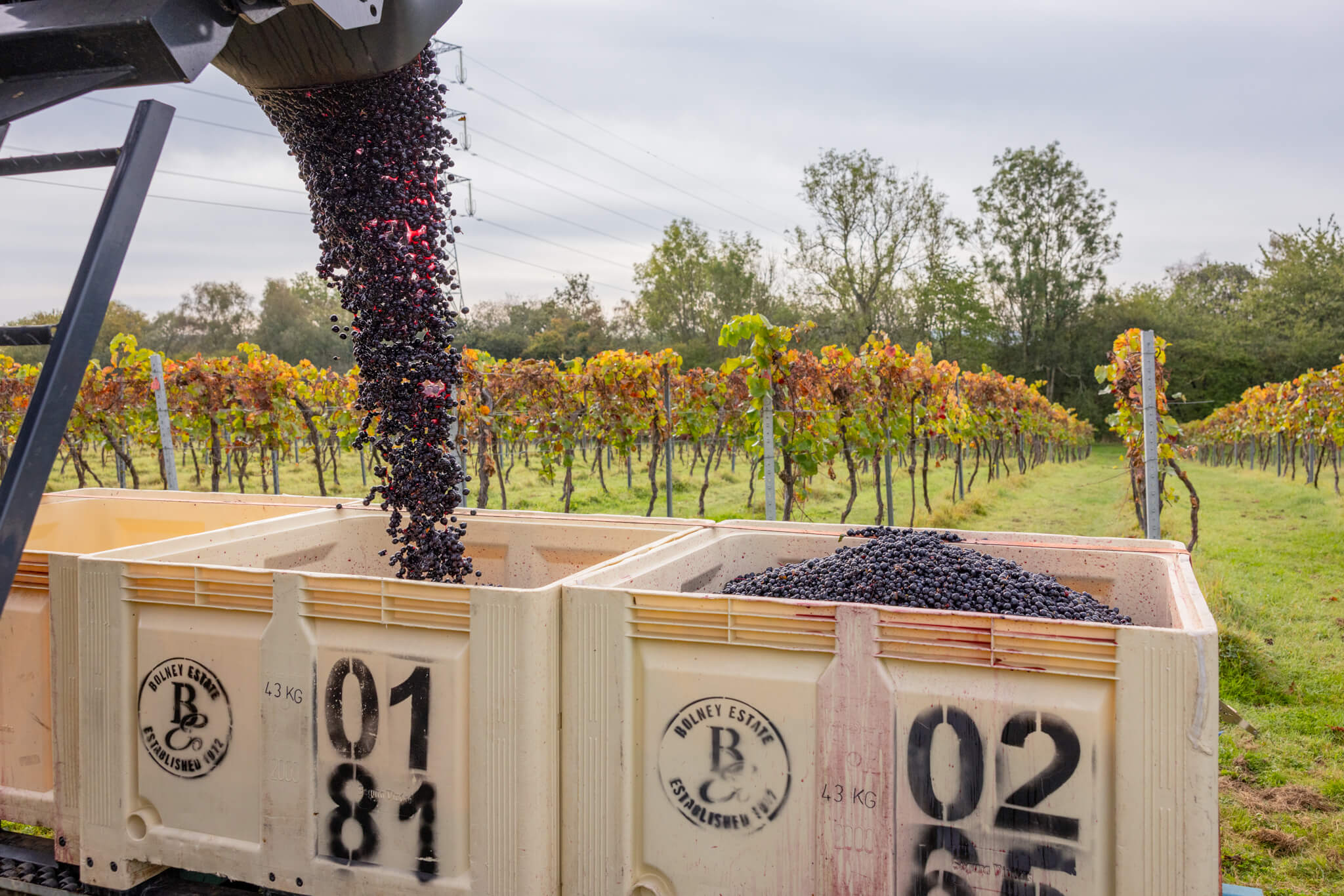
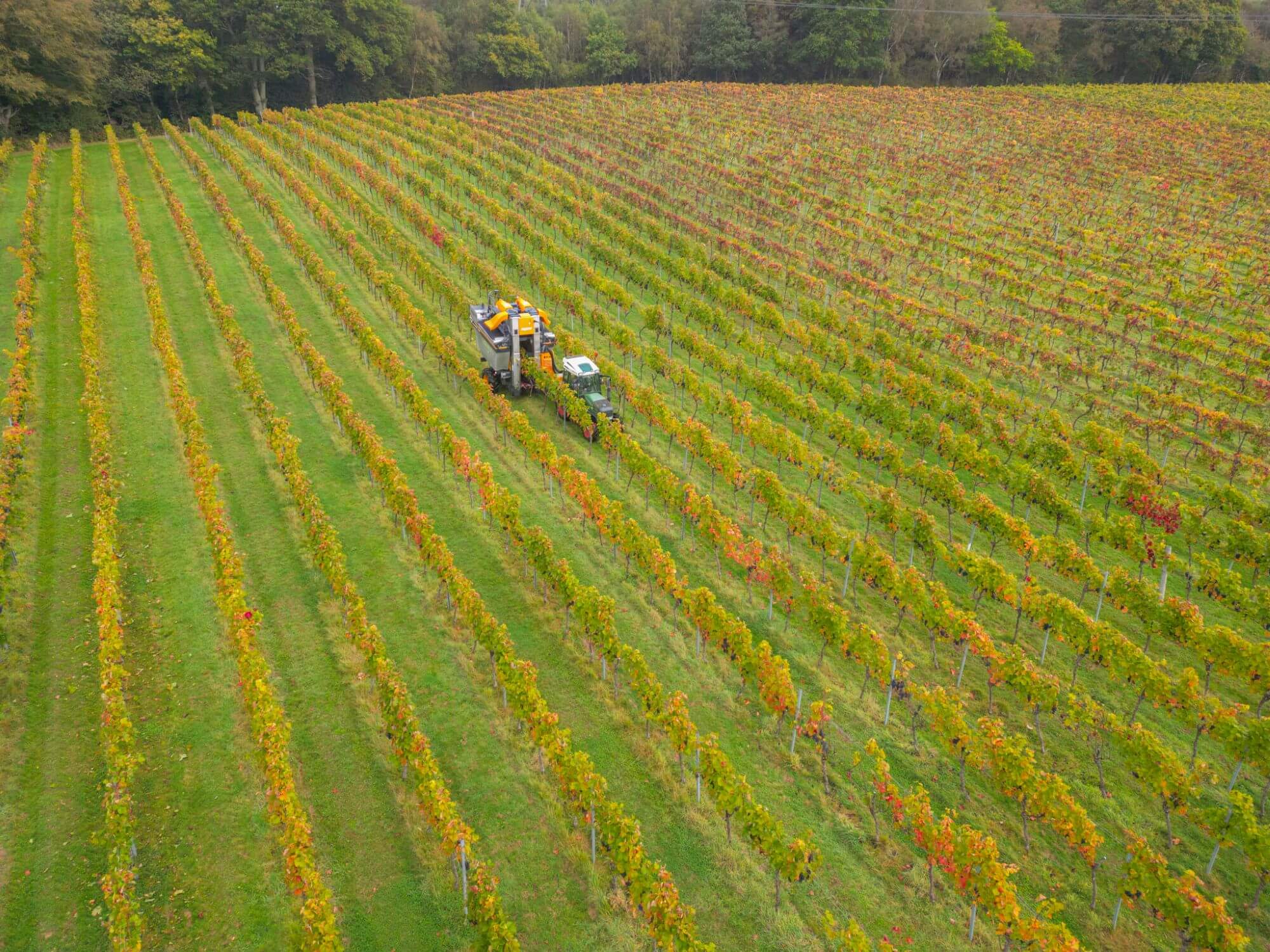
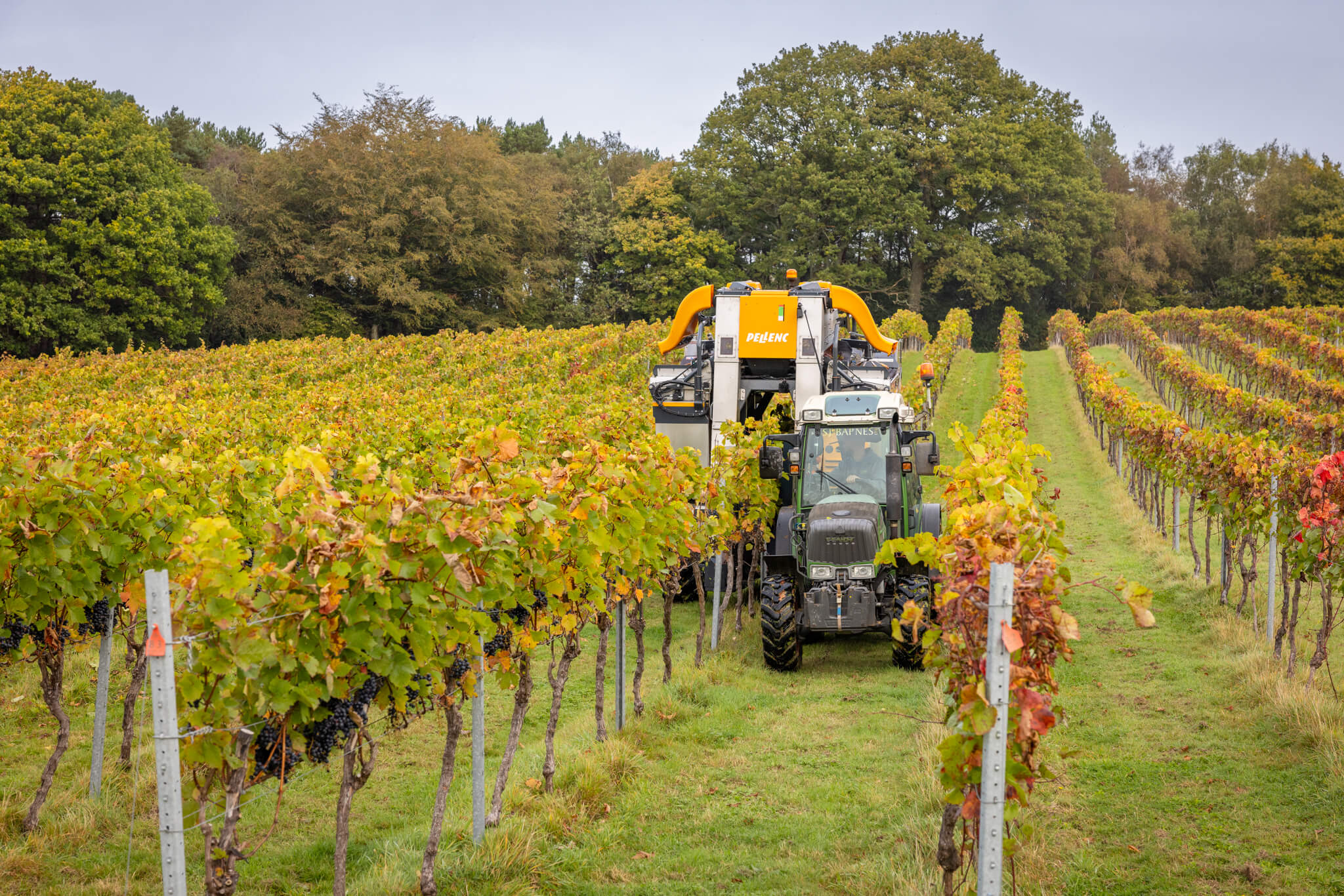
Some vineyards now use machines for part of the crop, while grapes for sparkling wine are often still picked by hand. A 2020 harvest report shows how the two can work side by side.
For a step-by-step look at picking, pressing and weather worries, see this guide to the English wine harvest.
Old Farm Customs and the Wine Harvest
Several threads link the old farming year to the vineyard year:
- Blessing the crop: Lammas blessed the first loaf. In Sussex, orchard wassailing blesses the apple trees each January in hope of a good autumn crop, much as vineyards hope for a kind season ahead.
- Feasting after the winepress: The Bible links harvest thanksgiving directly to grapes. Deuteronomy sets the Feast of Tabernacles after the produce of the threshing floor, and the winepress had been gathered in.
- Racing the weather: Farmers used the Harvest Moon to work late. Grape growers watch the forecast just as closely, since frost, rain and disease can all shape a vintage, as this look at a tricky 2021 harvest shows.
- Marking the year: A corn dolly kept the spirit of one harvest until the next. A vintage on a wine label keeps the story of one growing year in the bottle.
How Can You Enjoy Harvest Traditions This Autumn?
- Join a Harvest Festival: Many churches and schools welcome visitors, and a tin or two for the food bank goes a long way.
- Try making a corn dolly: Straw weaving is still taught as a folk craft.
- Visit a rural life museum: The Weald and Downland Living Museum near Chichester shows traditional rural life through the seasons.
- Host a harvest supper: Serve seasonal food with an English wine and toast the end of the growing year.
- Visit a vineyard in autumn: Taste wines from past vintages while the new one is being brought in.
Taste the Harvest Season for Yourself
Book a tasting at Bolney Wine Estate in West Sussex and discover how an English growing year ends up in the bottle.
Frequently Asked Questions
When is Harvest Festival in the UK?
Harvest Festival has no fixed date in the UK. Most churches and schools hold it in late September or early October, once the main crops are in.
Who started Harvest Festival?
Reverend Robert Hawker, vicar of Morwenstow in Cornwall, held the first modern Harvest Festival service in 1843. The idea spread across England during the Victorian era.
What harvest traditions come from Sussex?
Sussex farm workers marked the last day of harvest with suppers, songs and a decorated wagon. In Rottingdean, the Copper family remembered this as the “Hollerin’ Pot”. Sussex also keeps up orchard wassailing each January.
What is a corn dolly?
A corn dolly is a figure woven from the last sheaf of the harvest. Farmers kept it through winter in the belief that it sheltered the spirit of the corn until spring.
When are grapes harvested in England?
Grapes in England are usually harvested from mid-September to mid-October. The 2025 harvest was the earliest on record, with some picking starting in late August.
What is the link between harvest traditions and wine?
Grapes are a harvest crop like corn, picked in the same autumn season. England has grown vines since Roman times, and each wine’s vintage records the year its grapes were harvested.
Sources
- Britannica: Lammas: Date, “loaf-mass” name and quarter days
- BBC Sky at Night Magazine: Harvest Moon 2026: Definition, moonrise timing and 2026 date
- CPRE: Harvest traditions in England: Michaelmas, goose fairs, hollering largesse and harvest suppers
- Pitt Rivers Museum, University of Oxford: Harvest trophies: Crying the neck, corn dollies and their history
- Albion Magazine: The Copper Family of Rottingdean: The Hollerin’ Pot and Sussex farm song traditions
- Weald and Downland Living Museum: Folklore in West Sussex: Orchard wassailing in Sussex
- Canterbury Christ Church University: Hawker of Morwenstow: Origins of the modern Harvest Festival in 1843
- Bible Hub: Deuteronomy 26: The first fruits offering
- Bible Hub: Deuteronomy 16: The Feast of Tabernacles after the threshing floor and winepress
- Christian Today: What is the significance of harvest for Christians?: Biblical harvest festivals and their timing
- Trussell: Food banks provide over 2.6 million food parcels: 2025 food bank figures
- Trussell: Food bank donations: Finding your nearest food bank to donate
- Antiquity (Cambridge University Press): Roman vineyards in Britain: Evidence of Roman vines at Wollaston
- Hull Domesday Project: Vineyard: Vineyards recorded in the Domesday Book
- The Wine Guild of the United Kingdom: English wine: Roman, medieval and monastic vineyards
- RealClimate: Medieval warmth and English wine: Why medieval English vineyards declined
- The Drinks Business: English and Welsh 2025 wine harvest delivers ripest fruit ever: 2025 harvest timing
- The Drinks Business: New data reveals bumper 2025 harvest for UK vineyards: Bottle figures and vineyard numbers
- Decanter: Harvesting wine grapes: Why grapes are picked by hand